
Hoe betalen toeristen in Thailand: kaarten, contant geld en geldautomaten voor bezoekers
Hoe betalen toeristen in Thailand? Vergelijk Wise en betaalpassen van thuis, de KBank prepaid Visa-kaart, contant geld en geldautomaatkosten, eerlijk en zonder dat je een Thaise bankrekening nodig hebt.
Thailand Stuff Editorial Team
Researched and fact-checked against on-the-ground prices and reputable data · 14 Aug 2026 · 19 min lezen

Hoe betalen toeristen in Thailand: kaarten, contant geld en geldautomaten voor bezoekers
Je hebt als bezoeker geen Thaise bankrekening nodig om ergens voor te betalen in Thailand. Tussen een multi-currency reispas, je eigen betaal- en creditcards van thuis, een nieuwe prepaid toeristenkaart die je opwaardeert met contant geld, en gewone baht uit een geldautomaat, kun je taxiritten, hotels, restaurants en straatvoedsel betalen zonder ooit een lokale rekening te openen. Deze gids legt uit hoe toeristen in Thailand betalen in de praktijk, wat elke optie echt kost, en waar de kosten en wisselkoersmarges zich verstoppen, zodat je de mix kunt kiezen die bij je reis past en meer van je geld overhoudt.
Hoe betalen toeristen in Thailand: het korte antwoord
De meeste toeristen betalen in Thailand met een kaart in steden en toeristische gebieden en met contant geld overal daarbuiten. Kaartacceptatie is goed in winkelcentra, hotels, supermarkten en ketenrestaurants, maar straatvoedselkraampjes, lokale markten, kleine winkeltjes, songthaews en veel taxi's accepteren nog steeds alleen contant geld. Het praktische antwoord is om één of twee kaarten bij je te hebben voor grotere betalingen en een bescheiden hoeveelheid baht voor kleinere.
Dit is voor wie elke optie het meest geschikt is:
- Een Wise multi-currency kaart. Sterke allrounder voor de meeste reizigers die een koers dicht bij de middenkoers willen en vóór hun vlucht een kaart kunnen bestellen.
- Je eigen betaal- en creditcards van thuis. Prima voor hotels, winkelcentra en noodgevallen, met name een kaart met lage of geen buitenlandse transactiekosten.
- De KBank PAY and TOUR prepaid Visa-kaart. Een met contant geld opgewaardeerde toeristenkaart voor mensen die geen Thaise rekening kunnen openen en een lokale Visa-kaart in handen willen hebben.
- Contant geld van geldautomaten of wisselkoerskantoren. Essentieel voor dagelijkse kleine uitgaven en onvermijdelijk voor markten en straatvoedsel.
De rest van deze gids loopt elke optie eerlijk door, inclusief de kosten, zodat je kunt zien welke combinatie de beste kaart voor Thailand is voor jouw situatie.
Kunnen toeristen een bankkaart krijgen in Thailand zonder Thaise rekening?
Toeristen kunnen normaal gesproken geen standaard Thaise betaalrekening openen tijdens een kort bezoek, maar ze kunnen nog steeds een bruikbare kaart krijgen. Het openen van een volledige lokale rekening vereist bijna altijd documentatie voor een lang verblijf, zoals een werkvergunning, een visum voor lang verblijf of een lokaal adres. Daarom behandelen we de regels afzonderlijk in onze gids over het openen van een Thaise bankrekening en de specifieke vraag of je een rekening kunt openen op een DTV-visum.
Wat je als bezoeker kunt krijgen is ofwel een lokaal uitgegeven prepaid toeristenkaart met alleen een paspoort, of, veel vaker, je brengt simpelweg kaarten van thuis mee. Het eerlijke antwoord op de vraag of toeristen een bankkaart voor toeristen kunnen krijgen in Thailand is dus: geen normale bankrekening, maar ja tegen een prepaid Visa-kaart, en ja tegen het gebruik van je bestaande kaarten. De vier opties hieronder dekken elke realistische manier om te betalen.
Optie 1: een Wise multi-currency kaart
Een Wise multi-currency kaart is een van de sterkste keuzes voor veel reizigers omdat het je geld omzet tegen tarieven die dicht bij de middenkoers liggen, met kosten die vooraf worden getoond. Je bestelt hem online vóór je reis, waardeert hem vanuit je thuisbank op in je eigen valuta, en laat hem ofwel omzetten naar Thaise baht op het moment dat je uitgeeft, of houdt vooraf baht aan in de app.
Hoe de Wise-kaart werkt in Thailand
Zodra de kaart arriveert, gebruik je hem precies zoals elke Visa of Mastercard: tappen of steken bij winkels die kaarten accepteren, en baht opnemen bij geldautomaten. Omdat Wise omzet tegen een transparant tarief in plaats van een verhoogd toeristentarief, verslaat het meestal luchthavenwisselkantoren en de ingebouwde conversie die je thuisbank toepast. Het is een kaart in pinpasstijl, dus je kunt alleen uitgeven wat je laadt, wat het ook een handige manier maakt om een reis te budgetteren.
Kosten om te weten
Wise rekent een kleine, zichtbare omrekeningskosten en geeft een maandelijks tegoed aan gratis geldautomaatopnames voordat er kosten per opname in rekening worden gebracht. Cruciaal is dat die Wise-kosten los staan van de hieronder beschreven kosten van de Thaise geldautomaatbe operador, die elke buitenlandse kaart betaalt. Wise is ook nuttig buiten je reis: als je later grotere bedragen moet verplaatsen, vergelijk het dan met de goedkoopste manieren om geld naar Thailand te sturen. Revolut en vergelijkbare reispassen werken volgens hetzelfde principe, dus de methode is belangrijker dan het merk.
Optie 2: je eigen betaal- en creditcards van thuis
Je bestaande Visa of Mastercard van thuis werkt breed in Thailand en is de eenvoudigste optie voor veel bezoekers. Volgens richtlijnen van kaartuitgevers over het gebruik van kaarten in Thailand worden betaal- en creditcards geaccepteerd in grote steden en toeristische gebieden, terwijl kleinere winkels, lokale verkopers en afgelegen plekken mogelijk alleen contant geld accepteren. Voor hotels, winkelcentra, supermarkten en middelgrote of betere restaurants is een thuiskaart volkomen handig.
Het addertje onder het gras zijn de kosten. Veel thuiskaarten voegen een buitenlandse transactiekost toe van ongeveer 1 tot 3 procent op elke aankoop in het buitenland, en sommige passen ook hun eigen valuta-omrekeningsopslag toe, dus de werkelijke kosten van betalen per kaart in Thailand hangen sterk af van welke kaart je bij je hebt. Doe drie dingen voordat je reist:
- Controleer je buitenlandse transactiekosten. Als je dagelijkse kaart 2 tot 3 procent in rekening brengt, bespaart een reispas zonder kosten of een kaart in Wise-stijl je geld tijdens een langere reis.
- Vertel je bank dat je reist. Een plotselinge reeks Thaise transacties kan een fraudeblokkering activeren, en het deblokkeren van een kaart vanuit het buitenland is hoofdpijn.
- Schakel contactloos en een back-up in. Neem ten minste twee kaarten van verschillende netwerken mee voor het geval er één wordt geweigerd, beschadigd of bevroren.
Creditcards voegen een laagscherpe aankoopbescherming toe voor dure artikelen en hotelreserves, terwijl betaalpassen je dichter bij je budget houden. Het meenemen van van beide één is een verstandige opstelling, en het past natuurlijk bij een lokale toeristen-SIM of eSIM zodat je bank-apps en tweefactorauthenticatiecodes bij aankomst blijven werken.
Kies er altijd voor om in baht te worden afgeschreven
Wanneer een betaalautomaat of geldautomaat aanbiedt om je af te schrijven in je eigen valuta in plaats van in Thaise baht, weiger dat dan en kies voor baht. Deze valkuil wordt dynamische valuta-omzetting genoemd, en het is een van de makkelijkste manieren om geld te verliezen in Thailand. Wise legt dit duidelijk uit in haar richtlijnen over geld en banken in Thailand: kies er altijd voor om in de lokale valuta te worden afgeschreven om dest mogelijke deal te krijgen.
Wanneer je de handelaar of geldautomaat laat omzetten naar je eigen valuta, stellen zij de wisselkoers vast, en die koers is meestal slecht, plus een omrekeningsmarge daarbovenop. In plaats daarvan in baht betalen laat je eigen kaartuitgever de omzetting doen tegen een netwerktarief, wat bijna altijd beter is. Dit geldt zowel bij winkelkassa's, restaurantbetaalautomaten als geldautomaten. Visa's eigen reisrichtlijnen bevestigen dat je het recht hebt om in de lokale valuta te worden afgeschreven, dus als een terminal standaard je eigen valuta gebruikt, vraag de kassier dan om het opnieuw te laten draaien in baht. Het is een kleine gewoonte die stilzwijgend elke kaartbetaling beschermt die je doet. Let op dezelfde truc bij andere reizigersvalkuilen in onze opsomming van veelvoorkomende oplichtingspraktijken om te vermijden.
Optie 3: de KBank PAY and TOUR prepaid Visa-kaart
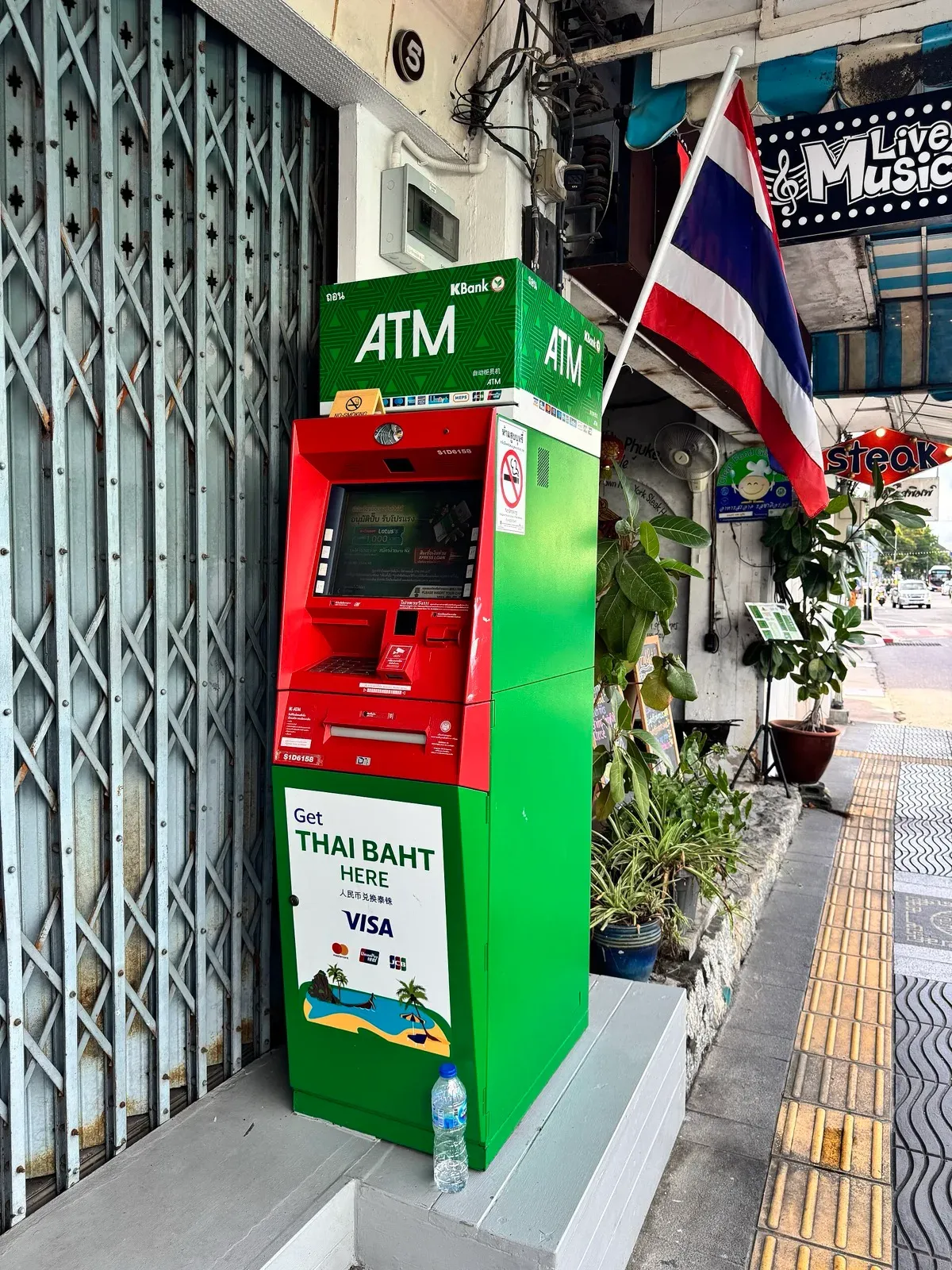
De PAY and TOUR-kaart is een prepaid Visa-kaart voor buitenlandse toeristen van Kasikornbank, de groene bank, gelanceerd in 2025 in samenwerking met de Tourism Authority of Thailand. Deze is direct gericht op bezoekers die geen Thaise rekening kunnen openen maar wel een lokale Visa-kaart in handen willen hebben, en volgens de officiële PAY and TOUR-pagina van Kasikornbank is er geen Thaise bankrekening vereist om er een te krijgen.
Je haalt de kaart persoonlijk op bij een Kasikornbank-wisselkoersbalie (FX), waaronder op de luchthavens Suvarnabhumi en Don Mueang en bij meer dan 100 vestigingen, met je paspoort. Het is een prepaid Visa, dus je kunt hem gebruiken om te betalen bij handelaren die Visa accepteren en om baht op te nemen bij KBank-geldautomaten, naar verluidt gratis tot ongeveer 10.000 THB per dag (beschouw die limiet als gerapporteerd en controleer de huidige voorwaarden wanneer je de kaart ophaalt).
Wees eerlijk tegen jezelf over twee beperkingen. Ten eerste waardeer je de kaart alleen op met contant geld, persoonlijk bij een KBank FX-balie, door je buitenlandse contanten om te wisselen in baht tegen de eigen FX-koers van KBank. Er is geen op afstand of online opwaarderen, en omdat die FX-koers een marge draagt in plaats van de middenkoers, is dit niet de goedkoopste manier om geld om te wisselen. Ten tweede is de kaart alleen geldig in Thailand en wordt deze doorgaans niet ondersteund voor online transacties, dus hij vervangt geen kaart van thuis voor het boeken van vluchten of hotels op het web. Beschouw het als een handige, met contant geld opgewaardeerde uitgavenkaart voor gebruik in het land, vooral handig voor toeristen en houders van een Destination Thailand Visa (DTV) die geen lokale rekening kunnen krijgen.
Hoe je de KBank PAY and TOUR-kaart kunt krijgen en gebruiken
| Stap | Wat te doen |
|---|---|
| 1. Neem je paspoort mee | Je hebt een geldig paspoort nodig; een Thaise bankrekening of lokaal adres is niet vereist. |
| 2. Vind een KBank FX-balie | Ga naar een Kasikornbank-wisselkoersbalie, inclusief op de luchthavens Suvarnabhumi en Don Mueang of een KBank-filiaal. |
| 3. Laat de kaart uitgeven | Toon je paspoort en vraag om de prepaid PAY and TOUR Visa-kaart. |
| 4. Waardeer op met contant geld | Geef buitenlands contant geld af om te wisselen in baht tegen de FX-koers van KBank; de baht wordt op de kaart geladen. |
| 5. Betaal en neem op | Gebruik hem als elke Visa-kaart bij handelaren en neem baht op bij KBank-geldautomaten. Waardeer persoonlijk opnieuw op wanneer deze bijna leeg is. |
Optie 4: contant geld en geldautomaten
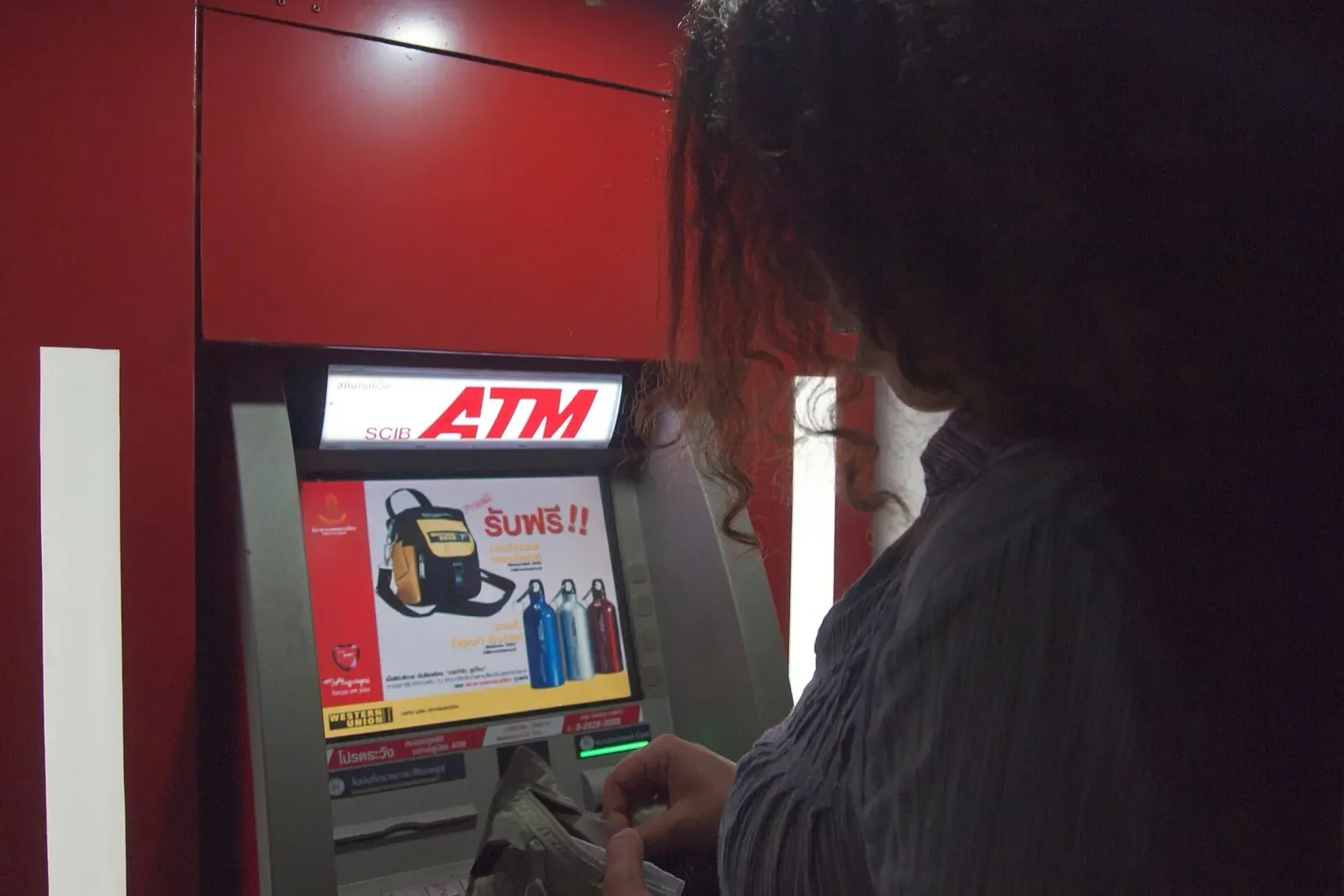
Contant geld is nog steeds koning voor dagelijkse uitgaven in Thailand, dus elke bezoeker heeft wat baht nodig, ongeacht welke kaarten ze bij zich hebben. Straatvoedsel, natte markten, kleine familiewinkeltjes, veel taxi's en songthaews, en landelijke gebieden accepteren vaak niets anders. Zoals Wise opmerkt in haar vergelijking tussen contant geld en kaart, dekt een kaart de meeste formele bedrijven terwijl contant geld de informele economie dekt die een groot deel van een reis uitmaakt.
De belangrijkste kosten voor het verkrijgen van contant geld zijn de kosten van de Thaise geldautomaat. Lokale geldautomaten rekenen een vaste vergoeding voor opnames met een buitenlandse kaart, en tegen 2025-2026 was dit gestegen tot ongeveer 220 tot 250 THB per opname bij de meeste banken, bovenop alles wat je thuisbank in rekening brengt. Wise's gids over geldautomaten in Thailand rapporteert ongeveer 200 tot 220 THB per transactie bij de meeste lokale banken, waarbij Aeon Bank minder in rekening brengt, dus het opzoeken van een Aeon-automaat kan de kosten beperken. Omdat de vergoeding per opname is in plaats van een percentage, is de beste manier om dit te verminderen simpel:
- Neem grotere bedragen op, minder vaak. Eén opname van 20.000 THB betaalt de vaste vergoeding één keer; vier opnames van 5.000 THB betalen deze vier keer.
- Geef de voorkeur aan automaten met lagere kosten. Aeon Bank-geldautomaten hebben historisch gezien minder in rekening gebracht dan de grote Thaise banken voor buitenlandse kaarten.
- Kies altijd voor baht bij de geldautomaat. Weiger het valuta-omrekeningsaanbod van de automaat, zoals hierboven behandeld.
- Let op je dagelijkse kaartlimiet. Veel thuiskaarten beperken dagelijkse opnames, dus plan een grote opname dienovereenkomstig.
Voor het wisselen van fysiek contant geld in plaats van het gebruik van een geldautomaat, verslaan speciale wisselkoerskantoren zoals SuperRich en andere FX-balies in het stadscentrum meestal zowel luchthavenkiosken als hotelbalies. Houd je contant geld veilig en verdeeld over tas en kluis, en budgetteer realistisch met behulp van onze uitsplitsing van de kosten van een maand in Phuket. Baht bij de hand hebben versoepelt ook het vervoer, van de rit naar het luchthaven tot dagtrips; zie verplaatsen in Phuket en de vaste opties voor reizen van de luchthaven van Phuket naar Patong.
Hoeveel contant geld moet je meenemen, en de 20.000 THB-vraag
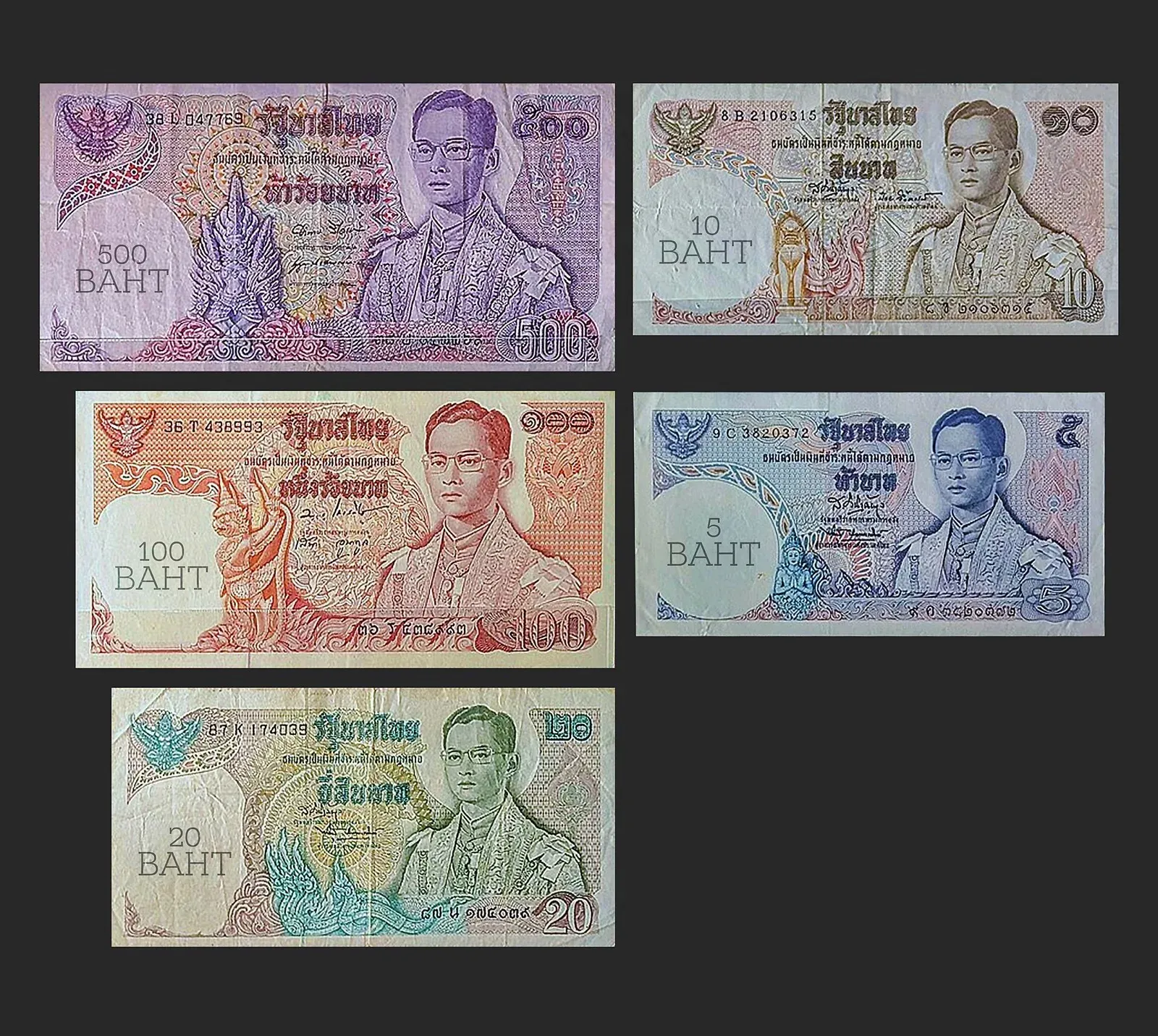
Je moet aankomen met een kleine hoeveelheid baht of gemakkelijk te wisselen valuta voor je eerste dag, en daarna vertrouwen op geldautomaten en kaarten. Een veelgestelde vraag is of je fysiek 20.000 THB per persoon bij je moet dragen om Thailand binnen te komen. Thaise immigratierichtlijnen vermelden wel een bewijs-van-middelen-cijfer, vaak genoemd als 20.000 THB per persoon of 40.000 THB per gezin voor bepaalde binnenkomsten, als bewijs dat je je verblijf kunt financieren.
In de praktijk wordt dit zelden gecontroleerd voor gewone toeristenaankomsten, maar het kan worden aangevraagd, en het eerlijke advies is om toegang tot fondsen te kunnen tonen als erom wordt gevraagd in plaats van ervan uit te gaan dat dat nooit gebeurt. Het meenemen van een paar duizend baht aan contant geld plus werkende kaarten dekt comfortabel de geest van de regel. Als je een langere reis plant, lees je dan in over de regels voor toeristenvisum en visumvrijstelling voordat je vliegt, en controleer de beste reistijd zodat je budget bij het seizoen past.
Waar kaarten werken en waar je nog steeds contant geld nodig hebt
Kaarten werken betrouwbaar in de formele economie van Thailand en zelden in de informele. Door de splitsing te kennen, voorkom je dat je bij een noedelstalletje staat met alleen een kaart.
Je kunt meestal per kaart betalen in Thailand bij:
- Hotels, resorts en de meeste pensions boven het budgetniveau.
- Winkelcentra, warenhuizen en supermarkten zoals Big C, Lotus's en Villa Market.
- Keten- en middelgrote restaurants, cafés en bars in toeristische gebieden.
- Gemakswinkels, apotheken en grotere touroperators.
Je hebt meestal contant geld nodig voor:
- Straatvoedsel, avondmarkten en natte markten.
- Kleine onafhankelijke winkels, wasserijen en lokale salons.
- Veel taxi's, tuk-tuks, songthaews en motortaxi's.
- Tempeldonaties, fooien en landelijke of eilandplekken.
Zelfs vrijetijdsbesteding splitst zich op deze manier: een strandclub of hotel-dagpas accepteert kaarten, terwijl de verkoper die ernaast een paddleboard verhuurt baht wil. Plan voor beide en je zult zelden voor verrassingen komen te staan.
Welke betaaloptie is het beste voor jou
De beste opstelling hangt af van hoe lang je blijft en of je een lokale rekening kunt openen. Er is geen enkele winnaar, dus stem de optie af op je reis:
- Kies een Wise- of reispas als je de beste dagelijkse wisselkoers wilt, comfortabel een kaart bestelt voordat je vliegt, en één schone kaart wilt voor kaarten en geldautomaten.
- Leun op je thuiskaarten als je reis kort is, je kaart al lage buitenlandse transactiekosten heeft, en je hoofdzakelijk uitgeeft in hotels, winkelcentra en restaurants.
- Overweeg de KBank prepaid Visa-kaart als je geen Thaise rekening kunt openen, de voorkeur geeft aan een lokale kaart in handen, en blij bent om persoonlijk op te waarderen met contant geld en de FX-baliemarge voor dat gemak te accepteren.
- Vertrouw meer op contant geld als je naar eilanden, landelijke gebieden reist of reizen met veel straatvoedsel onderneemt waar kaarten simpelweg niet worden geaccepteerd.
De meeste bezoekers eindigen met het combineren van twee of drie: een Wise- of thuiskaart voor grote betalingen, en contant geld van geldautomaten voor dagelijkse uitgaven. Langdurige bezoekers en mensen die de grenzen van een toeristenvisum opzoeken, of iedereen die als digitale nomade in Phuket woont, zal uiteindelijk een fatsoenlijke lokale rekening willen, maar voor een normaal bezoek is de mix van kaart plus contant geld alles wat je nodig hebt.
Vergelijkingstabel: de belangrijkste manieren waarop toeristen betalen in Thailand
De onderstaande tabel vergelijkt de vier hoofdroutes in één oogopslag. Tarieven en kosten veranderen, dus beschouw deze als een momentopname uit 2026 en bevestig de huidige voorwaarden bij elke provider voordat je erop vertrouwt.
| Optie | Hoe je het krijgt | Kwaliteit wisselkoers | Belangrijkste kosten | Best voor |
|---|---|---|---|---|
| Wise of reispas | Bestel online voordat je vliegt | Dicht bij de middenkoers | Kleine zichtbare omrekeningskosten; geldautomaatkosten na maandelijks tegoed; plus Thaise geldautomaatkosten | Beste dagelijkse waarde; budgetteren van een reis |
| Betaal- of creditcard van thuis | Al in je portemonnee | Kaartnetwerktarief (goed als je DCC vermijdt) | Buitenlandse transactiekosten ongeveer 1 tot 3 procent; plus Thaise geldautomaatkosten bij opnames | Hotels, winkelcentra, back-up en aanbetalingen |
| KBank PAY and TOUR prepaid Visa | Paspoort bij een KBank FX-balie of luchthaven | KBank FX-tarief (heeft een marge) | Contant opwaarderen tegen FX-tarief; KBank geldautomaatopnames naar verluidt gratis tot een dagelijkse limiet | Bezoekers zonder Thaise rekening die een lokale kaart willen |
| Contant geld van geldautomaten of FX-balies | Geldautomaatopname of wisselkoerskantoor | Afhankelijk van je kaart of de balie | Ongeveer 220 tot 250 THB per opname met buitenlandse kaart bij geldautomaat | Straatvoedsel, markten, taxi's, landelijke gebieden |
Veelvoorkomende fouten om te vermijden
Een paar eenvoudige fouten kosten bezoekers echt geld bij elke reis. Ontwijk deze en je baht reikt verder:
- Het accepteren van dynamische valuta-omzetting. Het kiezen van je eigen valuta bij een kassa of geldautomaat overhandigt de wisselkoers aan de handelaar. Kies altijd voor baht.
- Veel kleine geldautomaatopnames doen. Elk daarvan betaalt de volledige vergoeding van 220 tot 250 THB. Neem grotere bedragen minder vaak op.
- Reizen met slechts één kaart. Als deze bevroren, beschadigd of geweigerd is, zit je vast. Neem een back-up op een ander netwerk mee.
- Ervan uitgaan dat kaarten overal werken. Straatstalletjes en kleine verkopers accepteren alleen contant geld; houd baht bij je.
- Contant geld wisselen bij de aankomstbalie op de luchthaven. De tarieven daar behoren tot de slechtste. Neem een beetje op voor de taxi, gebruik daarna een stadswisselkantoor of geldautomaat.
- Vergeten je bank te vertellen dat je reist. Een fraudeblokkering in het buitenland kan je hoofdkaart afsnijden op het slechtste moment.
Gerelateerde gidsen over geld en visums van Thailand Stuff
Betalen als toerist is één onderdeel van het beheren van geld in Thailand. Deze zustergidsen behandelen de onderdelen die daarna komen, van lokale rekeningen tot belasting en dagelijkse budgetten.
| Gids | Wat het dekt |
|---|---|
| Hoe open je een bankrekening in Thailand | Wat daadwerkelijk werkt voor buitenlanders die een lokale rekening willen |
| Kun je een bankrekening openen op een DTV-visum | Wat realistisch is voor houders van een Destination Thailand Visa |
| Goedkoopste manier om geld naar Thailand te sturen | Het vergelijken van overboekingsmethoden, kosten en tarieven |
| Thaise inkomstenbelasting in het buitenland | Wat expats betalen over geld dat naar Thailand wordt gebracht |
| Hoe huur je een appartement in Phuket | Kosten, aanbetalingen en contracten voor langere verblijven |
Frequently asked questions
Can tourists get a bank card in Thailand?
Toeristen kunnen geen standaard Thaise bankrekening openen tijdens een kort bezoek, maar ze kunnen wel een prepaid toeristen-Visakaart krijgen, zoals de KBank PAY and TOUR-kaart, met alleen een paspoort. De meeste bezoekers gebruiken in plaats daarvan eenvoudigweg een Wise-kaart of hun eigen betaal- en creditcards van thuis.
Can you top up a Thai tourist card with cash?
Ja. De KBank PAY and TOUR prepaid kaart wordt persoonlijk opgewaardeerd met contant geld bij een Kasikornbank-wisselkoersbalie, waar je buitenlandse contanten worden omgewisseld in baht tegen de FX-koers van KBank en op de kaart worden geladen. Er is geen online of op afstand opwaarderen, dus je laadt hem opnieuw op bij een balie wanneer deze bijna leeg is.
What is the best card to use in Thailand?
Voor de meeste reizigers biedt een multi-currency kaart zoals Wise de beste dagelijkse waarde omdat deze omzet tegen een koers dicht bij de middenkoers. Een home creditcard is handig voor hotels en aanbetalingen, en de KBank prepaid Visa-kaart past bij bezoekers zonder Thaise rekening. De beste kaart voor Thailand is meestal een combinatie in plaats van één kaart.
Do ATMs in Thailand charge foreign-card fees?
Ja. De meeste Thaise geldautomaten rekenen een vaste vergoeding van ongeveer 220 tot 250 THB per opname op buitenlandse kaarten per 2026, bovenop elke vergoeding die je eigen bank toevoegt. Automaten van Aeon Bank hebben historisch gezien minder in rekening gebracht. Het opnemen van grotere bedragen minder vaak is de eenvoudigste manier om het totaal te verlagen.
Can you pay by card everywhere in Thailand?
Nee. Kaarten worden breed geaccepteerd in hotels, winkelcentra, supermarkten en ketenrestaurants, maar straatvoedsel, lokale markten, kleine winkels en veel taxi's accepteren alleen contant geld. Neem een kaart mee voor grotere betalingen en houd baht bij de hand voor kleine dagelijkse uitgaven.
Is it better to take cash or card to Thailand?
Beide. Kaarten zijn handig en veiliger om mee te nemen voor grotere betalingen, terwijl contant geld essentieel is voor de informele economie waar kaarten niet worden geaccepteerd. De beste aanpak is een kaart voor formele bedrijven plus genoeg baht voor markten, vervoer en straatvoedsel.
Should I pay in baht or my home currency on a card machine?
Betaal altijd in Thaise baht. Het kiezen van je eigen valuta activeert dynamische valuta-omzetting, waarbij de handelaar of geldautomaat een slechte wisselkoers instelt en een marge toevoegt. Betalen in baht laat je kaartuitgever omzetten tegen een beter netwerktarief, wat geld bespaart op elke transactie.
Do I need 20,000 baht in cash to enter Thailand?
Thaise immigratierichtlijnen vermelden een bewijs-van-middelen-cijfer, vaak genoemd als 20.000 THB per persoon of 40.000 THB per gezin, als bewijs dat je je verblijf kunt financieren. Dit wordt zelden gecontroleerd voor gewone toeristenaankomsten, maar kan wel worden aangevraagd, dus zorg dat je toegang tot fondsen kunt tonen via contant geld of kaarten als daarnaar wordt gevraagd.
Does the KBank PAY and TOUR card work for online payments?
Over het algemeen nee. De PAY and TOUR prepaid Visa-kaart is ontworpen voor persoonlijk gebruik in Thailand en wordt doorgaans niet ondersteund voor online transacties. Bewaar een kaart van thuis voor het boeken van vluchten, hotels en andere online aankopen, en gebruik de prepaid kaart voor uitgaven in het land.
Sources
- Kasikornbank (KBank): PAY and TOUR prepaid card (official page)
- Wise: ATMs in Thailand, credit cards and fees
- Wise: Money and currency in Thailand
- Wise: Cash or card in Thailand
- Wise: Thai baht travel and multi-currency card
- N26: Using your card in Thailand
- Bank of Thailand: exchange rates
- Visa: travelling with your Visa card
- Denz Phuket: further reading on tourist e-wallets in Thailand
About this guide
Deze gids is onderzocht en geschreven door het redactionele team van Thailand Stuff, die wonen in en verslag doen over Phuket. We onderzoeken onze gidsen aan de hand van actuele prijzen ter plaatse, officiële aanbiederpagina's en gerenommeerde bronnen voor kosten van levensonderhoud en reisfinanciën, en we herzien ze regelmatig om de cijfers actueel te houden. Deze is voor het laatst beoordeeld op 14 augustus 2026.
Thailand Stuff is een reis- en informatiesite over wonen, geen bank, gelicentieerd financieel adviseur of immigratieadvocaat, en dit artikel is algemene informatie in plaats van professioneel financieel advies. Kosten, wisselkoersmarges, kaartfuncties en toegangsvereisten veranderen en kunnen per aanbieder en nationaliteit verschillen, dus bevestig de huidige voorwaarden op de officiële pagina's waarnaar hierboven wordt gelinkt, en spreek met een gekwalificeerde professional of de relevante aanbieder voor advies over je eigen omstandigheden.
Verder lezen
 News
NewsA Thai senator has proposed letting foreigners own 100% of a business in Thailand to end the nominee system. Here is what was said and what it could mean.
 Practical
Het eerlijke antwoord voor 2026: de meeste Thaise banken weigeren houders van een DTV-visum voor nieuwe rekeningen. Waarom dit gebeurt, wat niet werkt en de echte alternatieven die wel werken.
 News
NewsDe meest voorkomende oplichtingspraktijken in Phuket, van jet ski en tuk-tuk trucs tot edelsteen-, timeshare- en bar-rekeningfraude, met waarschuwingssignalen, hoe je elke truc vermijdt en de 1155-hulplijn.