
Biggest expat communities in Thailand: where foreigners cluster and why
Where do expats actually live in Thailand? A friendly hub-by-hub guide to Bangkok, Chiang Mai, Phuket, Pattaya and more, with rough costs and who each suits.
Thailand Stuff Editorial Team
Researched and fact-checked against on-the-ground prices and reputable data · 6 Aug 2026 · 阅读需 19 分钟

Biggest expat communities in Thailand: where foreigners cluster and why
Foreigners do not spread themselves evenly across Thailand. The biggest expat communities in Thailand sit in a handful of well worn hubs, and once you know the shortlist, the whole country becomes much easier to plan around. This guide walks through Bangkok, Chiang Mai, Phuket, Pattaya and Jomtien, Hua Hin, Koh Samui, and the quieter edges of Isaan, Udon Thani and Krabi. For each one you get a rough sense of how large the community is, which nationalities dominate, the vibe, a rough monthly cost, and who it actually suits. Every population figure here is an estimate, because Thailand keeps no single tidy count of its foreign residents, so treat the numbers as informed ranges rather than gospel.
How many expats live in Thailand, really?
Nobody knows the exact number, and anyone who quotes a precise figure is guessing. The honest answer is a range. United Nations migrant-stock data compiled by Macrotrends put the total international migrant population in Thailand at roughly 3.18 million in 2024, while insurer Allianz Care refers to around 2.2 million foreigners living in the country. Relocation specialist APRIL International estimates 3 to 4 million foreigners live and work here, roughly 5 to 6 percent of the population.
The big caveat is what "expat" means. Most of that migrant stock is made up of migrant workers from neighbouring countries, especially Myanmar, rather than the Western retirees, remote workers and professionals people usually picture. The Western, Japanese and Korean "expat" population that this guide is about is far smaller, likely in the low hundreds of thousands, and heavily concentrated in the hubs below. One clearer signal of the long-stay foreigner trend is retirement visas: an academic dataset shared on ResearchGate records retirement-visa holders rising roughly fivefold in sixteen years, from about 10,709 in 2005 to 52,040 in 2021. So when people ask what part of Thailand has the most expats, the real story is concentration, not headcount.
Which nationalities make up the biggest communities
Thailand's foreign residents are a genuinely mixed bunch, but a few nationalities show up again and again. According to InterNations, the largest expat groups come from the United Kingdom, the United States, Australia, Japan and India. Each brings a slightly different flavour to the hubs they favour.
Thailand keeps no single public register of expats by nationality, so the sizes below are best-available estimates from official counts (where they exist), embassies and expat insurers. The ordering is approximate, and it deliberately excludes the millions of migrant workers from Myanmar, Cambodia and Laos who make up most foreign residents overall.
| Nationality | Estimated size | Mainly found in | Source |
|---|---|---|---|
| Japanese | Around 70,000 (70,421 counted in 2024) | Bangkok | MOFA Japan (official) |
| American | Roughly 50,000 (estimate, no official register) | Bangkok, Chiang Mai, Pattaya | World Population Review |
| British | Around 41,000 (estimate) | Nationwide, islands, retiree towns | William Russell |
| Chinese | Large and fast growing, the biggest non-neighbour foreign workforce. Recent arrivals are hard to count and are separate from Thailand's long-settled ethnic-Chinese citizens | Bangkok, resort cities | Bangkok Post |
| Russian | No reliable resident count, but surging since 2022 (about 7,600 sought long-stay extensions in Phuket in early 2024 alone) | Phuket, Pattaya | Bangkok Post |
| Indian | Long-established, with 100,000+ people of Indian origin estimated by India's embassy (includes long-settled families, not only recent expats) | Bangkok (Phahurat), Chiang Mai | Embassy of India, Bangkok |
| Other Western and East Asian | Australian, German, French, Scandinavian and Korean communities are all well established, especially among retirees and remote workers | Chiang Mai, Pattaya, the islands | InterNations |
- Japanese. One of the largest and most established communities. Japan's Ministry of Foreign Affairs counted 70,421 Japanese nationals residing in Thailand in 2024, most of them in Bangkok, giving the capital one of the biggest Japanese enclaves in the world.
- British. Insurer William Russell estimates around 41,000 British expats in Thailand, spread across Bangkok, the islands and the retiree towns.
- American and Australian. Both are large, visible groups, strong among retirees, remote workers and long-stay couples, and notably present in Chiang Mai, Pattaya and Udon Thani.
- Chinese, Russian and Indian. Faster growing in recent years, with Russians very prominent in Phuket and Pattaya, and Chinese and Indian communities significant in Bangkok and the resort areas.
So the answer to "expats in Thailand by nationality" is that no single nationality dominates nationwide. Instead, different hubs skew toward different passports, which is part of why choosing your base matters so much.
Bangkok: the biggest expat community of all
Bangkok is home to the single biggest and most diverse expat community in Thailand. If you want the widest mix of nationalities, the most jobs, the best hospitals and the most international schools, this is it. Expats here cluster along the Sukhumvit corridor, from Asok and Phrom Phong through Thonglor and Ekkamai, with Ari and the riverside also popular. Phrom Phong in particular anchors the Japanese community, complete with Japanese supermarkets, clinics and schools.
The crowd skews toward working professionals, corporate transferees, teachers and families, alongside a growing base of remote workers who want big-city energy. Bangkok is where "where do expats live in Thailand" most often gets answered with a specific street rather than a city. Costs vary enormously by lifestyle: a comfortable single-person budget commonly runs from about 40,000 to 90,000 baht a month (roughly 1,150 to 2,600 US dollars), driven mostly by rent in the prime condo districts. Many long-term residents eventually look at buying a condo in Thailand once they settle on an area they like. Bangkok suits people who prioritise career, connectivity and world-class healthcare over beaches.
Chiang Mai: the digital-nomad and slow-living capital
Chiang Mai is Thailand's northern hub for digital nomads and slower-living retirees, and it is comfortably one of the cheapest of the major expat destinations. The old city and the Nimmanhaemin ("Nimman") area buzz with cafes, coworking spaces and a long-established remote-working crowd, while leafier suburbs like Hang Dong and San Sai attract retirees and families who want space and calm. The vibe is creative, low-key and community-driven, with an unusually easy path to making friends.
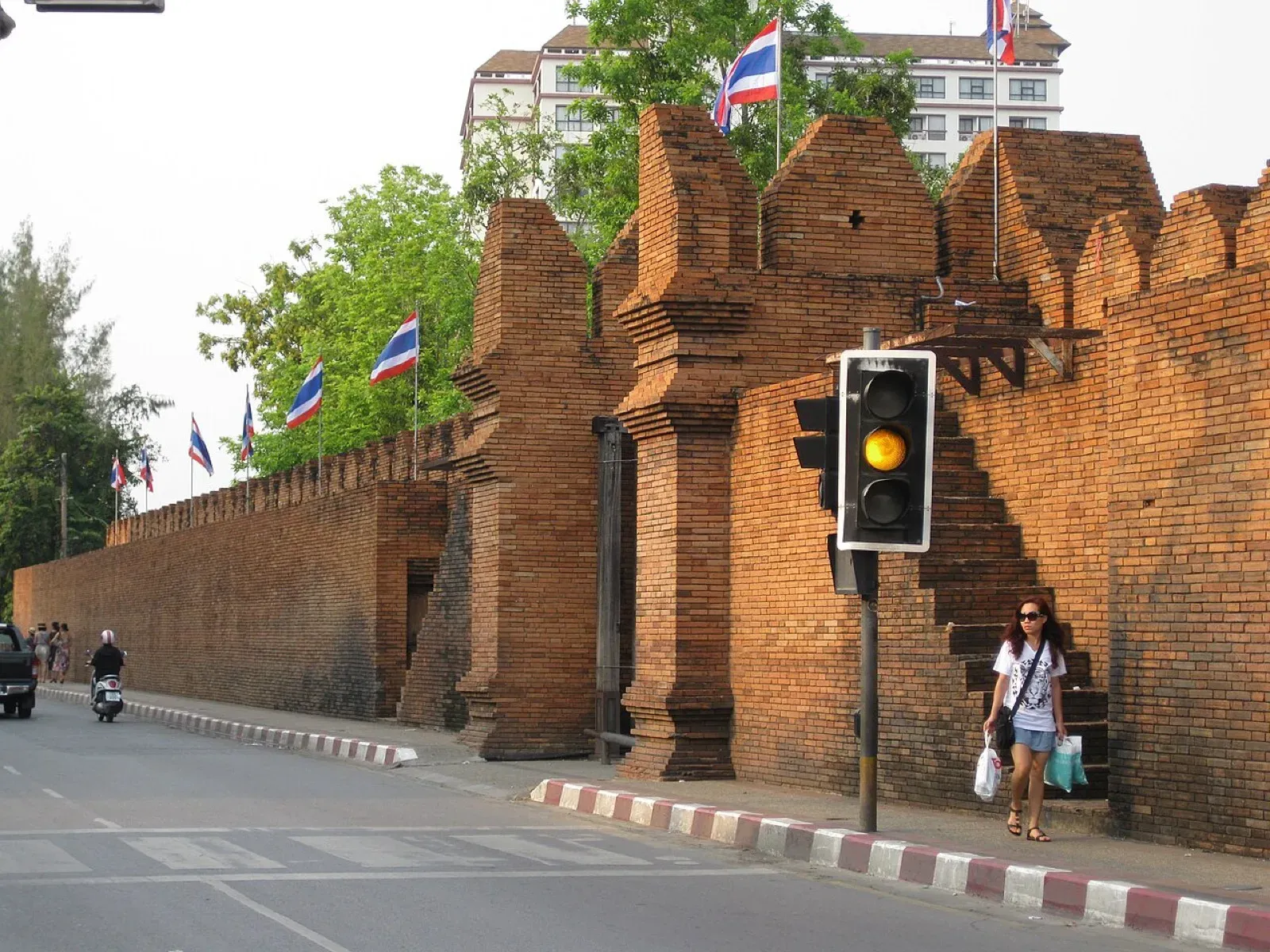
Chiang Mai's old city draws one of the biggest digital-nomad and retiree communities in Thailand.
A single person can live comfortably here on roughly 25,000 to 50,000 baht a month (about 700 to 1,450 US dollars), which is a big part of the draw. The one honest caveat is the annual burning season, usually late in the dry months, when agricultural haze pushes air quality to poor levels and many residents travel elsewhere for a few weeks. Chiang Mai suits remote workers on a visa like the Destination Thailand Visa for remote workers, plus budget-minded retirees weighing up how much you need to retire in Thailand. If you value culture, nature and a gentle cost of living over the beach, Chiang Mai is hard to beat.
Phuket: the island all-rounder
Phuket is the island that manages to be several things at once, which is why its expat community is so broad. It draws remote workers, families, retirees and business owners in roughly equal measure, helped by an international airport, private hospitals, international schools and a genuine year-round social scene. Russians are especially prominent here, alongside strong British, Australian, Scandinavian and, increasingly, Chinese and Indian communities. Different beaches attract different tribes, so where you land on the island matters a lot.
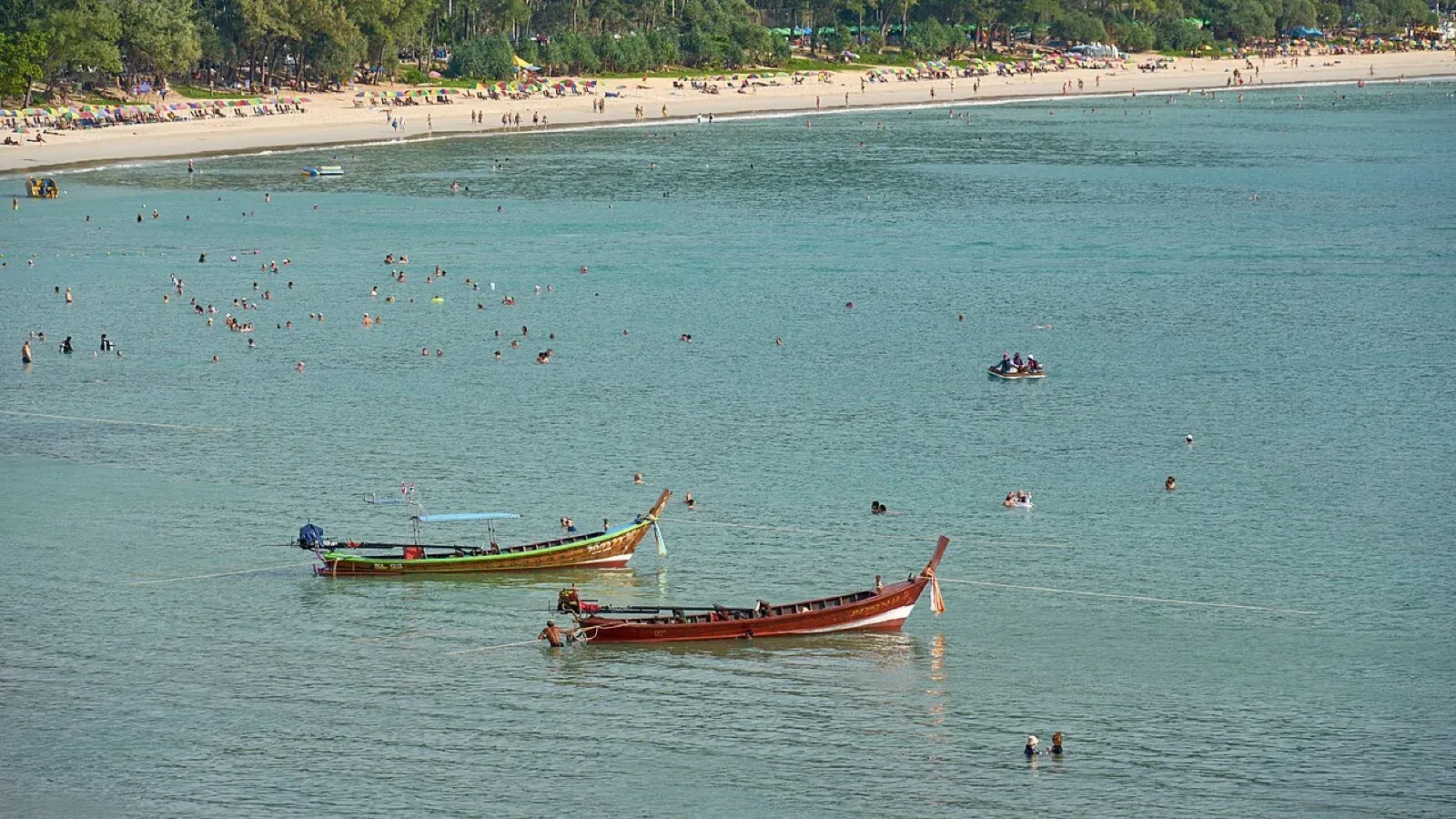
Phuket blends beach life with the infrastructure that draws families, retirees and remote workers.
Rawai and Nai Harn on the south coast pull in families and long-stay couples, Bang Tao and Cherngtalay in the northwest have become the smart, upmarket nomad and family belt, while Patong remains the loud tourist heart that most residents visit but few choose to live in. Our guides on the best areas to live in Phuket and where to base yourself in Phuket break the choice down beach by beach. Costs sit at the higher end for Thailand, commonly 45,000 to 100,000 baht a month (about 1,300 to 2,900 US dollars) for a comfortable single lifestyle, because island logistics and imported goods add a premium. If you want to understand the day-to-day numbers, see what Phuket really costs each month and our take on living in Phuket as a digital nomad. Phuket suits people who refuse to choose between beach life and real infrastructure.
Pattaya and Jomtien: value, convenience and a big retiree scene
Pattaya has one of Thailand's largest and most entrenched Western expat communities, particularly retirees and long-stay men, and it offers unusually good value for a coastal city close to Bangkok. Its reputation for nightlife is well earned, but that is only one slice of a much bigger picture: modern condos are cheap, hospitals are good, and the drive to the capital and its airports takes only a couple of hours. Neighbouring Jomtien is the quieter, more residential and more family-friendly side of the same bay, popular with couples and those who want the beach without the bar strip.
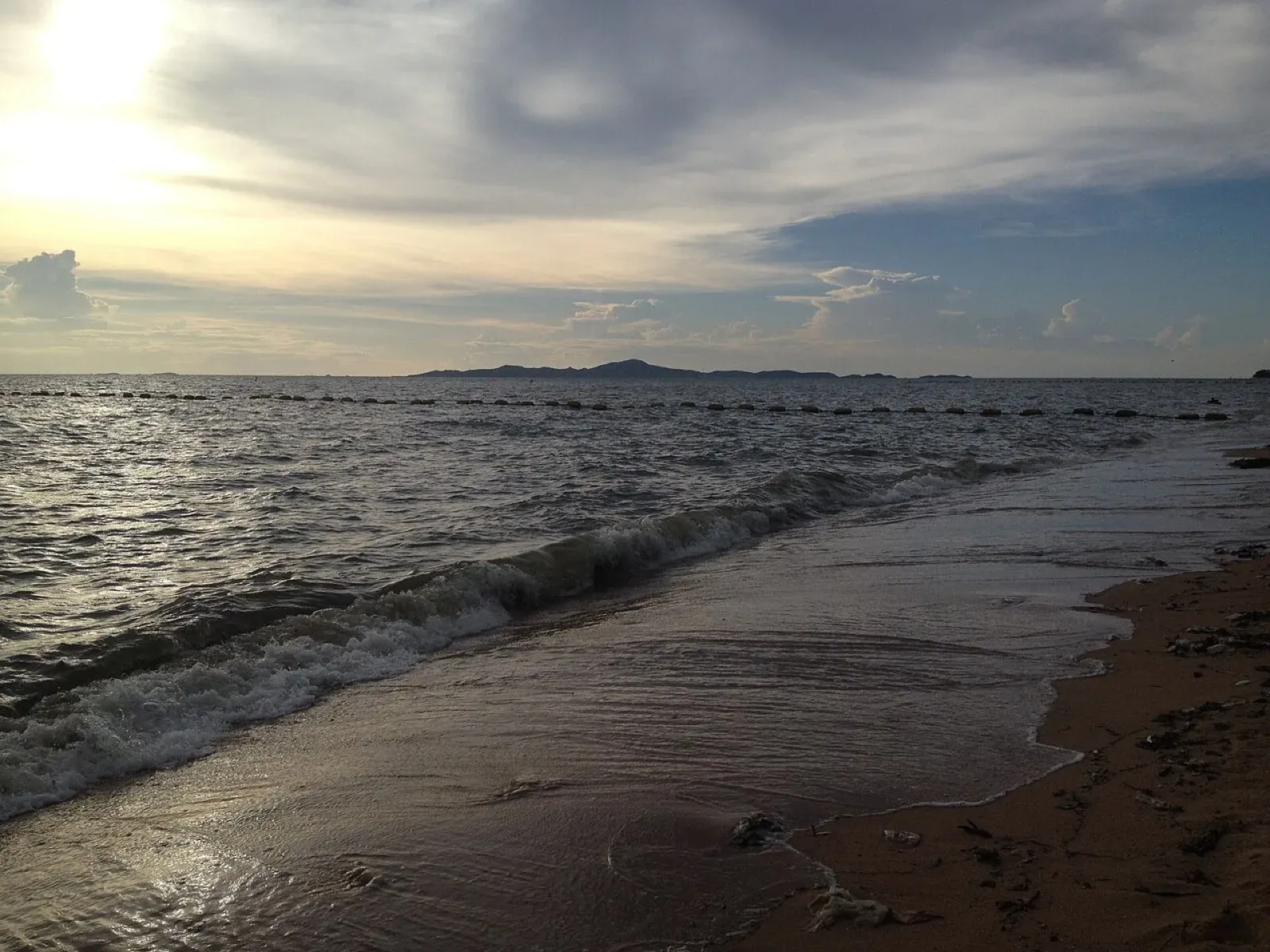
Jomtien and Pattaya host one of Thailand's largest and best-value retiree communities.
The community skews British, American, German, Scandinavian and Russian, with a large contingent of retirees on fixed incomes who appreciate how far their money goes. A comfortable single-person budget commonly runs from about 35,000 to 70,000 baht a month (roughly 1,000 to 2,000 US dollars). Pattaya and Jomtien suit retirees and long-stayers who want low costs, easy Bangkok access and a ready-made social scene, and who are relaxed about the city's brasher reputation.
Hua Hin: the calm retiree favourite
Hua Hin is the quietly civilised retiree town, a former royal-resort on the Gulf coast that trades nightlife for golf courses, gentle beaches and a slower pace. It has long attracted a notably European crowd, with strong Scandinavian, German and British communities, plus a steady stream of Thai-Bangkok weekenders that keeps the town feeling lived-in rather than touristy. Families like it too, thanks to international schools and a safe, walkable feel.
Because it is on the mainland and only about three hours from Bangkok, Hua Hin avoids the island price premium. A comfortable single-person budget commonly falls between 30,000 and 60,000 baht a month (about 850 to 1,750 US dollars). It is a classic landing spot for people arriving on a Thailand retirement visa, drawn by the calm and the healthcare. Hua Hin suits retirees and families who want beach-town peace, good medical care and an easy road back to the capital, and who are happy to swap Phuket's buzz for something more sedate.
Koh Samui: island life for remote workers and retirees
Koh Samui is smaller and more laid-back than Phuket, but its expat community has grown steadily as remote work has spread. Bophut, Fisherman's Village, Maenam and Lamai host most of the long-stay foreigners, a mix of remote workers, entrepreneurs running location-independent businesses, and retirees who want a genuinely tropical, unhurried base. The island feel is stronger here than on Phuket, with fewer big roads and a more resort-like rhythm.
That island character comes at a cost. Almost everything is shipped in, so groceries, fuel and rent carry a premium, and a comfortable single-person budget commonly runs from about 40,000 to 80,000 baht a month (roughly 1,150 to 2,300 US dollars). Healthcare and international schooling exist but are more limited than in Bangkok or Phuket, and the rainy season can be pronounced, so it pays to scout in different months, much as you would when weighing up the the best time to visit Phuket to scout. Koh Samui suits remote workers and retirees who want a smaller, prettier island and accept the trade-offs in price and services.
Isaan and Udon Thani, plus Krabi: the quieter edges
Beyond the headline hubs sit two very different kinds of quieter community. In the northeast, the Isaan region and its main city Udon Thani host a large, low-profile expat population, often Western men married to Thai partners, along with a notable American presence with roots in the region's history. It is comfortably the cheapest option covered here, with a comfortable single-person budget frequently in the 20,000 to 40,000 baht a month range (about 580 to 1,150 US dollars). Life is authentically Thai, far from the tourist trail, which is exactly the appeal for some and the drawback for others.
On the Andaman coast, Krabi offers a smaller, more relaxed alternative to Phuket, with dramatic limestone scenery, a slower pace and a modest but friendly foreign community around Ao Nang. It suits people who want the beach and nature without the crowds or the price. If you are torn between the two Andaman options, our comparison of Phuket compared with Krabi lays out the trade-offs. A comfortable single-person budget in Krabi commonly runs from about 30,000 to 55,000 baht a month (roughly 850 to 1,600 US dollars).
Rough cost of living by hub
Cost is usually the deciding factor, and the gap between hubs is real. The cheapest bases are inland and off the coast; the priciest are the islands, where imports and logistics add a premium. To put the Phuket versus Chiang Mai question in numbers, Numbeo data suggests you would need roughly 84,000 baht in Chiang Mai to match the lifestyle that around 120,000 baht buys in Phuket, a sizeable difference driven mostly by rent and imported goods.
The table below gives rough, comfortable single-person monthly budgets. They are estimates, not quotes, and your own number will swing with rent, how often you eat out, and whether you run a car or a scooter. Couples do not pay double: shared rent means two people usually live well on roughly 1.5 times a single budget. Moving money efficiently matters too, so it is worth reading up on the cheapest way of sending money to Thailand before you commit, and cross-checking the island figures against what Phuket really costs each month.
| Hub | Rough monthly cost, single (THB / USD) | Relative price |
|---|---|---|
| Udon Thani / Isaan | 20,000 to 40,000 / 580 to 1,150 | Cheapest |
| Chiang Mai | 25,000 to 50,000 / 700 to 1,450 | Low |
| Hua Hin | 30,000 to 60,000 / 850 to 1,750 | Low to mid |
| Krabi | 30,000 to 55,000 / 850 to 1,600 | Low to mid |
| Pattaya / Jomtien | 35,000 to 70,000 / 1,000 to 2,000 | Mid |
| Koh Samui | 40,000 to 80,000 / 1,150 to 2,300 | Higher (island) |
| Bangkok | 40,000 to 90,000 / 1,150 to 2,600 | Higher |
| Phuket | 45,000 to 100,000 / 1,300 to 2,900 | Highest (island) |
Hub comparison at a glance
Here is the whole shortlist in one view. Expat-size labels are relative, not exact counts, because there is no official register of foreign residents by city. Read them as "how big and visible the community feels" rather than a headcount.
| Hub | Est. expat community | Who it suits | Rough monthly cost (single) | Vibe |
|---|---|---|---|---|
| Bangkok | Very large | Professionals, families, Japanese community | 40,000 to 90,000 THB | Fast, international, big-city |
| Chiang Mai | Large | Digital nomads, budget retirees | 25,000 to 50,000 THB | Creative, calm, affordable |
| Phuket | Large | Nomads, families, retirees, business owners | 45,000 to 100,000 THB | Beach plus real infrastructure |
| Pattaya / Jomtien | Large | Retirees, long-stayers, value seekers | 35,000 to 70,000 THB | Convenient, lively, cheap condos |
| Hua Hin | Medium | Retirees, European crowd, families | 30,000 to 60,000 THB | Quiet, civilised, golf and beach |
| Koh Samui | Medium, growing | Remote workers, retirees | 40,000 to 80,000 THB | Small-island, resort pace |
| Udon Thani / Isaan | Medium, low-profile | Thai-family expats, budget-focused | 20,000 to 40,000 THB | Authentic, off the tourist trail |
| Krabi | Small | Nature lovers, quiet-beach seekers | 30,000 to 55,000 THB | Scenic, relaxed, uncrowded |
Who each hub suits: retirees, nomads and families
The best base depends far more on who you are than on which city is objectively "best". Matching the hub to your stage of life is the single most useful thing you can do.
- Retirees. Hua Hin, Chiang Mai, Pattaya and Jomtien, and Udon Thani are the classic retiree hubs, balancing cost, healthcare and a ready-made social scene. Most arrive on a retirement visa, so it helps to plan around both the visa rules and the sums involved in retiring here. Phuket works too if the budget stretches.
- Digital nomads and remote workers. Chiang Mai and Phuket lead, with Bangkok and Koh Samui close behind. The Destination Thailand Visa for remote workers has made longer, legal stays far easier for this group.
- Families. Bangkok, Phuket and Hua Hin offer the strongest international schools and hospitals. Families with a Thai partner often settle wherever that partner's roots are, and many navigate the process of getting married in Thailand along the way.
Read against your own priorities, the shortlist usually narrows to two or three candidates very quickly.
How to choose your Thai base
Once you have a shortlist, a simple checklist turns a vague preference into a decision. Run each candidate hub through the same questions and the winner tends to reveal itself.
- Budget. Be honest about your comfortable monthly number, then match it to the cost table above rather than to the glossy version of a place.
- Climate and air. Islands are humid year-round; the north is cooler but has a burning season; the Gulf and Andaman coasts have opposite rainy seasons.
- Healthcare. Bangkok and Phuket have the deepest private-hospital networks. Wherever you land, sort out health insurance for expats in Thailand early.
- Community and language. A bigger foreign community means an easier soft landing, but a smaller one pushes you to integrate faster.
- Admin. You will need to open a Thai bank account and keep a visa valid, so factor in the local immigration office and banking friction.
Above all, scout before you commit. Rent short-term in your top choice for a month or two, ideally in different seasons, before signing anything long or buying a condo in Thailand. The base that looks best on paper is not always the one that feels like home.
Honest trade-offs of expat-hub life
Living where the biggest expat communities in Thailand cluster is easier, but it is not free of friction, and it is worth going in with eyes open. Visa and reporting admin is a constant background task, from 90-day reporting to annual renewals, and it does not get much simpler no matter how long you stay. Seasonality is real: the burning months in the north, the monsoon on the islands, and the high-season crowds that can make a favourite spot feel over-touristed for part of the year.
There is also a comfort trap. It is genuinely easy to live in an English-speaking bubble in the big hubs and never really connect with Thai life, which some people love and others come to regret. Smaller places force more integration but offer fewer services and a thinner safety net if things go wrong. None of this is a reason to stay away; it is simply the honest other side of a very good deal. Go in informed, pick the hub that matches your real priorities, and Thailand rewards the effort.
Frequently asked questions
What part of Thailand has the most expats?
Bangkok has by far the largest and most diverse expat community, spread along the Sukhumvit corridor and anchored by big professional, Japanese and family populations. After the capital, Chiang Mai, Phuket and the Pattaya and Jomtien area host the next biggest concentrations of foreign residents.
How many expats actually live in Thailand?
There is no official count, so estimates vary widely. United Nations migrant-stock data suggests around 3.18 million foreign-born residents, though most are migrant workers rather than Western expats. Estimates of the total foreign population commonly land between 2.2 and 4 million, roughly 5 to 6 percent of Thailand.
Where do most Americans retire in Thailand?
American retirees are most visible in Chiang Mai, Pattaya and Jomtien, Hua Hin and the Udon Thani area of Isaan, with Phuket popular among those with bigger budgets. The choice usually comes down to cost, climate and whether they want a beach, a city or a quieter Thai town.
Which nationalities are the biggest expat communities?
Reporting from InterNations points to British, American, Australian, Japanese and Indian nationals as the largest groups. The Japanese community is especially large in Bangkok, while Russians are very prominent in Phuket and Pattaya, and Chinese and Indian numbers have grown quickly.
Is it cheaper to live in Phuket or Chiang Mai?
Chiang Mai is clearly cheaper. Numbeo data suggests you would need around 84,000 baht there to match the lifestyle that about 120,000 baht buys in Phuket. Island logistics, imported goods and higher rents make Phuket one of the pricier bases in the country.
Is 3,000 US dollars a month enough to live in Thailand?
Yes, comfortably in most hubs. In Chiang Mai, Hua Hin or Udon Thani, 3,000 US dollars a month funds a very comfortable single lifestyle with room to spare. Even in pricier Bangkok and Phuket it covers a good standard of living for one person, and a decent one for a couple.
Where do expats live within Bangkok?
Most cluster along the Sukhumvit line, from Asok and Phrom Phong through Thonglor and Ekkamai, plus Ari and the riverside. Phrom Phong is the heart of the Japanese community, while Thonglor and Ekkamai draw younger professionals and families who want cafes, schools and easy transport.
What is the biggest downside to living in Thailand?
For most long-stay foreigners it is the ongoing visa and reporting admin, which never fully goes away. Seasonal issues, the northern burning season and the island monsoon, and the risk of never integrating beyond an expat bubble are the other common complaints. None are dealbreakers, but they are worth planning for.
Do I need to speak Thai to live in these hubs?
Not to get by. In the big expat hubs you can manage daily life in English, and many long-term residents do. That said, learning some Thai makes everything smoother and opens up friendships and areas beyond the foreigner bubble, and it matters much more in smaller places like Isaan.
Sources
- Macrotrends, Thailand Immigration Statistics (UN data)
- Allianz Care, expat guide to living in Thailand
- APRIL International, best places to live in Thailand for expats
- InterNations, moving to Thailand guide
- Ministry of Foreign Affairs of Japan, Japan and Thailand basic data
- William Russell, guide to living in Thailand as an expat
- ResearchGate, foreigners obtaining retirement and long-stay visas in Thailand
- Thailand Board of Investment, Long-Term Resident (LTR) Visa
- Numbeo, cost of living database
- Expatica, best cities in Thailand for expats
- World Population Review, American expats by country
- Bangkok Post, Focusing on foreigners (foreign workforce)
- Bangkok Post, 7,600 Russians seek to extend Phuket stay
- Embassy of India, Bangkok, Indian community in Thailand
About this guide
This guide was researched and written by the Thailand Stuff editorial team, who live in and cover Phuket. We research our guides against current on-the-ground prices, listings and reputable cost-of-living and population data, and review them regularly to keep figures current. Population and cost figures for foreign residents in Thailand are inherently uncertain: there is no single official register of expats by city, so every number here is an attributed estimate or range, not a hard fact. This is general information to help you plan, not immigration, financial or legal advice; for your own situation, check the official Thai Immigration Bureau guidance and speak to a qualified professional before you commit. Last reviewed 6 August 2026.
继续阅读
 News
NewsA Thai senator has proposed letting foreigners own 100% of a business in Thailand to end the nominee system. Here is what was said and what it could mean.
 Practical
2026 年的实话实说:大多数泰国银行拒绝为 DTV 签证持有人开立新账户。解释为什么会这样、什么行不通,以及切实可行的替代方案。
 Practical
游客在泰国如何付款?客观对比 Wise 与国内银行卡、开泰银行(KBank)预付费 Visa 卡、现金以及 ATM 手续费,无需泰国银行账户。