
Dirt bike trails in Phuket: where to ride enduro and off-road
Where to ride dirt bikes and enduro in Phuket: the real trails and areas, how hard they are, when to ride in green vs dry season, and where to rent a bike.
Thailand Stuff Editorial Team
Researched and fact-checked against on-the-ground prices and reputable data · 6 Aug 2026 · 阅读需 21 分钟

Dirt bike trails in Phuket: where to ride enduro and off-road
Yes, there are real dirt bike trails in Phuket, and they are better than most visitors expect from a beach island. Behind the resorts sits a spine of forested hills, and threaded through it is a network of red-earth tracks, rubber-plantation roads and jungle singletrack that riders reach on enduro bikes almost every day of the year. This guide is the practical companion to our riding guides: it maps where the off-road riding actually is, how hard each area gets, when to ride in the green season versus the dry season, where to rent a proper trail bike, and how to stay safe. If you want the wider picture first, our full enduro in Phuket guide covers the scene end to end.
Can you ride dirt bikes in Phuket?
Yes. Off-road riding is well established in Phuket, and dirt bikes are ridden legally on the island's forest tracks, plantation roads and a couple of private motocross areas. What you cannot do is treat the trails like a public road network with signs and right of way. Many of the best routes cross rubber and palm plantations, forestry land, or ground that belongs to someone, so access depends on being respectful and, in a few cases, riding with a guide or operator who has an arrangement with the landowner.
The riding falls into three broad buckets. There is genuine jungle enduro on rough hill trails, mellow plantation and fire-road riding that a confident beginner can handle, and a small amount of closed-circuit motocross. Almost everyone rides four-stroke trail bikes such as the Honda CRF, with tougher two-stroke and KTM machines used on the harder guided routes. If you already ride a scooter around town and want to understand the road side of licences and rentals, our guide on how to rent a scooter in Phuket is a useful primer before you graduate to the dirt.
Where the off-road riding actually is
Phuket's off-road riding is concentrated in the hilly interior and the western hills, not on the flat coastal strip where the hotels sit. The single most productive zone is the Kathu and Kamala hill belt in the middle-west of the island, where the terrain climbs quickly from sea level into steep, wet forest. This is where the majority of the trails, tour operators and rental shops are based, and it is within twenty minutes of Patong, Kamala and Kata.
Four areas cover almost everything worth riding. The Kathu and Patong hills hold the most famous routes and the steepest climbs. The Kamala hills to the north offer everything from gentle hillside loops to a serious full-day jungle expedition. The Chalong and Big Buddha area in the south-centre gives longer, mixed loops with big views. And the Nai Harn and Rawai hills at the southern tip have shorter, quieter tracks that suit lighter days. Because the island is small, you can base yourself almost anywhere and reach a trailhead quickly, which is part of what makes Phuket such an easy place to ride off-road.
The trails, area by area
Phuket has more than a dozen mapped off-road routes, and the honest truth is that they range from beginner-friendly hillside loops to expedition-grade jungle that only very experienced riders should attempt. The table below is an at-a-glance view of the main trails, with distance, difficulty and a link to the full route page, elevation profile and GPS track for each. Use it to match a route to your ability before you commit.
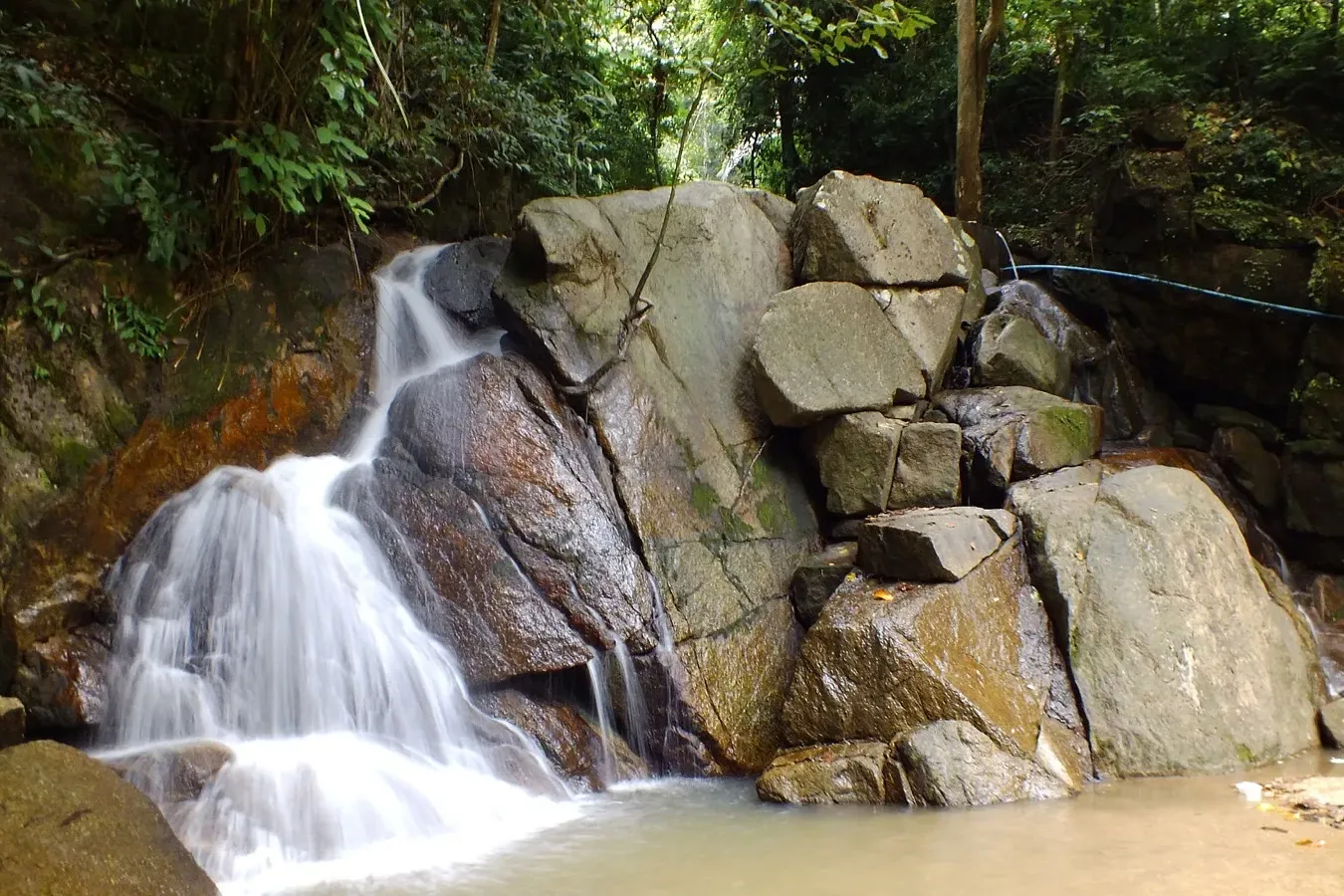 The Kathu Waterfall Loop is one of the most accessible dirt bike trails in Phuket, close to Patong and rideable for improving riders.
| Trail | Distance | Difficulty | Activity | Route page |
|---|---|---|---|---|
| Kathu Waterfall Loop | 11.8 km | Moderate | Enduro | Kathu Waterfall Loop |
| JunJaow Trail | 1.8 km | Hard | Enduro | JunJaow Trail |
| Radar Hill Loop | 11.5 km | Hard | Enduro | Radar Hill Loop |
| Durian Chum Viewpoint | 7.3 km | Hard | Enduro | Durian Chum Viewpoint |
| Kamala Hillside Trail | 7.9 km | Easy | Enduro | Kamala Hillside Trail |
| Ban Manik Hill Loop 3 | 7.6 km | Moderate | Enduro | Ban Manik Hill Loop 3 |
| Kamala to Bang Niau Dam | 16.6 km | Hard | Enduro | Kamala to Bang Niau Dam |
| Chalong Dam to Big Buddha Loop | 12.9 km | Hard | Enduro | Chalong Dam to Big Buddha Loop |
| Kata Loop to Big Buddha | 4.9 km | Moderate | Enduro | Kata Loop to Big Buddha |
| Black Rock Loop | 7.8 km | Moderate | Enduro | Black Rock Loop |
| Hillside North of Nui Beach | 7.2 km | Easy | Enduro | Hillside North of Nui Beach |
Kathu and Patong hills
This is the heart of Phuket enduro, and the closest riding to the Patong nightlife strip. The moderate Kathu Waterfall Loop is the friendly introduction, an 11.8 km circuit that starts near the waterfall and climbs on plantation tracks with a few rocky, rooty sections to keep you honest. Step up from there and the area gets serious fast. The short but brutal JunJaow Trail is only 1.8 km yet graded hard for its steep, loose climb, and the Radar Hill Loop and Durian Chum Viewpoint are proper hard routes with real exposure and technical climbing. Ride the easy stuff here first and earn the hard trails.
Kamala hills
The Kamala hills to the north hold the widest spread of difficulty on the island. Beginners and improvers love the easy Kamala Hillside Trail, a 7.9 km loop that gives you jungle scenery without the fear, and the Ban Manik hill loops add moderate climbing when you want more. At the far end of the scale sits the Kamala to Bang Niau Dam route, a 16.6 km out-and-back with over 700 metres of climbing that is faint, overgrown in places and genuinely wild. Treat that last one as a full-day expedition for experienced, self-sufficient riders only, with a GPS track and plenty of water.
Chalong and Big Buddha
The south-central hills around Chalong and the Big Buddha give you longer mixed loops with the island's best viewpoints. The Chalong Dam to Big Buddha Loop is a hard 12.9 km route that strings together dam tracks and hill climbs, while the shorter Kata Loop to Big Buddha is a moderate way to reach the same landmark on dirt. These routes reward a bit of fitness and a bike with decent low-end torque, and they are a great choice on a clear morning when the haze has lifted off the coast.
Nai Harn and Rawai south
At the quiet southern tip, the tracks are shorter and generally gentler. The easy Hillside North of Nui Beach loop and the moderate Black Rock Loop are good half-day options, especially if you are based around Rawai or Nai Harn and do not want to ride across the island to Kathu. They also make sensible warm-up rides on your first day, before you tackle the steeper Kathu and Kamala trails.
How hard are Phuket's trails, and what bike you need
Phuket's trails run from easy plantation loops a confident beginner can enjoy to hard jungle routes that demand real off-road skill, so match the trail to your ability rather than your ambition. The difficulty grading on each route page is honest: easy means rideable ground with a few rough patches, moderate means sustained climbs and technical sections, and hard means steep, loose, exposed or faint terrain where mistakes have consequences.
The bike matters as much as the grading. The workhorse of Phuket off-road riding is the Honda CRF, in 250 and 300 forms, a forgiving four-stroke that handles everything from the Kathu Waterfall Loop to most hard trails. Smaller machines such as the Kawasaki KLX suit lighter riders and easier loops. The hardest routes and the guided extreme rides often use two-stroke KTM and Husqvarna enduro bikes, which are lighter and more capable but far less forgiving of a novice. There is also a small motocross scene on private tracks for riders who want to lap a circuit rather than explore, which is a different discipline from trail riding.
- New to dirt. Start on easy loops such as the Kamala Hillside Trail on a CRF250 or KLX, ideally with a guide for the first outing.
- Confident trail rider. A CRF300L opens up the moderate routes and the easier hard trails.
- Experienced enduro rider. A KTM or Husqvarna two-stroke and the hard Kathu, Kamala and Chalong routes will keep you grinning.
When to ride: green season versus dry season
The best time for dependable, lower-risk off-road riding in Phuket is the dry season, roughly December to April, when the trails firm up and the river crossings drop. The island's wet, green season runs with the southwest monsoon from around May to October, according to the Thai Meteorological Department, and it changes the riding completely. This is the single biggest planning decision you will make, so it is worth understanding both sides.
In the dry season the ground is grippy, the faint jungle trails are easier to follow, and beginners have a far more forgiving experience. It is also the busiest and priciest time to visit the island generally, as our best time to visit Phuket guide explains, so book bikes and tours ahead. The green season is the opposite: fewer crowds, lush scenery, and mud. Many enduro riders actively prefer it, because deep ruts, slick clay and real river crossings turn a moderate loop into an adventure. The trade-off is that trails overgrow, hard routes such as Kamala to Bang Niau Dam become dangerous or impassable, and a slip has bigger consequences.
- December to April (dry). Best for beginners and for the hard, faint trails; grippy ground, lower rivers, clearer navigation.
- May to October (green). Mud, atmosphere and fewer people; fun for experienced riders, but skip the hardest routes and always check the forecast.
Whichever season you choose, check the rain radar the morning of your ride. A sunny start can turn into a wall of monsoon rain within an hour, and a dry-looking clay climb becomes a skating rink the moment it gets wet.
Where to rent a dirt bike and what it costs
You rent a dirt bike in Phuket from a specialist off-road shop rather than a beachfront scooter stand, and most will deliver a trail-ready machine to your hotel. Expect to leave a deposit or your passport as security, and to sign for the bike's condition. Prices vary with the machine and the season, but a proper trail bike costs several times what a town scooter does, which reflects the wear that off-road use inflicts. Our dedicated dirt bike rental in Phuket guide goes deeper on shops, deposits and insurance.
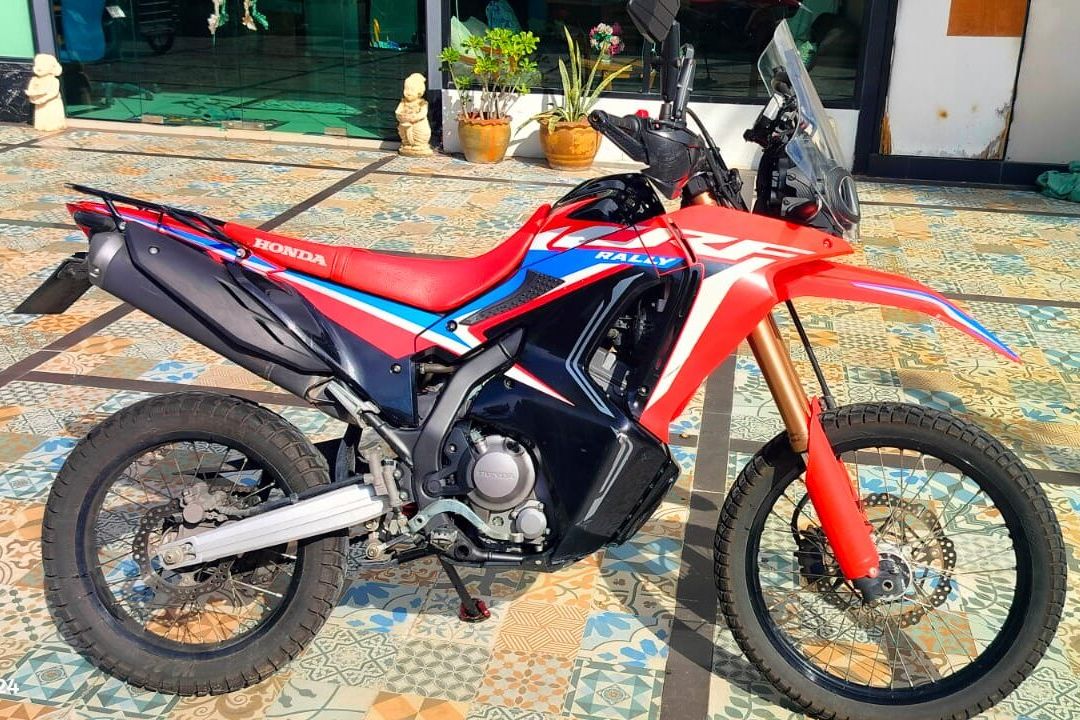 A trail-ready CRF is the standard rental for Phuket off-road riding, hired by the day from specialist shops.
| Option | Typical bike | Rough day rate (THB) | Best for |
|---|---|---|---|
| Self-ride rental | Honda CRF250 / CRF300L | 1,200 to 2,500 | Confident riders who can navigate solo |
| Premium enduro rental | KTM / Husqvarna two-stroke | 2,500 to 4,000+ | Experienced enduro riders |
| Guided ride (bike included) | CRF or KTM plus gear and guide | 3,500 to 5,500+ | First-timers and visitors short on time |
Two well-reviewed places to start are Phuket CRF Off-Road and Enduro Rentals in the Patong area, which specialises in trail-ready CRF machines, and Motorbike Rental Station Phuket, which offers free delivery around Kathu. Book ahead in the dry season, confirm exactly what deposit and insurance apply, and photograph the bike before you leave so there is no argument over existing scratches when you return it.
Guided versus solo: which is right for you
If you are new to Phuket or new to dirt, ride guided first; if you are an experienced enduro rider who can read terrain and navigate, solo unlocks the freedom of the island. There is no wrong answer, only the honest one about your own skill and local knowledge. The trails are not signposted, several cross private or forestry land, and a wrong turn on a hard route can leave you stranded in jungle with no phone signal.
A guided ride solves all of that. Operators supply the bike, full gear and a leader who knows which trails are open, which are flooded, and where the landowner is relaxed about access. That local knowledge is worth a lot, and it is why even competent riders often book a guide for their first outing to learn the lay of the land. Riding solo suits you when you can already handle the terrain, you have downloaded the GPS track from the route page, and you are comfortable being self-sufficient. Community-mapped tracks on platforms such as Wikiloc are a useful backup, but treat every track as a guide, not gospel, because trails change with every wet season.
- Choose guided if you are a beginner, short on time, riding in the green season, or want to attempt a hard route safely.
- Ride solo if you are an experienced off-road rider, riding easy or moderate trails, in the dry season, with a GPS track and a riding buddy.
Getting to the trailheads
Most Phuket trailheads sit in the hills a short ride inland from the west-coast beaches, so getting to them is quick but rarely on a straight road. From Patong, the Kathu trails are barely fifteen minutes away; from Kamala, the Kamala hill routes start almost at your doorstep; and the Chalong and Big Buddha loops are central enough to reach from Kata or Rawai in well under half an hour. If you are still working out how to move around the island generally, our getting around Phuket guide covers taxis, Grab and car hire.
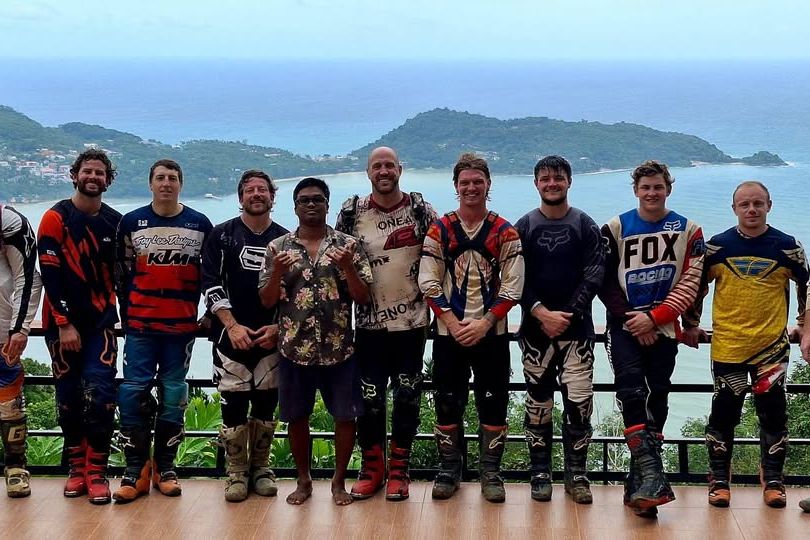 Hill cafes such as JunJaow make natural meeting points and trailheads for a day of off-road riding in Phuket.
Ride your dirt bike to the trailhead rather than trailering it, since the roads up into the hills are part of the fun and give you a warm-up. Plenty of riders build a day around a hill cafe: JunJaow Camping and Restaurant sits right by its namesake trail and makes a good base, and Ta Yong Garden Cafe is a relaxed spot to regroup after a loop. Save the GPS track to your phone before you leave, screenshot the first few junctions in case you lose signal, and tell someone your rough plan and return time.
Safety: helmets, licences, insurance and the honest risks
Riding in Thailand carries real risk, and it would be dishonest to pretend otherwise, so treat safety as the price of entry rather than an optional extra. Thailand has one of the highest rates of motorcycle-related road deaths in the world, with roughly 22,000 such deaths a year, according to the World Health Organization. Off-road riding removes the traffic but adds terrain, so the rule is simple: gear up, ride within your limits, and never make Phuket the place you learn to ride a motorbike for the first time.
A helmet is legally required and, far more importantly, is the single thing most likely to save your life. For trail riding wear a proper off-road helmet with goggles, plus gloves, boots and ideally body armour, all of which good rental shops and tour operators provide. On the paperwork side, you should hold a motorcycle licence from home plus an International Driving Permit with the motorcycle category, which is recognised for driving in Thailand under the rules published by the Department of Land Transport; our guide on the Thai driving licence for foreigners explains the longer-term options. Confirm that your travel insurance actually covers motorcycle riding, because many policies exclude it or require a valid licence, and off-road riding is a further grey area worth checking in writing.
- Always wear a helmet. Add goggles, gloves, boots and body armour for the trails.
- Ride within your skill. Drop down a difficulty grade when the ground is wet.
- Check your insurance. Confirm motorcycle and off-road cover in writing before you ride.
- Never ride impaired. Alcohol and dirt trails do not mix.
Respecting the trails, the locals and the jungle
The trails stay open because riders treat them with respect, so ride like a guest, not an owner. A large share of Phuket's routes cross rubber and palm plantations, forestry land and ground that belongs to local families, and access is a courtesy that can be withdrawn. A handful of thoughtless riders churning up a plantation or roaring past a house at dawn can close a trail for everyone.
Keep the noise down near homes and temples, slow right down for people, dogs and livestock, and never ride through planted crops or leave gates open. Pack out everything you bring in, avoid riding fragile or eroded ground when it is soaking wet, and give way to hikers and farm vehicles. Phuket's jungle also holds real wildlife, including snakes, so stay on the established line rather than blazing new trails. Riding responsibly is not just etiquette; it is what keeps these dirt bike trails in Phuket rideable for the next person.
What to pack for a day of off-road riding
Pack for heat, mud and the chance that a short loop turns into a long day. Phuket's hills are hot and humid, help can be far away, and a small mechanical or a wrong turn can add hours, so a little preparation goes a long way. Guided riders can travel lighter because the operator carries tools and water, but solo riders should be self-sufficient.
- Water and snacks. More than you think, especially on hard or long routes.
- Phone with the GPS track downloaded. Plus a power bank and a waterproof pouch.
- Basic tools and a tube or repair kit. Punctures happen on rocky trails.
- Rain layer and dry bag. The green season delivers sudden downpours.
- Cash. For fuel, a cafe stop and any small access fees.
- Sun protection and basic first aid. Cuts and grazes come with the territory.
Your first week of riding off-road in Phuket
Build up gradually, and your first week of off-road riding in Phuket will be the best part of the trip rather than a trip to the clinic. Start with an easy loop such as the Kamala Hillside Trail or the Hillside North of Nui Beach to get a feel for the bike and the ground. Add a moderate route such as the Kathu Waterfall Loop once you are comfortable, then attempt a hard trail only when the easier ones feel routine and the conditions are dry.
The smartest move for most visitors is to book a guided ride early in the trip. You will learn which trails suit you, pick up local knowledge on access and conditions, and meet people who ride the island regularly, all of which makes any later solo rides safer and more fun. When you want the full context on operators, bikes and the riding culture, our enduro in Phuket guide is the natural next read, and the individual route pages give you the elevation profiles and GPS tracks to plan each day.
Frequently asked questions
Can you ride dirt bikes in Phuket?
Yes. Phuket has an established off-road scene with more than a dozen trails in the Kathu, Kamala, Chalong and Nai Harn hills. Riders use enduro bikes on forest tracks, plantation roads and a little private motocross ground, though many routes cross private land, so access depends on riding respectfully.
Where can you ride a dirt bike in Phuket?
The main off-road areas are the Kathu and Patong hills, the Kamala hills, the Chalong and Big Buddha area, and the Nai Harn and Rawai south. Popular routes include the Kathu Waterfall Loop, the JunJaow Trail and the Kamala Hillside Trail, each with a route page, elevation profile and GPS track.
Do you need a licence to ride off-road in Phuket?
You should hold a motorcycle licence from home plus an International Driving Permit with the motorcycle category, which Thailand recognises. Guided operators may let you ride on private trails without one, but for anything on or crossing public roads a valid licence and permit are expected and protect your insurance.
How much does it cost to rent a dirt bike in Phuket?
Self-ride trail bikes such as a Honda CRF typically cost around 1,200 to 2,500 THB a day, premium KTM and Husqvarna enduro bikes more. Guided rides that include the bike, gear and a leader usually run from about 3,500 THB upward for a half-day, depending on the operator and route.
What is the best time of year for enduro in Phuket?
The dry season, roughly December to April, is best for dependable riding and for beginners, with grippy ground and lower river crossings. The green season from May to October brings mud and atmosphere that experienced riders love, but the hardest trails can become impassable, so check conditions first.
Can you ride dirt bikes in Phuket's rainy season?
Yes, and many enduro riders prefer it for the mud and river crossings, but it is riskier. Trails overgrow, clay climbs turn slick, and faint hard routes such as Kamala to Bang Niau Dam can be dangerous. Ride easier loops, go with a guide, and always check the rain radar before setting out.
Is it better to ride guided or solo?
Ride guided if you are a beginner, short on time, riding in the green season, or attempting a hard trail, because operators handle bikes, gear, access and navigation. Ride solo only if you are an experienced off-road rider on easier trails, in the dry season, with a downloaded GPS track and ideally a riding buddy.
What bike do you need for Phuket's trails?
A Honda CRF250 or CRF300L handles almost everything, from the Kathu Waterfall Loop to most hard trails, and is the standard rental. Lighter riders may prefer a Kawasaki KLX, while experienced riders on the toughest routes often choose a KTM or Husqvarna two-stroke enduro bike.
Are Phuket's dirt bike trails safe for beginners?
The easy loops, such as the Kamala Hillside Trail and Hillside North of Nui Beach, are suitable for confident beginners, ideally guided at first. The moderate and hard trails are not the place to learn. Thailand's roads are among the world's most dangerous for motorcyclists, so never learn to ride here.
Is a dirt bike or a scooter better for exploring Phuket?
For paved roads and getting around, a scooter is easier and cheaper. For the forest tracks and hill trails covered in this guide, you need a proper dirt bike with knobbly tyres and suspension. Many riders keep a scooter for town and rent a trail bike for dedicated off-road days.
Sources
- World Health Organization, Bangkok road-safety case study (Thailand motorcycle fatality data)
- Thai Meteorological Department (southwest monsoon and season dates)
- Tourism Authority of Thailand (Phuket weather and travel seasons)
- Department of Land Transport, Thailand (driving licence and international driving permit)
- Wikiloc, community-mapped enduro trails in Phuket (GPS tracks)
About this guide
This guide was written and reviewed by the Thailand Stuff editorial team, who live in and cover Phuket. We research our guides against current on-the-ground information, our own trail pages and GPS tracks, and reputable data such as the World Health Organization and the Thai Meteorological Department, and we review them regularly to keep the details current. It is general information for planning, not professional riding instruction or a substitute for local advice, and off-road riding carries real risk, so ride within your ability, wear proper gear, and confirm your own licence and insurance before you ride. Last reviewed August 2026.
继续阅读
 News
NewsA Thai senator has proposed letting foreigners own 100% of a business in Thailand to end the nominee system. Here is what was said and what it could mean.
 Practical
2026 年的实话实说:大多数泰国银行拒绝为 DTV 签证持有人开立新账户。解释为什么会这样、什么行不通,以及切实可行的替代方案。
 Practical
游客在泰国如何付款?客观对比 Wise 与国内银行卡、开泰银行(KBank)预付费 Visa 卡、现金以及 ATM 手续费,无需泰国银行账户。