
Is Starlink legal in Thailand: why you should not use your own kit in 2026
Using your own Starlink in Thailand is illegal: it is not NBTC-licensed, kit gets seized, and you risk confiscation. Here is why, plus the legal ways online.
Thailand Stuff Editorial Team
Researched and fact-checked against on-the-ground prices and reputable data · 6 Aug 2026 · 阅读需 19 分钟

Is Starlink legal in Thailand: why you should not use your own kit in 2026
The short version is the one nobody wants to hear: using your own Starlink in Thailand is illegal, and you should not bring or switch on a personal terminal here in 2026. Starlink is not licensed by Thailand's telecom regulator for general consumer use, so importing, owning or operating one falls foul of Thai radio and telecom law. This is not scare talk. Authorities have seized Starlink equipment from boats and buildings, terminals can be confiscated at the border, and in November 2025 the Thai government formally rejected SpaceX's proposal to operate in the country. This guide explains, in plain English, why Starlink in Thailand is off limits, what actually happens to people who try, the honest nuance around trials and permits, and the legal ways to get fast internet instead. It is general information, not legal advice, so confirm anything critical with the regulator before you act.
The short answer: is Starlink legal in Thailand
No. As of 2026, you cannot legally use your own Starlink terminal in Thailand, because the service is not licensed by the country's National Broadcasting and Telecommunications Commission (NBTC) for general or consumer use. That makes a personal dish unauthorised radio equipment, which is an offence to import, possess or operate. According to Developing Telecoms, Starlink "is not legally available in Thailand, as it has yet to be licenced by the National Broadcasting and Telecommunications Commission." A minority of forum posts claim it became "legal in 2026," but that is not supported by any official source, and the enforcement record points the other way.
Here is the at-a-glance picture of what is and is not allowed:
| Scenario | Status in Thailand | Notes |
|---|---|---|
| Using your own residential or Mini Starlink | Not allowed | No NBTC licence for consumer use; risk of confiscation |
| Bringing a terminal in to use here | Not allowed | Unauthorised radio equipment; can be seized at customs |
| Transiting with a boxed, unused terminal | Grey area | Lower risk if never operated, but no guarantee at the border |
| NBTC-supervised trial or emergency permit | Allowed (conditional) | Only under specific permission; not for individuals |
| Licensed satellite via a Thai operator | Allowed | Thaicom, and Amazon Leo licensed through Thaicom |
| Thai SIM or eSIM, mobile data, home fibre | Allowed | The normal, legal ways to get online |
If you are moving here or planning a long stay, this matters more than you might expect, because reliable internet is central to living in Phuket as a digital nomad and to remote work generally. The good news is that the legal options are cheap and genuinely fast, and we cover them further down.
Why it is illegal: unlicensed radio and telecom equipment
 A personal satellite dish is unauthorised radio equipment in Thailand without an NBTC licence. (Photo via Flickr, CC BY-SA 2.0)
Starlink is illegal to use in Thailand because Thai law requires a licence to operate satellite and radio-communication equipment, and Starlink does not hold one for consumer service. The rules come from telecom and radio-equipment law, chiefly the Radiocommunications Act B.E. 2498 and the Telecommunications Business Act B.E. 2544, both administered by the NBTC. Under that framework, importing, possessing or operating radio-transmitting equipment without permission is an offence, regardless of the brand on the box.
It is not a "Starlink law"
This is an important distinction that a lot of coverage gets wrong. There is no statute in Thailand that names Starlink and bans it. Instead, Starlink is caught by the general requirement that any satellite terminal or radio transmitter be type-approved and licensed. Because SpaceX has no NBTC authorisation to sell or run the service to the public, every personal terminal in the country is unlicensed by definition, and therefore unlawful to use. Think of it the way you would a strong radio jammer or an unregistered transmitter: it is not that one product was singled out, it is that the whole category needs a permit the product does not have. The practical effect is the same, though, which is that your dish is not welcome here.
Foreigners sometimes assume telecom rules are loosely enforced, and in day-to-day life plenty of things are. Satellite transmitters are not one of them, partly because unregulated links have been tied to serious crime, which we come to below. If you want a sense of how Thai officials treat unauthorised equipment more broadly, our guide to your rights if the police search you in Thailand is a useful primer on how these encounters tend to go.
The November 2025 rejection of SpaceX
The clearest signal that consumer Starlink is not coming soon is that Thailand actively turned it down. In November 2025, the Digital Economy and Society (DES) ministry rejected SpaceX's proposal to operate in the country because the company wanted to set up a 100%-foreign-owned entity, which conflicts with Thai foreign-ownership and national-security rules for communications services. As Bangkok Post reported, the minister said 100% foreign ownership of a communication service "raises security concerns."
The government did not leave much wiggle room. Coverage from Thai Examiner noted that the ministry reiterated no exceptions would be made for Starlink, citing national law, security concerns and market integrity, and contrasted the decision with Vietnam, which took a different path. So the reason you cannot buy Starlink from a Thai storefront is not a backlog or a paperwork delay. It is a deliberate policy choice, and until the ownership question is resolved, that choice keeps consumer Starlink out. This is the same protect-the-local-market instinct that shapes many rules foreigners meet here, from media to property, and it is worth understanding if you plan to spend real time among the country's biggest expat communities in Thailand.
Can you actually use it? Roaming, dishes and the Mini
Technically a terminal might connect for a while; legally that changes nothing, and it can stop working anyway. Some travellers arrive with a global roaming plan and find the dish links up at first, because coverage physically reaches the region. That is not the same as it being allowed. Starlink's own support material is explicit that in-motion use on land and in territorial waters requires local government approval and may not be available, and that roaming in unsupported countries is not guaranteed, per Starlink's official support pages. In a country where the service is unlicensed, "it happened to connect" is not a defence if you are caught.
Does the Starlink Mini change anything
No. The Starlink Mini is smaller and easier to pack, which is exactly why people ask about it, but it is the same category of unlicensed radio transmitter in the eyes of Thai law. Its portability makes it more likely to be carried in casually and, frankly, more likely to draw attention if found. Whether it is the residential dish, the high-performance kit or the Mini, the legal status is identical: not authorised, not allowed. Do not treat the Mini as a quiet workaround, because it is not one. If your goal is simply to stay connected while you move around, our guide to getting around Phuket and a local SIM will serve you far better and keep you on the right side of the law.
Bringing a Starlink through customs
Do not bring a Starlink terminal into Thailand intending to use it, because it can be confiscated at the border as unauthorised radio equipment. Customs and telecom rules treat satellite transmitters as controlled items, and travellers have reported having a Mini taken on entry. There is a difference, at least in theory, between transiting through the country with a boxed terminal you never switch on and importing one to operate, and some people have moved kit onward without incident. But that is a grey area you are relying on the discretion of an officer to resolve in your favour, and there is no guarantee it will go your way.
The honest advice is simple. If you are visiting on a normal Thailand tourist visa or exemption, leave the Starlink at home. If you are relocating with a household of belongings, do not assume a satellite dish will pass unquestioned the way a laptop does. Declaring it, or worse, being found with it after a denial, invites exactly the scrutiny you want to avoid, and families managing complex moves already have enough to think about, as anyone who has read our guide on leaving Thailand with a Thai child will recognise. Keep the border crossing boring.
Enforcement: seizures and who gets caught
 Marine police seized unauthorised Starlink equipment from an illegal fishing tour off Phuket in June 2026. (Photo via Flickr, CC BY 2.0)
Enforcement is real, and it has ramped up sharply through 2025 and into 2026. In March 2025, Thai law enforcement confiscated 38 Starlink satellite internet transmitters that were allegedly intended for use in scam compounds across the border, according to The Record. In October 2025, after Myanmar's military shut down a major cybercrime operation along the Thai border, NBC News reported that SpaceX said it had disabled around 2,500 Starlink terminals linked to those scam compounds. In November 2025, WIRED reported that US authorities issued seizure warrants covering Starlink terminals and accounts tied to the same networks. The equipment is treated as illegal precisely because it was never authorised in the first place.
It is not only criminal networks, either. In June 2026, Thai marine police intercepted an illegal fishing tour carrying Chinese tourists off Phuket and found unauthorised Starlink equipment aboard, seizing the kit and arresting the operators. That case is a useful reality check: the boat was not a scam call centre, it was a tour operation, and the Starlink was still deemed illegal and confiscated. Honesty matters here, so we will say plainly that most publicised seizures have involved boats, businesses or criminal operations rather than a random tourist with a dish on a balcony. But the law applies to everyone, enforcement is clearly widening, and being an ordinary expat is not a legal shield. The pattern across all of these cases is consistent: no NBTC licence, so the hardware is unlawful and gets taken.
Penalties: what you actually risk
The most likely and immediate consequence is confiscation of your equipment, and beyond that you expose yourself to fines and, potentially, imprisonment under Thai radio and telecom law. Unauthorised possession or operation of radio-communication equipment is a criminal offence, and the framework can include monetary penalties and a possible custodial term, alongside seizure of the gear. We are deliberately not quoting an exact fine figure, because penalty amounts vary by the specific charge and are updated over time, and repeating a precise number you have seen online risks being wrong. Treat the takeaway as: you can lose the hardware and face a criminal penalty, and you should confirm the current specifics with the NBTC or a Thai lawyer if it matters to your situation.
How a case is handled also depends on context and officer discretion, which is a recurring theme in Thai regulation generally. A boxed unit in transit is a very different conversation from an operating dish feeding a business, or a terminal linked to fraud. None of that makes casual use safe, though. The rational move for a resident or long-stay visitor is to not create the risk at all, in the same way you would keep your paperwork clean for tax or immigration; our overview of Thailand foreign income tax makes a similar point about staying compliant rather than hoping not to be checked.
The honest nuance: trials and emergency permits
There is genuine nuance worth stating, because "illegal" does not mean the technology has never touched Thai soil legally. The NBTC has permitted supervised trials and emergency-use imports under strict, specific conditions. Regulators have allowed controlled technical trials involving Thai institutions, for example Ku-band satellite testing in cooperation with a Thai university, and have granted temporary import permits for emergency communications, such as restoring connectivity in flood-hit areas. These are tightly scoped, time-limited and authorised in advance.
Crucially, none of that makes a personal consumer terminal legal. A supervised research trial or a disaster-response permit is the opposite of an individual quietly running a dish for home broadband. If anything, the existence of these narrow, permission-based exceptions underlines the rule: satellite equipment is usable in Thailand only when the NBTC has specifically said yes, and it has not said yes to consumer Starlink. So if a seller, a forum post or a marketing page implies that "trials prove it is basically fine," read that as a red flag rather than a green light.
The legal alternatives: how to actually get online
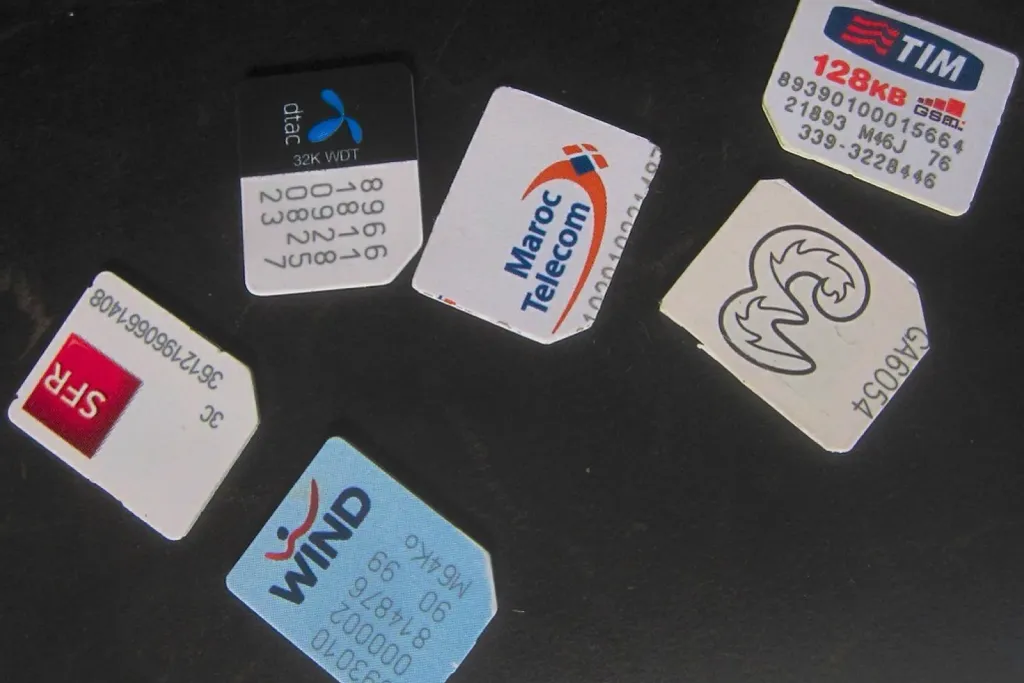 A Thai SIM or eSIM is the fast, legal way to get online instead of using Starlink in Thailand. (Photo via Flickr, CC BY-SA 2.0)
You do not need Starlink in Thailand, because the legal options are fast, cheap and easy to set up, which is the part most Starlink-curious visitors underestimate. Thailand has excellent mobile and fibre infrastructure in cities and tourist areas, and getting connected legally usually takes minutes, not weeks. Here are the routes that keep you compliant:
| Option | Best for | Rough cost | Notes |
|---|---|---|---|
| Tourist SIM or eSIM (AIS, TrueMove H, dtac) | Short stays, instant data | ~200 to 900 THB for a few days to a month | Buy at the airport or online; an eSIM can be active before you land |
| Monthly mobile plan (4G or 5G) | Nomads, phone hotspot | ~300 to 800 THB per month | Strong coverage in cities and most tourist zones |
| Home fibre (AIS Fibre, True, 3BB, NT) | Long-stay, work from home | ~400 to 900 THB per month | Fast and cheap where available; needs a Thai address |
| Pocket WiFi or MiFi | Groups, several devices | Varies | Runs on a Thai SIM; rent or buy |
| Licensed satellite (Thaicom, Amazon Leo) | Genuinely remote sites | Higher | The legal satellite route where fibre and mobile do not reach |
For most people, a local SIM or eSIM is the answer, and it is the first thing to sort on arrival. A prepaid tourist SIM from AIS, TrueMove H or dtac gives you plentiful data for a low price, and 4G and 5G are strong across Phuket, Bangkok and the main islands. If you are settling in and renting a place, home fibre is outstanding value; providers like AIS Fibre, True, 3BB and NT deliver fast connections cheaply, and setting one up pairs naturally with renting an apartment in Phuket or, if you are buying, with buying a condo in Thailand. Budget-wise, connectivity is a small line item; our breakdown of the cost of living in Phuket shows how it fits into a monthly plan, and where you base yourself affects which providers are available, which is worth checking against our guide to the best areas to live in Phuket.
If you genuinely need satellite because you are somewhere fibre and mobile do not reach, there is now a licensed path. In April 2026, Data Center Dynamics reported that Amazon Leo authorised Thaicom to resell satellite broadband in Thailand, after the government had rejected Starlink, giving the country a properly licensed low-earth-orbit option that plays by local rules. That is the difference in a sentence: same kind of technology, but done through a licensed Thai operator rather than an unauthorised import. Remote workers weighing where to base themselves can factor this in alongside the Destination Thailand Visa (DTV), and longer-term professionals on the LTR visa will find licensed fibre or fixed wireless more than enough for serious work.
Will Starlink ever be legal in Thailand?
Possibly, but not until the ownership and licensing questions are resolved, and there is no confirmed timeline. The barrier is structural rather than technical: Thailand's concern is foreign ownership of communications infrastructure and national security, not whether the satellites work. For consumer Starlink to launch legally, SpaceX would need an arrangement the NBTC and DES accept, which likely means a licensed local partnership rather than a wholly foreign-owned operation. Industry observers note that the Amazon Leo and Thaicom deal shows the licensed route is open to those willing to work within the rules, so a future Starlink entry is not impossible if the structure changes.
Until an official announcement says otherwise, though, treat "Starlink is coming to Thailand" as speculation. Do not buy hardware on the assumption it will soon be authorised, and be sceptical of resellers or social posts that present availability as imminent. The only source that can confirm a change is the regulator itself, so check the NBTC before acting on any rumour.
What to do if you already own a Starlink
If you already own a Starlink and you are heading to Thailand, the safe answer is not to bring it to use here. Leave it at home, or keep using it only in countries where it is licensed. If you are relocating permanently and it simply is not worth shipping an unusable dish, selling it before you move is often the cleaner choice. Do not plan your connectivity around a terminal you cannot legally switch on.
Instead, sort a legal connection the moment you land. Pick up a Thai SIM or eSIM at the airport for instant data, then arrange home fibre once you have an address. Setting up local services is easier with a Thai bank account, so our guide to opening a Thai bank account is a sensible early step, and if you are funding the move from abroad, our walkthrough on sending money to Thailand covers the cheapest ways to do it. Handle connectivity the boring, legal way and you will be online within an hour of arrival, without risking your equipment or a criminal charge.
Frequently asked questions
Is Starlink legal in Thailand?
No. Using your own Starlink terminal in Thailand is illegal in 2026 because the service is not licensed by the NBTC for consumer use. That makes a personal dish unauthorised radio equipment, which is unlawful to import, possess or operate, and it can be confiscated.
Why is Starlink illegal in Thailand?
It is unlicensed. Thai law requires NBTC permission to operate satellite and radio equipment, and Starlink has none for public use. In November 2025 the government also rejected SpaceX's plan to operate through a 100%-foreign-owned company on national-security grounds, so consumer service remains unavailable.
Can I bring my Starlink to Thailand?
You should not bring one to use here. A terminal is treated as unauthorised radio equipment and can be seized at customs. Merely transiting with a boxed, unused unit is a grey area with lower risk, but there is no guarantee an officer will allow it through.
What happens if you use Starlink in Thailand?
The most immediate outcome is confiscation of your equipment. Beyond that, unauthorised use of radio-communication equipment is a criminal offence that can carry fines and possibly imprisonment. Exact penalties vary by charge, so confirm the current position with the NBTC or a Thai lawyer.
Does Starlink work in Thailand?
A roaming terminal may sometimes connect because coverage physically reaches the region, but that does not make it legal, and service is not guaranteed in unsupported countries. Starlink's own terms say in-motion and land use require local government approval, which Thailand has not granted for consumer use.
Can I use the Starlink Mini in Thailand?
No. The Starlink Mini is the same category of unlicensed radio transmitter as the standard dish, so it is equally illegal to use in Thailand. Its small size makes it easier to carry in, but that does not change its legal status or reduce the risk of confiscation.
When will Starlink be available in Thailand?
There is no confirmed date. Availability depends on SpaceX meeting Thai foreign-ownership and licensing rules, likely through a local partnership. The government rejected its proposal in late 2025, so treat any claim of imminent launch as speculation until the NBTC confirms it officially.
What is the legal way to get internet in Thailand?
Use a Thai SIM or eSIM for mobile data, a monthly 4G or 5G plan, or home fibre from providers such as AIS Fibre, True, 3BB or NT. For genuinely remote sites, licensed satellite via Thaicom, including Amazon Leo, is the compliant satellite option.
Has Starlink actually been seized in Thailand?
Yes. Thai authorities confiscated 38 Starlink transmitters in March 2025, terminals tied to border scam compounds were disabled and seized later in 2025, and in June 2026 marine police seized Starlink kit from an illegal fishing tour off Phuket. Enforcement is active and widening.
Sources
- Developing Telecoms, Thailand to crack down on scammers using illegal LEO satellite kits
- Bangkok Post, Thailand rejects Starlink offer due to ownership hurdle
- Thai Examiner, Digital Minister rejects Starlink's plans to set up in the Kingdom
- The Record, Thai officers intercept Starlink transmitters
- NBC News, SpaceX disables 2,500 Starlink terminals at scam compounds
- WIRED, DOJ issued seizure warrants to Starlink over satellite internet systems
- Data Center Dynamics, Amazon Leo authorizes Thaicom to resell Thai satellite broadband
- Starlink, official support and roaming terms
- NBTC, National Broadcasting and Telecommunications Commission (official regulator)
About this guide
This guide was researched and written by the Thailand Stuff Editorial Team, who live in and cover Phuket. We check our guides against current, reputable sources and review them regularly to keep them accurate; this article was last reviewed on 6 August 2026. Thailand Stuff is a directory and guides publisher, not a law firm, and this article is general information, not legal advice. Telecom licensing and enforcement can change and are applied at official discretion, so before you bring, buy or use any satellite equipment, confirm the current position with the NBTC or a qualified Thai lawyer. For everyday connectivity, a legal Thai SIM, eSIM or home fibre plan is the right starting point, and our wider Thailand guides cover the rest of settling in.
继续阅读
 News
NewsA Thai senator has proposed letting foreigners own 100% of a business in Thailand to end the nominee system. Here is what was said and what it could mean.
 Practical
2026 年的实话实说:大多数泰国银行拒绝为 DTV 签证持有人开立新账户。解释为什么会这样、什么行不通,以及切实可行的替代方案。
 Practical
游客在泰国如何付款?客观对比 Wise 与国内银行卡、开泰银行(KBank)预付费 Visa 卡、现金以及 ATM 手续费,无需泰国银行账户。