
The History of Thailand: From Siam to the Present Day
A clear history of Thailand, from the Sukhothai and Ayutthaya kingdoms and old Siam through the Chakri dynasty, the modernising kings and Thailand today.
Thailand Stuff
Culture & History Desk · 12 Jul 2026 · 9 min read

Thailand has one of the richest and most distinctive histories in Southeast Asia, and it holds a rare distinction: it is the only country in the region never to have been colonised by a European power. From the first Thai kingdoms and the age of old Siam, through a dynasty of modernising kings, to the constitutional monarchy of today, this is a clear overview of the history of Thailand, with a look too at how Phuket fits into the story.
From Siam to the first Thai kingdoms
For most of its history the country was known as Siam. The name is usually traced to the Sanskrit word syam, meaning dark or brown, and it came to describe the Tai-speaking peoples who migrated south from what is now southern China into mainland Southeast Asia over many centuries.
The Thai state is generally dated to 1238 and the founding of the Sukhothai Kingdom, often called the first true Thai kingdom. Under rulers such as Ramkhamhaeng, credited with creating the Thai script, Sukhothai flourished and expanded. It was soon rivalled and eventually eclipsed by a new power to the south, the Ayutthaya Kingdom, founded around 1350, which absorbed Sukhothai into its orbit by the mid-1400s.
Ayutthaya's golden age and fall
For more than 400 years Ayutthaya was one of the great powers of Southeast Asia, at its height controlling large parts of what are now Cambodia, Laos and Myanmar. It was a wealthy, cosmopolitan trading capital, and it was here that the West first made contact with Siam: the Portuguese arrived in the early 1500s, the first Europeans to do so. Under King Naresuan, remembered as one of Ayutthaya's greatest rulers, the kingdom threw off Burmese overlordship in the late 1500s.
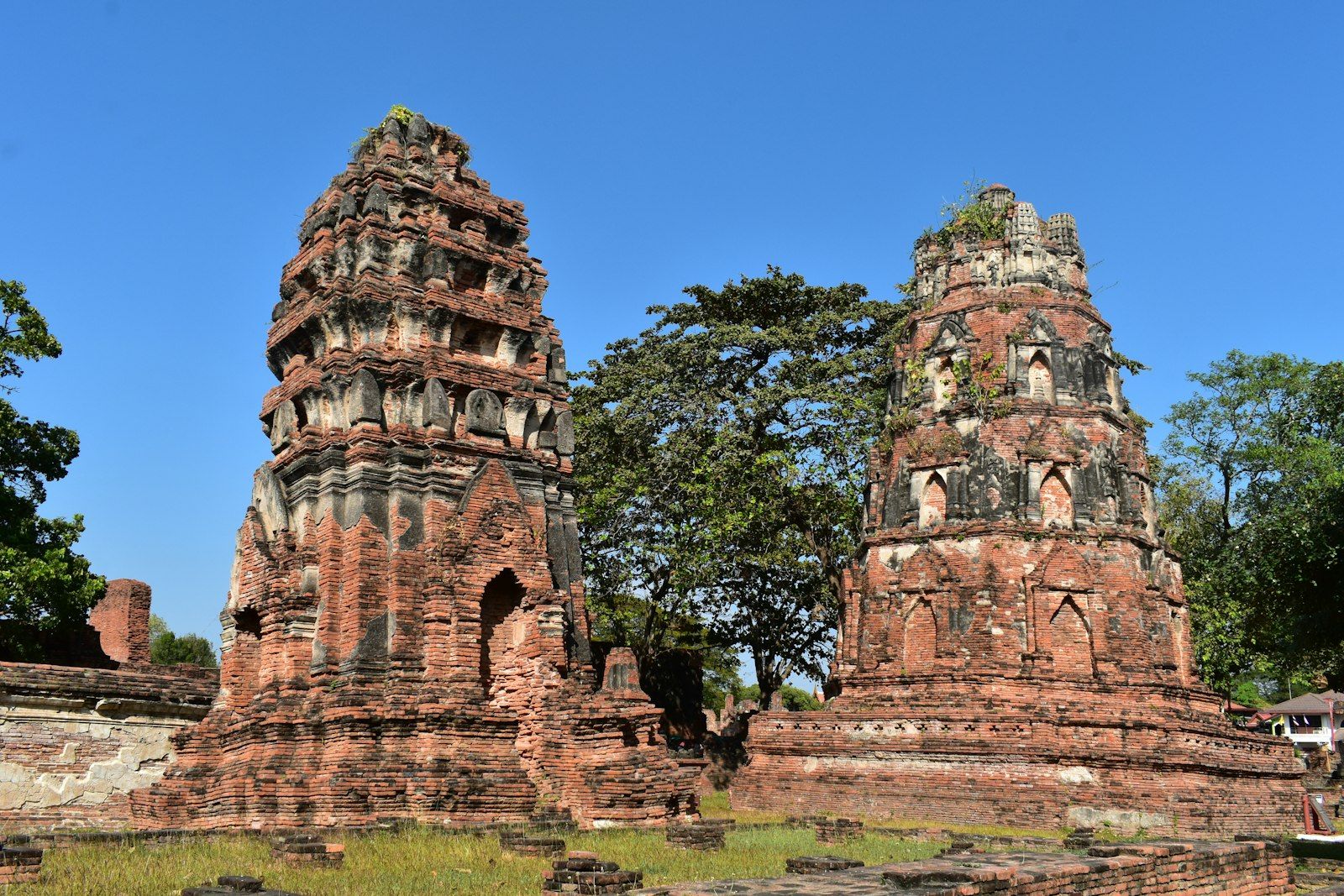
That long golden age ended abruptly in 1767, when invading Burmese armies sacked and destroyed Ayutthaya, bringing the kingdom to a close.
Taksin, Thonburi and the founding of Bangkok
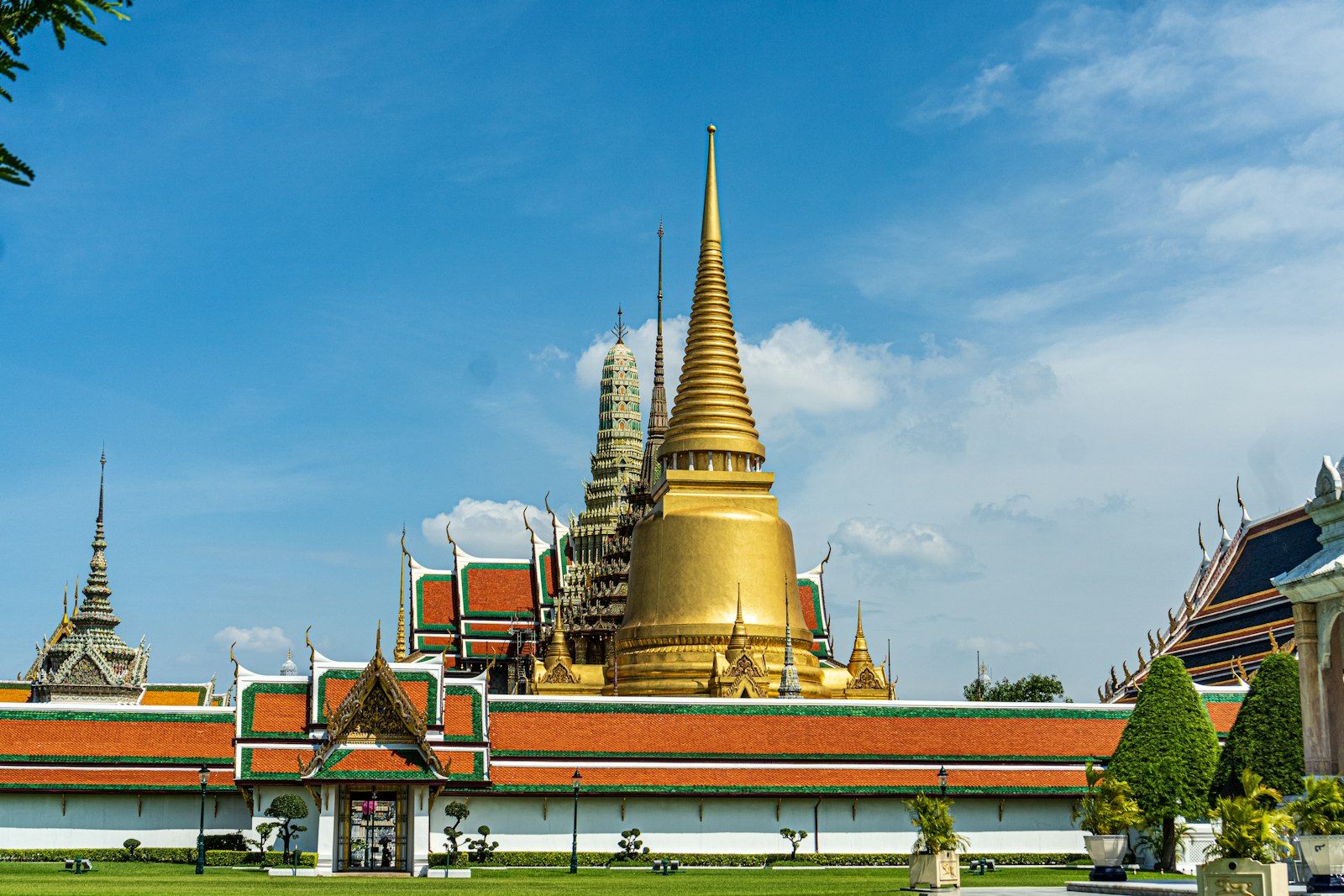
The collapse did not last. Within a year, a military leader of Thai-Chinese descent, Taksin the Great, had driven out the Burmese and reunified the country, establishing a new capital at Thonburi in 1768. His reign was brief. In 1782 he was overthrown, and General Chao Phraya Chakri took the throne as Rama I, founding the Chakri dynasty that still reigns today. He moved the capital across the Chao Phraya River to a village that would grow into Bangkok.
The great modernising kings
The 19th century brought an existential threat. Britain and France were colonising Siam's neighbours one by one, and two kings are credited with the diplomacy that kept the country independent.
King Mongkut (Rama IV, reigned 1851 to 1868) recognised the danger and embraced Western ideas and technology. In 1855 he signed the Bowring Treaty with Britain, which opened Siam to global trade but cost the crown some of its revenue and authority; similar agreements followed with other European powers. His son, King Chulalongkorn (Rama V, reigned 1868 to 1910), went further. Educated alongside Western tutors (the English governess Anna Leonowens taught the royal children), he abolished slavery, reformed the administration and courts, built the first railways, and ceded some outlying territory to preserve the heart of the kingdom. Thanks largely to these two reigns, Thailand was never colonised, a fact that remains a deep source of national pride.
Revolution, world war and a new name
King Vajiravudh (Rama VI, 1910 to 1925) promoted Thai nationalism and introduced surnames and the Gregorian calendar, and in 1917 Siam joined the First World War on the Allied side, which later helped it renegotiate the old unequal treaties. Under his successor King Prajadhipok (Rama VII), a bloodless revolution in 1932 ended seven centuries of absolute monarchy and established a constitutional monarchy with a parliament.
In 1939 the country changed its name from Siam to Thailand, meaning "land of the free". During the Second World War Thailand declared neutrality, but was invaded by Japan within hours of the attack on Pearl Harbour in December 1941 and granted Japanese forces passage through the country, even as a "Free Thai" resistance worked against the occupation. King Ananda Mahidol (Rama VIII) died in 1946 and was succeeded by his younger brother, Bhumibol Adulyadej (Rama IX).
Bhumibol's long reign and the age of coups
King Bhumibol reigned for 70 years, from 1946 to 2016, and was the world's longest-reigning monarch at the time of his death, a constant and unifying presence through decades of dramatic change. Those decades were politically turbulent. During the Cold War Thailand hosted US airbases and sent troops to the Vietnam War, and its modern politics settled into a recurring cycle of military coups followed by elected governments, with close to twenty coups since 1932.
The 1997 Asian financial crisis began in Thailand, sending the baht into freefall and forcing an IMF rescue. In 2001 the telecoms billionaire Thaksin Shinawatra won power in a landslide, but was removed in a 2006 coup, beginning years of colour-coded political conflict that led to a further coup in 2014, after which General Prayut Chan-o-cha governed as prime minister.
Phuket in the story
Phuket has its own proud chapter. Long a trading island, its wealth came from tin, and that wealth made it a target. When the Burmese invaded Thalang (old Phuket) in 1785, the island had just lost its governor. Two sisters, Lady Chan and Lady Mook, rallied the local defence, warned and armed in part by the British trader Francis Light. After about a month of fighting the Burmese withdrew in early 1786, and King Rama I honoured the sisters with the noble titles Thao Thep Krasattri and Thao Si Sunthon. Today they are celebrated as Phuket's Two Heroines, commemorated by the landmark Heroines' Monument.
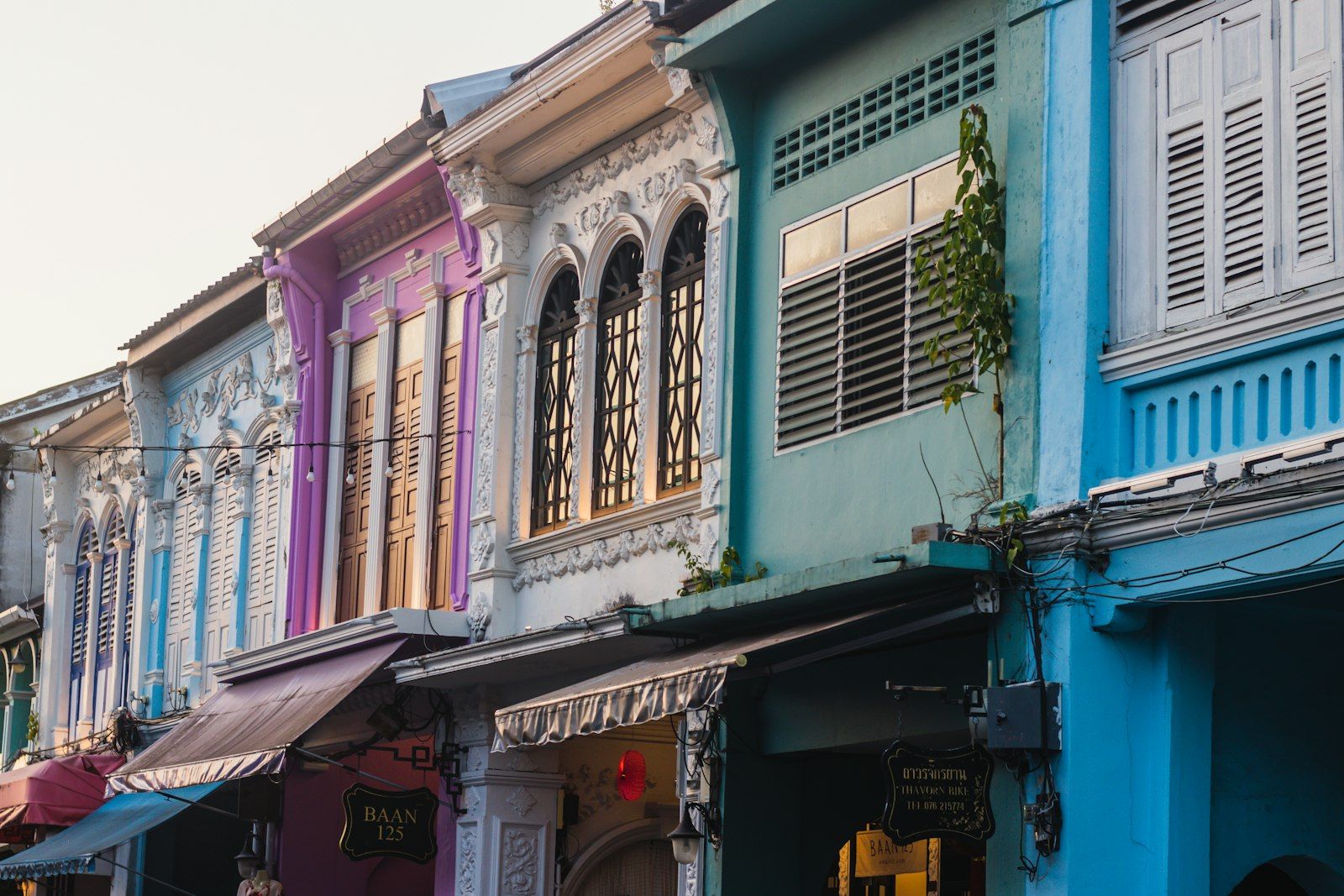
Under King Chulalongkorn, Phuket became the administrative centre of the tin-producing south. The mining boom drew waves of Chinese migrant workers, and it is their descendants and their money that built the elegant Sino-Portuguese shophouses of Phuket Old Town that give the island's capital its distinctive character, and its excellent restaurants, today.
Thailand today
King Bhumibol died on 13 October 2016 and was succeeded by his son, King Maha Vajiralongkorn (Rama X), who was crowned in an elaborate ceremony in May 2019. That year also saw the first general election since the 2014 coup, after which Prayut Chan-o-cha continued as prime minister, followed in 2020 and 2021 by large, youth-led protests calling for political reform.
Politics have remained eventful since. The 2023 election was won at the ballot box by the reformist Move Forward Party, but it was blocked from forming a government, and Srettha Thavisin of the Pheu Thai party became prime minister, around the time Thaksin Shinawatra returned to Thailand. In 2024 Srettha was removed by the Constitutional Court and replaced by Paetongtarn Shinawatra, Thaksin's daughter and the country's youngest ever prime minister. She in turn was removed by the court in 2025, and Anutin Charnvirakul of the Bhumjaithai party became prime minister, a position confirmed after a general election in 2026. Thailand today remains a constitutional monarchy, still navigating the long-running balance between elected politics and its established institutions.
Frequently asked questions
What was Thailand called before?
Thailand was known as Siam until 1939, when it adopted the name Thailand, meaning "land of the free". It briefly reverted to Siam in the 1940s before the name Thailand was settled on for good.
Was Thailand ever colonised?
No. Thailand is the only country in Southeast Asia never to have been colonised by a European power, thanks largely to the shrewd diplomacy and modernisation of Kings Mongkut and Chulalongkorn in the 19th century.
When did the current royal dynasty begin?
The Chakri dynasty was founded in 1782 by Rama I, who also established Bangkok as the capital. The current monarch, King Vajiralongkorn (Rama X), is the tenth king of the dynasty.
Who was King Bhumibol?
Bhumibol Adulyadej (Rama IX) reigned from 1946 to 2016, a period of 70 years that made him the world's longest-reigning monarch at his death. He was a unifying figure through decades of political change.
Who leads Thailand now?
King Vajiralongkorn (Rama X) has been the monarch since 2016. Following a series of court rulings and a general election, Anutin Charnvirakul became prime minister, a role confirmed in 2026.
What is Phuket's place in Thai history?
Phuket, then called Thalang, was a tin-rich trading island. Its defenders, the Two Heroines, repelled a Burmese invasion in 1785 to 1786, and the later tin boom drew Chinese migrants whose descendants built the Sino-Portuguese Old Town.
From ancient Sukhothai to the modern day, Thailand's history is one of resilience, adaptation and a fierce sense of independence. You can still walk through much of it, from the ruins of Ayutthaya to the shophouses of Phuket Old Town and the living traditions of festivals like Songkran. Got a question about Thai history, or a favourite piece of it? Share it in the comments below.
Keep reading
 News
NewsA Thai senator has proposed letting foreigners own 100% of a business in Thailand to end the nominee system. Here is what was said and what it could mean.
 Practical
The honest 2026 answer: most Thai banks reject DTV visa holders for new accounts. Why it happens, what does not work, and the real alternatives that do.
 Practical
How do tourists pay in Thailand? Compare Wise and home cards, the KBank prepaid Visa card, cash and ATM fees, honestly, with no Thai bank account needed.