
Destination Thailand Visa (DTV) 2026: The Complete Guide for Remote Workers
Thailand's DTV visa in 2026 for remote workers: eligibility, the 500,000 THB rule, costs, the application steps, tax, and what life is like in Phuket.
Thailand Stuff Editorial
5 Jul 2026 · 15 min read

The Destination Thailand Visa (DTV) is the visa that finally made "living in Thailand while working for a company back home" simple, legal, and long-term. Launched in July 2024, it hands remote workers, freelancers and digital nomads a five-year, multiple-entry visa for a single 10,000 baht fee, with stays of up to 180 days at a time.
This guide is the practical, no-fluff version written from Phuket, one of the most popular places people actually use the DTV. We cover exactly who qualifies, the money you need, the 2026 application process (including the newer checks that are tripping people up), the tax question everyone gets wrong, and what daily life on the visa really looks like on the island.
Last updated: July 2026. Visa rules change and individual Thai embassies interpret them differently. Treat this as a detailed starting point, not legal advice, and confirm the current requirements with the official Thai e-Visa portal or a licensed visa agent before you apply.
DTV at a glance
| Feature | Detail |
|---|---|
| Visa type | Destination Thailand Visa (long-stay, multiple-entry) |
| Validity | 5 years from date of issue |
| Stay per entry | 180 days, extendable once in-country by another 180 days |
| Max consecutive stay | ~360 days (with one extension), then a border exit and re-entry |
| Government fee | 10,000 THB (roughly USD 280–320) |
| Financial requirement | Equivalent of 500,000 THB in accessible funds |
| Minimum age | 20 years |
| Where you apply | From outside Thailand, online via the Thai e-Visa system |
| Processing time | Typically 2–4 weeks (varies by embassy) |
| Work allowed | Remote work for foreign employers/clients only |
| Dependents | Spouse and children under 20 (each applies separately) |
| In-country extension | 1,900 THB (TM.7 form) |
What is the Destination Thailand Visa?
The DTV is Thailand's answer to the global race for remote-worker spending power. Before it existed, digital nomads bounced between 60-day tourist visas, education visas and border runs, none of which were really designed for someone who wanted to base themselves in Thailand for a year or two while earning income from abroad.
The DTV fixes that. It is a five-year, multiple-entry visa aimed at two broad groups: remote professionals on a "workcation," and people coming for Thailand's "soft power" activities such as Muay Thai training, Thai cooking courses, sports camps or medical treatment. Crucially, it is issued once and stays valid for five years, so you are not reapplying every few months, only extending or doing an occasional border run.
It is important to understand what the DTV is not. It is not a work permit, not a path to permanent residency, and not a licence to take a local Thai job. It is a long-stay visa for people whose income comes from outside Thailand.
Who qualifies for the DTV?
There are three routes onto the visa, and you apply under whichever fits you:
- Workcation (remote workers, freelancers, business owners). You work remotely for a company registered outside Thailand, freelance for foreign clients, or run your own online business based abroad. This is the route most digital nomads use.
- Soft power activities. You are coming for a recognised Thai cultural or wellness activity such as Muay Thai, Thai cooking classes, a sports training camp, a music festival, a seminar, or medical/wellness treatment. You will need documentation from the school, gym, hospital or organiser.
- Dependents. The legal spouse and unmarried children under 20 of a main DTV holder can each apply for a linked "DTV Dependent" visa, but only after the main applicant is approved.
The common thread for the workcation route is simple: your income must come from outside Thailand. If your clients or employer are Thai, the DTV is the wrong visa and you would need a Non-Immigrant B visa and work permit instead.

The DTV is built for people earning income from foreign employers or clients, not for taking a local Thai job.
DTV requirements in detail
The money: 500,000 THB, and how you hold it
The headline financial requirement is the equivalent of 500,000 THB (roughly USD 14,000–15,000) in accessible funds. This is the single most misunderstood part of the application.
Two things matter beyond the number itself:
- Where it is held. Embassies expect the money to sit in your bank account and to be genuinely accessible. Investment accounts, crypto and someone else's account are routinely rejected.
- How long it has been there. The old trick of borrowing money, parking it for a day and screenshotting the balance no longer works. Many embassies now want to see the balance maintained for around three months (roughly 90 days) through dated bank statements. Season your account early.
If your bank statement is in a foreign currency, show the equivalent clearly and be ready for the reviewing officer to convert it at a conservative rate.
Proof of remote work or activity
For the workcation route you need to prove your income is foreign and remote. Depending on your situation that means an employment contract stating remote work is permitted, a letter from your employer, client contracts or invoices, a business registration if you own the company, or a freelance portfolio plus proof of earnings. For soft-power applicants, you provide the enrolment or booking documents from the Thai school, gym, hospital or event.
Passport and personal documents
You must be at least 20 years old with a passport valid for at least six months (many applicants aim for more). You will also need a recent passport-style photo on a white background.
The 2026 reality: location verification
The biggest change applicants report in 2025–2026 is stricter location verification. You must apply from outside Thailand, and the e-Visa system now flags IP addresses and GPS data on uploads, so applying while physically in Thailand gets caught. Some embassies also ask for proof you are genuinely in their jurisdiction, such as a utility bill, residence permit or driver's licence matching that country. Apply from a country where you can back up your presence.
DTV vs. other Thailand long-stay options
The DTV is not always the right answer. Here is how it compares to the other common long-stay routes:
| Visa | Best for | Typical validity | Ballpark cost | Work rights |
|---|---|---|---|---|
| DTV | Remote workers, freelancers, soft-power visitors | 5 years, 180 days/entry | 10,000 THB | Remote, foreign income only |
| Tourist visa / exemption | Short holidays | Exemption ~60 days (30 pending) / TR 60 days, +30 ext | Free – 5,000 THB | None |
| LTR (Long-Term Resident) | High earners, wealthy retirees, skilled professionals | 10 years (5+5) | ~50,000 THB | Yes (some categories) |
| Thailand Privilege (Elite) | A hassle-free paid membership + VIP perks | 5–20 years | From ~650,000 THB | None |
| Non-Immigrant B + work permit | Working for a Thai employer | 1 year (renewable) | Low gov fees; agent fees vary | Local Thai employment |
| Retirement (Non-O / O-A / O-X) | Over-50s settling long-term | 1 yr renewable (O-X: 10 yrs) | 1,900 THB/yr + 800k THB shown | None |
| Education (ED) | Studying (language, Muay Thai, university) | Per course, ~6–12 months | ~2,000 THB + tuition | None |
For most remote workers with a normal income, the DTV wins on price and flexibility. If you earn a high salary or want the widest privileges, look at the LTR. If money is no object and you want zero admin, Thailand Privilege exists. If you want to work for a Thai company, only the Non-B does that.
How to apply for the DTV: step by step
The entire process is online and done from abroad.
- Prepare your documents (see the checklist below) as clear PDFs or images. Get your bank statements seasoned first.
- Create an account on the official Thai e-Visa portal and select the Destination Thailand Visa, then your category (workcation or soft power).
- Complete the application form with your personal details, purpose of stay and the embassy/consulate that will process it (usually the one covering the country you are physically in).
- Upload your documents and pay the 10,000 THB fee online.
- Wait for processing, typically 2–4 weeks but sometimes faster or slower depending on the embassy and how complete your file is.
- Receive your e-Visa by email as a PDF. There is no sticker in your passport; you show the approval on arrival.

Season your finances and line up consistent paperwork before you open the online application.
Required documents checklist
- Passport bio-data page (valid 6+ months) and a recent white-background photo
- Proof you are outside Thailand and within the embassy's jurisdiction (entry stamp, residence permit, utility bill or licence)
- Financial evidence: bank statements showing ~500,000 THB held for about three months
- Proof of purpose: employment contract/letter, client contracts, business registration or freelance portfolio (workcation); or enrolment/booking documents (soft power)
- Completed online application and paid fee
Tip by applicant type: employees should get a signed letter explicitly stating remote work is allowed; freelancers should combine signed client contracts with matching bank deposits; business owners should include company registration plus proof of ownership.
DTV costs: what you will really spend
The government fee is only part of the picture.
| Cost | Ballpark |
|---|---|
| DTV government fee | 10,000 THB |
| In-country 180-day extension | 1,900 THB |
| Document translation/notarisation | 0–5,000 THB (if needed) |
| Optional visa agent | 5,000–25,000 THB |
| Travel/health insurance | Varies (SafetyWing-style plans common) |
Note that the fee is set in baht, so what you pay in USD, GBP or EUR shifts a little with the exchange rate, and some embassies collect in local currency. Budget for translation only if your documents are not already in English or Thai.
Extensions, 90-day reporting and re-entry
The DTV lets you stay 180 days per entry. Near the end of that window you have two options:
- Extend in-country. File a TM.7 extension at a local immigration office for 1,900 THB to add another 180 days, giving you roughly 360 consecutive days.
- Border run. Leave Thailand and re-enter on the same visa (it is multiple-entry for five years), which resets your 180-day clock.
Separately, if you stay in Thailand for more than 90 consecutive days you must file a 90-day report (TM.47) confirming your address. It is free, unrelated to visa extensions, and can be done online, by post or in person. Overstaying your permitted period carries daily fines and, for longer overstays, bans on re-entry, so track your dates carefully.
Taxes on the DTV: what remote workers must know
This is where people get nervous, usually more than they need to, but it is worth understanding.
You become a Thai tax resident if you spend 180 days or more in a calendar year in Thailand. Being a tax resident does not automatically mean a big Thai tax bill, but it does bring your foreign income into scope when you remit (bring) it into Thailand.
Since a rule change effective 1 January 2024, foreign income remitted into Thailand by a tax resident is generally taxable in the year it is brought in, regardless of when it was earned. Money kept offshore and not remitted is treated differently. This is a genuinely complex, changing area.
If you are a US citizen, you keep filing with the IRS on worldwide income no matter where you live. Tools like the Foreign Earned Income Exclusion can reduce double taxation on income tax, but self-employment tax is a separate matter because the US and Thailand have no totalization agreement. Other nationalities should check their own country's tax treaty with Thailand.
This is not tax advice. Thai tax treatment of remitted foreign income has changed recently and depends on your nationality, residency and how you move money. Speak to a cross-border tax professional and see the Thai Revenue Department before making decisions.
Bringing your family
The DTV is family-friendly. Your legal spouse and unmarried children under 20 can each apply for a linked DTV Dependent visa. Two practical points: each dependent submits their own application with their own documents (marriage and birth certificates, translated and legalised as required), and they can generally only apply after the main applicant has been approved. Dependents get the same five-year validity and 180-day stays but are not permitted to work.
Common mistakes that get DTVs rejected
Rejections are usually avoidable. The patterns we see most often:
- Freshly funded accounts. A balance that appeared last week looks like borrowed money. Season it for around three months.
- Weak proof of remote work. A vague job title is not enough; officers want a contract or letter that explicitly allows remote work, or client contracts with matching income.
- Applying from the wrong place. Applying while inside Thailand, or from a country you cannot prove you are in, is an increasingly common rejection reason in 2026.
- Mismatched documents. Names, dates and amounts that do not line up across your passport, statements and contracts raise flags.
- Wrong category. Trying to use the DTV for local Thai work, or picking soft power without real enrolment documents.
- Thin or blurry uploads. Incomplete, low-quality or untranslated documents slow everything down and invite refusal.
When in doubt, over-document. A clean, consistent, well-labelled file is the single biggest thing within your control.
Living in Phuket on the DTV
Phuket is one of the most popular islands for DTV holders, and for good reason: it combines fast internet, a large established remote-work community, an international airport for easy border runs, and, of course, the beaches and jungle that make the "workcation" worth it.
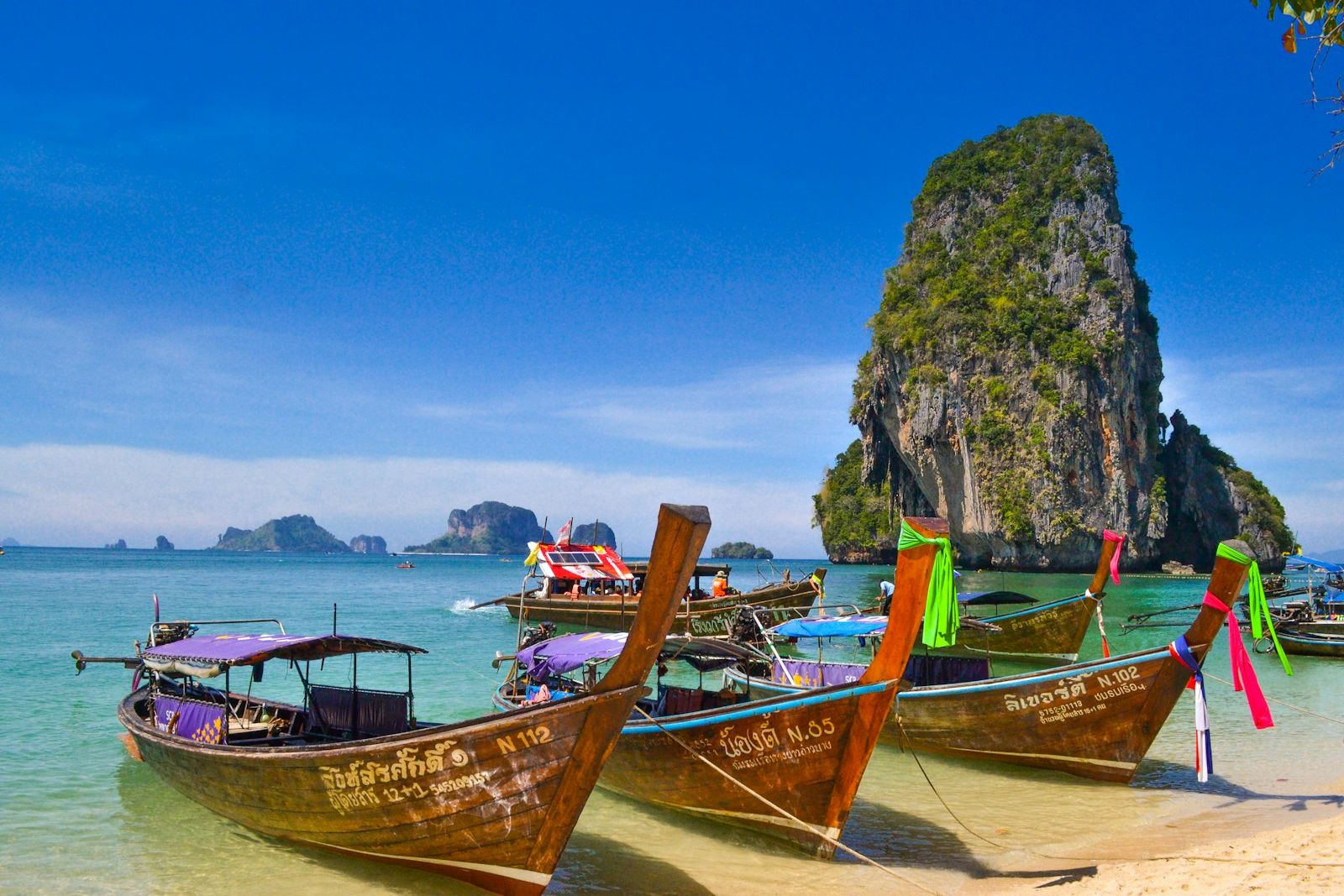
Phuket pairs fast internet and a large remote-work community with beaches for your days off.
Internet and workspace. Fibre broadband is widely available in condos, and 4G/5G coverage is strong across the island. Cafés and coworking spaces cluster around Rawai, Chalong, Patong and the Old Town. Browse our directory of Phuket cafés and coworking spots to find somewhere with reliable wifi and good coffee.
Cost of living. Phuket is pricier than Chiang Mai but cheaper than most Western cities. A comfortable remote-worker budget covers a modern one-bed condo, a scooter, eating a mix of local and Western food, and weekend trips. Beach-town areas like Patong cost more; inland and southern areas stretch your baht further.
Getting out and exploring. The upside of basing yourself here is everything beyond the desk. Between deadlines you can hike a jungle waterfall trail, spend a morning at a quiet beach, or plan around the island's festivals and events. It is the part of DTV life that does not show up on a requirements checklist but matters most.
Visa-run logistics. Phuket International Airport has direct flights to regional hubs like Kuala Lumpur, Singapore and Penang, so a border run to reset your 180 days is a cheap overnight trip rather than a saga. New to the island? Our guide to Phuket is a good orientation.
Further reading. For another Phuket-based perspective on the visa, the team at Denz coworking café have written their own detailed DTV guide, which is worth a read alongside this one.
Banking and health insurance
Banking. Opening a Thai bank account as a DTV holder is possible but not guaranteed, and requirements vary by branch. Many people succeed by visiting a bank in a tourist-heavy area, bringing their passport and DTV approval, proof of address (a condo lease helps), and sometimes a Thai phone number. A visa agent can smooth this if a branch turns you away. In the meantime, a low-fee multi-currency card handles day-to-day spending.
Health insurance. The DTV does not always mandate insurance, but travelling without it is a bad idea given private hospital costs. Nomad-focused plans (SafetyWing and similar) are popular because they are monthly and cover multiple countries; expats staying longer often move to a more comprehensive regional policy. Check the current requirement for your embassy, and buy cover regardless.
Frequently asked questions
Can I work for a Thai company on the DTV?
No. The DTV only permits remote work for employers and clients based outside Thailand. Working for a Thai company requires a Non-Immigrant B visa and a work permit.
How long can I actually stay in Thailand on a DTV?
Up to 180 days per entry, extendable once in-country by another 180 days (about 360 consecutive days) for 1,900 THB. Because the visa is multiple-entry for five years, you then do a border run and start again.
Can I apply for the DTV while I am already in Thailand?
No. You must apply from outside Thailand, and the e-Visa system now flags IP and GPS data, so applying from inside the country gets rejected.
How much money do I need, and how long must I have it?
The equivalent of 500,000 THB in accessible funds, and increasingly embassies want to see it held for around three months (roughly 90 days) via dated bank statements, not just parked for a day.
Do I have to pay tax in Thailand on the DTV?
Only if you become a tax resident (180+ days in a calendar year), and then generally on foreign income you remit into Thailand under the rules that changed in 2024. It is complex and depends on your nationality; get professional advice.
Do I need to do 90-day reporting?
Yes, if you stay more than 90 consecutive days. It is a free address report (TM.47) separate from your visa extension, filed online, by post or in person.
Can I bring my partner and children?
Yes. A legal spouse and unmarried children under 20 can each apply for a DTV Dependent visa, separately, and only after the main applicant is approved. Dependents cannot work.
How much does the DTV cost?
The government fee is 10,000 THB. Budget extra for a possible 1,900 THB extension, any document translation, insurance and an optional visa agent.
How long does approval take?
Usually two to four weeks, though it varies by embassy and how complete your application is. Apply well before you plan to travel.
Is Phuket a good place to use the DTV?
Yes. It has strong internet, a big remote-work community, an international airport for easy border runs, and plenty to do on days off, which is why it is one of the most popular DTV bases in Thailand.
Is the DTV right for you?
If you earn your income from outside Thailand and want to spend serious time in the country without the old visa-run treadmill, the DTV is almost certainly the best option available in 2026. It is affordable, valid for five years, and flexible enough for both hard-working nomads and people chasing Muay Thai, cooking or wellness goals.
Get your finances seasoned early, document everything cleanly, apply from a country you can prove you are in, and take the tax question seriously if you will cross 180 days. Do that, and the hardest part of your Thailand move is behind you.
Ready to picture the day-to-day? Start with the best of the island in our Phuket directory, lace up for a trail, and see what is on this month.
About this guide
This guide was written and fact-checked by the Thailand Stuff editorial team, who live in and cover Thailand. We research our visa guides against official sources such as Thai Immigration and the Ministry of Foreign Affairs, and we review them regularly to keep requirements, fees and processes current. Thailand Stuff is an independent guide, not a law firm or a licensed visa agent, so treat this as general information rather than legal advice. Visa rules change often and are applied at the discretion of individual immigration offices, so always confirm the current requirements with Thai Immigration or your nearest Thai embassy before you apply or travel. Last reviewed: July 2026.
Keep reading
 News
NewsA Thai senator has proposed letting foreigners own 100% of a business in Thailand to end the nominee system. Here is what was said and what it could mean.
 Practical
The honest 2026 answer: most Thai banks reject DTV visa holders for new accounts. Why it happens, what does not work, and the real alternatives that do.
 Practical
How do tourists pay in Thailand? Compare Wise and home cards, the KBank prepaid Visa card, cash and ATM fees, honestly, with no Thai bank account needed.