
Thailand Tourist Visa & Visa Exemption: 2026 Guide
How the Thailand tourist visa and visa exemption work in 2026 — stay lengths, the 60 to 30 day change, TR visa, fees, extensions in Phuket and the crackdown.
Thailand Stuff Editorial
7 Jul 2026 · 14 min read

Thailand is one of the easiest countries in the world to visit — for most travellers, a short holiday needs no visa at all. But "easy" and "unlimited" are not the same thing, and 2025–26 has been the messiest stretch for Thai entry rules in years: a headline change to the visa exemption, a hard crackdown on back-to-back "visa runs", and a new digital arrival card everyone now has to file. Get the details wrong and it can mean a refused entry or a fine on the way out.
This guide explains the Thailand tourist visa and the visa-exemption scheme in plain English — how long you can actually stay, when you need a proper Tourist Visa (TR) instead, how to apply on the official portal, what it costs, and how to extend in Phuket. If your plan is really a long stay, we'll point you to the right long-stay visa instead.
Last updated July 2026. Thai visa rules change often and details vary by embassy and immigration office. This is a general guide, not legal advice — always confirm the current requirements with an official source (linked throughout) or a licensed visa agent before you apply.
Visa status update — read this first (July 2026)
Thailand's visa exemption is mid-change, so pin down the current rule before you book anything.
As of early July 2026, the visa exemption is still 60 days for roughly 93 nationalities, with a further 30-day extension available at an immigration office (1,900 THB). In mid-May 2026 the Thai Cabinet approved cutting exemption stays to 30 days for most countries (54 of them) and 15 days for three (Maldives, Mauritius and Seychelles). That change takes effect 15 days after it is published in the Royal Gazette — and it had not been published as of early July 2026, so the 60-day allowance still applies right now. See the official TAT Newsroom announcement for the government's own wording.
What this means in practice: check the status on the day you travel. If the Gazette publication has happened by the time you fly, assume 30 days (or 15 for the three countries above) rather than 60. Long-stay visas are not affected by this change — the DTV, LTR, Thailand Privilege, retirement, Non-B work and education routes all run on their own rules.
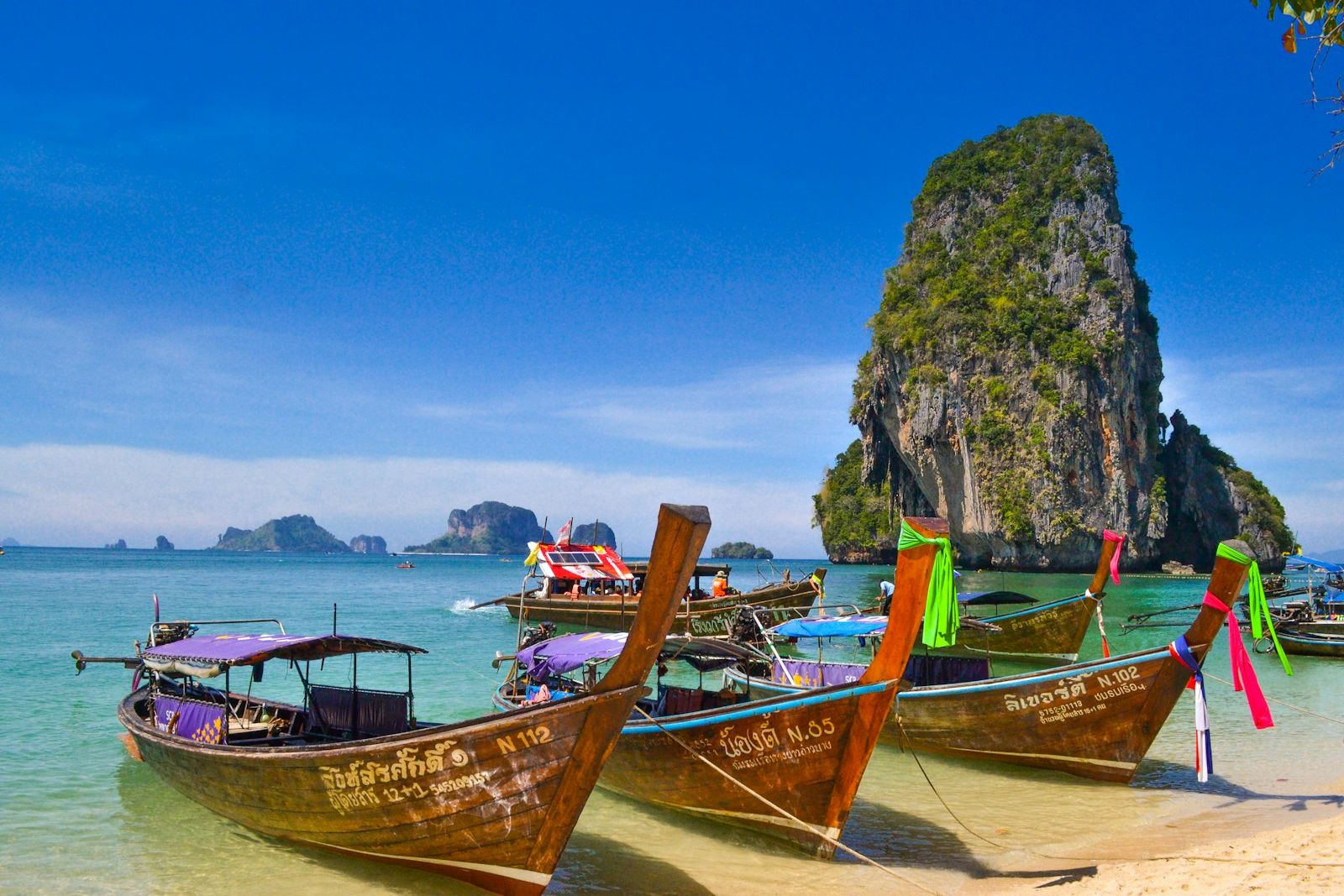
Thailand tourist visa at a glance
| Key fact | Detail |
|---|---|
| Validity | Exemption: entry stamp on arrival. TR single-entry: 3 months from issue. TR multiple-entry: 6 months |
| Length of stay | Exemption: ~60 days now (30/15 pending). TR: 60 days per entry, +30-day extension (90 max) |
| Official cost | Exemption: free. TR single-entry: ~1,000 THB. TR multiple-entry: ~5,000 THB |
| Who it's for | Tourists, short holidays, visiting friends and family |
| Work rights | None — no working for Thai or foreign employers on a tourist status |
| Key requirement | Passport valid 6+ months with 2 blank pages; onward/return flight; funds |
| Reporting | File the TDAC digital arrival card within 72h of arrival |
Do you even need a visa?
For most short trips, no. Citizens of around 93 countries — including the UK, most of the EU, the US, Australia, Canada, Japan and many more — get the visa exemption: you simply arrive, and immigration stamps you in. There is no application, no fee and no embassy visit.
You need an actual Tourist Visa (TR) if any of these apply:
- Your nationality is not on the exemption list (a Tourist Visa or Visa on Arrival may be your route in).
- You want a longer, more secure stay than the exemption gives — a 60-day TR plus a 30-day extension is 90 days on a single entry.
- You want the flexibility of a multiple-entry visa across several trips within six months.
Remember the moving target from the status box above: the exemption stay length is being cut from 60 to 30 days (15 for three countries). If you're travelling after the change lands, a Tourist Visa becomes far more attractive because it still gives a full 60 days plus an extension.
Visa exemption explained
The exemption is a stamp, not a visa. You land, hand over your passport, and get an entry stamp valid for the current exemption period — 60 days as of July 2026 (dropping to 30, or 15 for Maldives, Mauritius and Seychelles, once the Gazette change is live). You can then extend once by 30 days at any immigration office for 1,900 THB, using a TM.7 form and a photo.
Two things trip people up:
The land-border limit. Since a November 2025 directive, you can only enter Thailand visa-exempt twice per calendar year by land. This was aimed squarely at "border bounce" residents. Air arrivals have historically been treated more generously, but officers now review your full entry history — more on that in the crackdown section.
The extension count. For visa-exempt entries, some travellers report immigration offices will only grant the 30-day extension a limited number of times — anecdotally around twice a year — but this is officer discretion, not a published nationwide rule, and it varies by office. Treat a second extension as a request, not a right.
The TDAC digital arrival card (everyone)
Separate from your visa or exemption, every arrival in Thailand must file the Thailand Digital Arrival Card (TDAC). It replaced the old paper TM6 card in May 2025 and is mandatory for all foreign visitors. Complete it online within 72 hours before you arrive at the official site, thaievisa.go.th. It is free, quick, and completely separate from having a visa — do not confuse the two.
The Tourist Visa (TR)
If you need or want a visa rather than the exemption stamp, the Tourist Visa (TR) is the standard option. It comes in two forms, plus a limited Visa on Arrival for a few nationalities.
Single-entry Tourist Visa (SETV)
- Valid for 3 months from the date of issue (that's the window to enter, not the stay length).
- Permits a 60-day stay, extendable by 30 days at immigration — 90 days maximum on one entry.
- Official consular fee is roughly 1,000 THB (about £22 / $28).
Multiple-entry Tourist Visa (METV)
- Valid for 6 months, with unlimited entries in that window.
- Each entry allows a 60-day stay (again extendable by 30 days).
- Requires proof of a bank balance of around 200,000 THB held for the previous six months.
- Official fee is roughly 5,000 THB.
Watch the fees. The figures above are the official consular fees. Many third-party "visa service" websites bundle in their own charges — often $70 or more on top — and present the total as if it were the government price. There's nothing illegal about paying an agent for convenience, but know the official baseline so you can see the markup. The government's own fee schedule is published by Bangkok Immigration.
Visa on Arrival (VOA)
A small set of nationalities that are not exemption-eligible can get a Visa on Arrival for about 15 days. It is non-extendable, paid in cash at the checkpoint, and only useful for a genuinely short trip. Most Western tourists will never use it — they're covered by the exemption instead.
Requirements and documents
Whether you're using the exemption or applying for a TR, be ready to show:
- A passport valid for at least 6 months beyond your arrival date, with at least 2 blank pages.
- A recent passport photo (for visa applications and extensions).
- Proof of funds — typically a bank statement showing around $2,000 (or the 200,000 THB balance for the METV).
- Onward or return flight confirmation — immigration and airlines both check this.
- Proof of accommodation — a hotel booking or address for your first nights.
These aren't always requested at the airport on an exemption entry, but they can be, and low-cost carriers frequently ask for onward tickets at check-in. Have them ready.

How to apply on thaievisa.go.th
Thailand has consolidated tourist visa applications into a single official e-Visa portal. Ignore the lookalike sites — the real one is thaievisa.go.th.
- Apply from outside Thailand. The e-Visa can only be lodged while you are abroad — you cannot apply for a Tourist Visa once you're already in the country.
- Create an account on the portal and start a new application for the Tourist Visa (single- or multiple-entry).
- Upload your documents: passport bio page, a passport photo, your onward/return flight booking and your first hotel booking.
- Pay online. The fee is charged during the application and is non-refundable, even if the visa is refused — so get the details right first.
- Wait for processing, typically 5 to 10 working days. You'll receive the approved e-Visa electronically; print it and carry it with you.
Once approved and travelling, don't forget the TDAC arrival card within 72 hours of your flight — it's a separate step on the same official domain.
Costs and fees: official vs agent markup
Here's the honest cost picture for a tourist stay:
- Visa exemption: free. Just the 1,900 THB if you extend.
- Single-entry TR: ~1,000 THB official fee.
- Multiple-entry TR: ~5,000 THB official fee (plus the 200,000 THB balance you must show, not spend).
- 30-day extension: 1,900 THB at immigration.
The trap is service fees. Agent and "fast-track" websites routinely add $70 or more and quote only the total. Paying for help is fine — paying a markup you didn't know about is not. Compare any quote against the official Bangkok Immigration fee schedule before you hand over money.
Extending your stay in Phuket
If you're in Phuket, you don't need to travel to Bangkok to extend. Phuket Immigration handles the standard 30-day extension of both exemption entries and Tourist Visas.
You'll need:
- A completed TM.7 extension form.
- A passport photo.
- Your passport and the 1,900 THB fee.
File before your current stamp expires — turning up after you've overstayed turns a routine errand into a fine. Phuket's office can get very busy in high season, so go early in the day and allow time to queue. While you're planning the day around it, our Phuket hub and Phuket business listings are handy for sorting out the practical side of a longer stay, from SIM cards to somewhere decent for a coffee afterwards at one of the Phuket cafes.
Remember the earlier caveat: repeat extensions on a visa-exempt entry are at the officer's discretion and may be limited. If you find yourself extending again and again, that's a sign you've outgrown tourist status.
Visa runs and the 2025–26 crackdown
For years, some foreigners effectively lived in Thailand by doing "visa runs" — nipping across a land border and coming straight back for a fresh exemption stamp. That era is over, and it's important to be honest about it.
A November 2025 directive instructs immigration officers to review a traveller's full passport history and refuse entry where the pattern looks like living in Thailand rather than visiting. Land borders now cap visa-exempt entries at two per calendar year. The results are visible in the numbers: roughly 29,490 foreigners were denied entry between January and May 2026.
The takeaway is simple. The exemption and Tourist Visa are for holidays and genuine short visits. If your real intention is to stay for months on end, stacking tourist stamps is now a good way to get turned away at the border. Get a proper long-stay visa instead — which is exactly what the next section is about.

Which option is right for you?
- A one- to three-week holiday? Use the visa exemption. No paperwork, no fee — just file the TDAC and enjoy it.
- Up to ~90 days in one go, or your nationality isn't exempt? Get a single-entry Tourist Visa (TR) — 60 days plus a 30-day extension.
- Several trips over six months? The multiple-entry TR (METV) is built for this, if you can show the 200,000 THB balance.
- Planning to actually live, work remotely or stay long-term? Stop looking at tourist options. The Destination Thailand Visa (DTV) is the obvious upgrade for remote workers and long-stayers: 5-year multiple-entry, 180 days per entry (extendable by another 180), a 10,000 THB fee, and a 500,000 THB savings requirement. It's designed for people working remotely for foreign employers — you still cannot work for a Thai employer on it, which is what the Non-B + work permit route is for.
Thailand tourist visa vs other Thailand long-stay options
If a tourist stay isn't enough, here's how it sits against Thailand's main long-stay visas. Every other option links to its full guide.
| Visa | Best for | Typical validity | Ballpark cost | Work rights |
|---|---|---|---|---|
| DTV | Remote workers, freelancers, soft-power visitors | 5 years, 180 days/entry | 10,000 THB | Remote, foreign income only |
| Tourist visa / exemption | Short holidays | Exemption ~60 days (30 pending) / TR 60 days, +30 ext | Free – 5,000 THB | None |
| LTR (Long-Term Resident) | High earners, wealthy retirees, skilled professionals | 10 years (5+5) | ~50,000 THB | Yes (some categories) |
| Thailand Privilege (Elite) | A hassle-free paid membership + VIP perks | 5–20 years | From ~650,000 THB | None |
| Non-Immigrant B + work permit | Working for a Thai employer | 1 year (renewable) | Low gov fees; agent fees vary | Local Thai employment |
| Retirement (Non-O / O-A / O-X) | Over-50s settling long-term | 1 yr renewable (O-X: 10 yrs) | 1,900 THB/yr + 800k THB shown | None |
| Education (ED) | Studying (language, Muay Thai, university) | Per course, ~6–12 months | ~2,000 THB + tuition | None |
Verdict: for a holiday, nothing beats the free exemption or a cheap Tourist Visa. But if you catch yourself extending and re-entering to string together months in Thailand, the DTV is almost always the smarter, safer choice — and over-50s settling down should look at the retirement visa instead.
Overstaying
Don't. Overstaying carries a fine of 500 THB per day, capped at 20,000 THB, payable when you leave. Worse, an overstay of 90 days or more triggers automatic re-entry bans — starting at one year and climbing with the length of the overstay. Even a short overstay can cause problems at check-in and on future entries. If your stamp is about to run out, extend it or leave — a 1,900 THB extension is a lot cheaper than a ban.
Frequently asked questions
How long can I stay in Thailand without a visa?
As of July 2026, the visa exemption gives most nationalities 60 days, extendable by a further 30 days at immigration. A Cabinet-approved change will cut this to 30 days (15 for Maldives, Mauritius and Seychelles) once it's published in the Royal Gazette — not yet done as of early July 2026. Always check the current rule before you travel.
Do I need a visa for a two-week holiday in Thailand?
Almost certainly not. If you hold a passport from one of the ~93 exemption countries (the UK, EU, US, Australia and many others), you get an entry stamp on arrival for free. You only need a Tourist Visa if your nationality isn't exempt or you want a longer, more secure stay.
What's the difference between the visa exemption and a Tourist Visa?
The exemption is a free stamp you get on arrival with no application. A Tourist Visa (TR) is applied for in advance and gives a 60-day stay (extendable to 90) — as a single-entry (~1,000 THB) or multiple-entry (~5,000 THB) visa. The TR is more secure and useful if you're not exemption-eligible or want to enter several times.
How do I extend my Thailand tourist visa?
Visit any immigration office — in Phuket, that's Phuket Immigration — before your current stamp expires. Bring a completed TM.7 form, a passport photo, your passport and 1,900 THB. This buys a 30-day extension on both exemption entries and Tourist Visas.
What is the TDAC and do I really need it?
Yes. The Thailand Digital Arrival Card has been mandatory for all arrivals since May 2025, replacing the paper TM6. File it online at thaievisa.go.th within 72 hours before you arrive. It's free and separate from your visa — but you must complete it regardless of how you enter.
Can I still do visa runs in Thailand?
Not reliably. Since a November 2025 directive, officers review your full passport history, land borders cap visa-exempt entries at two per calendar year, and tens of thousands of people were refused entry in early 2026. The visa-run lifestyle is effectively finished — for a genuine long stay, get a proper visa like the DTV.
How much does a Thailand tourist visa cost?
Official fees are roughly 1,000 THB for a single-entry TR and 5,000 THB for a multiple-entry TR; the exemption is free. Beware third-party sites that add $70+ service fees on top and quote only the total. Check the official Bangkok Immigration fees to spot the markup.
What happens if I overstay?
You'll pay 500 THB per day, capped at 20,000 THB, when you leave. An overstay of 90 days or more triggers an automatic re-entry ban. It's never worth it — extend for 1,900 THB or leave before your stamp expires.
Can I work in Thailand on a tourist visa?
No. Neither the exemption nor the Tourist Visa grants any work rights — not for Thai employers and not for foreign ones. Remote workers should look at the DTV (foreign income only); anyone employed by a Thai company needs a Non-B visa and work permit.
Do I need proof of onward travel?
Often, yes. Airlines regularly ask for an onward or return ticket at check-in, and immigration can request it too — along with proof of funds and accommodation. Have a return or onward flight booked before you fly, even on visa-exempt entry.
Is the Thailand tourist visa right for you?
For a holiday, the answer is almost always yes — and often you won't even need the visa itself, just the free exemption stamp and a TDAC filing. Keep it simple: check the current exemption length on the day you travel, carry proof of onward travel and funds, file the TDAC, and extend at Phuket Immigration if you want a few more weeks.
But be honest with yourself about your plans. The 2025–26 crackdown has drawn a firm line under using tourist stamps to live here. If Thailand is becoming home rather than a holiday, the DTV or one of the other long-stay visas will save you money, stress and the risk of a refused entry. When you're ready to explore the island properly, start with our Phuket directory.
About this guide
This guide was written and fact-checked by the Thailand Stuff editorial team, who live in and cover Thailand. We research our visa guides against official sources such as Thai Immigration and the Ministry of Foreign Affairs, and we review them regularly to keep requirements, fees and processes current. Thailand Stuff is an independent guide, not a law firm or a licensed visa agent, so treat this as general information rather than legal advice. Visa rules change often and are applied at the discretion of individual immigration offices, so always confirm the current requirements with Thai Immigration or your nearest Thai embassy before you apply or travel. Last reviewed: July 2026.
Keep reading
 News
NewsA Thai senator has proposed letting foreigners own 100% of a business in Thailand to end the nominee system. Here is what was said and what it could mean.
 Practical
The honest 2026 answer: most Thai banks reject DTV visa holders for new accounts. Why it happens, what does not work, and the real alternatives that do.
 Practical
How do tourists pay in Thailand? Compare Wise and home cards, the KBank prepaid Visa card, cash and ATM fees, honestly, with no Thai bank account needed.