
Best time to visit Phuket: weather, crowds and prices by month
The best time to visit Phuket is November to April for dry, calm weather. Green season means fewer crowds and lower prices. See the month by month guide.
Thailand Stuff
Phuket travel editors · 21 Jul 2026 · 14 min read

Phuket runs on two seasons, and picking the right one shapes your whole trip. The best time to visit Phuket for reliable sunshine, calm seas and postcard beaches is the dry high season from November to April, with December to February the peak. If you care more about low prices, green scenery and quiet beaches, the green season from May to October rewards you, as long as you understand how the rain actually behaves. This guide breaks down the best time to visit Phuket month by month, with weather, sea conditions, crowds and prices, so you can match the island to the trip you want.
The short answer: when is the best time to visit Phuket
The best time to visit Phuket is between November and April, when the southwest monsoon has passed, the skies are mostly clear, the Andaman Sea is calm and the beaches are at their best. Within that window, December to February gives you the most dependable weather and the liveliest atmosphere, while November and April are quieter shoulder months with lower prices.
If your priority is value rather than guaranteed sun, the green season from May to October is a genuinely good option. Hotels drop by around 30 to 40 percent, the island turns lush, and the crowds thin out. The trade off is more rain, rougher seas on the west coast, and the occasional cancelled boat trip. For many repeat visitors, that is a fair swap.
So there is no single best time to visit Phuket for everyone. There is a best time for sunbathing and diving, a best time for your budget, and a best time for peace and quiet, and they do not all fall in the same month.
Phuket's two seasons: dry season and green season
Phuket has a tropical monsoon climate, so it is warm all year, with daytime temperatures almost always sitting between 29 and 33 degrees Celsius and high humidity. Instead of hot and cold, the year splits into a dry season and a wet season, driven by the monsoon winds over the Andaman Sea.
The dry season, also called the high season, runs from roughly mid November to April. The northeast monsoon brings drier, more stable air, so you get long sunny days, light winds and a flat, clear sea. This is when Phuket looks like the brochure.
The green season, also called the low or wet season, runs from about May to October. The southwest monsoon pushes moist air onto the Andaman coast, bringing heavier rainfall, bigger swells and stronger currents on the west coast beaches. According to Climates to Travel, the rainy period tends to peak twice, once early on and again around September and October.
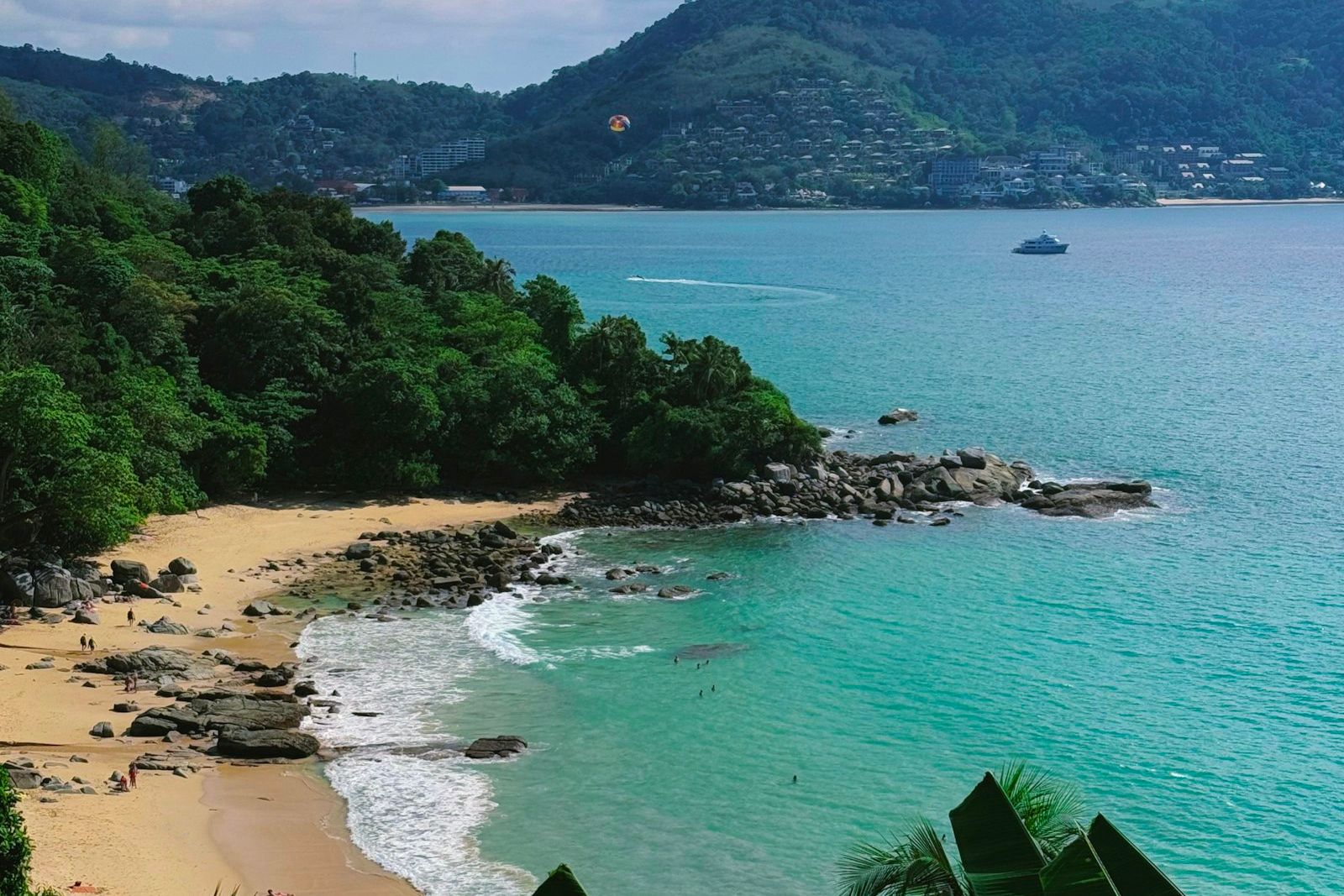
The important thing to understand is that green season does not mean rain all day, every day. Most of the time the rain arrives in short, heavy bursts, often in the late afternoon or overnight, and the sun returns quickly. You can still have plenty of beach time in a so called wet month.
Best time to visit Phuket month by month
Here is the quick month by month view, so you can see at a glance how weather, crowds and prices shift across the year. Use it to narrow down your dates, then read the season sections below for detail.
| Month | Season | Weather | Sea and beaches | Crowds and prices |
|---|---|---|---|---|
| January | High (peak) | Dry, sunny, low humidity | Calm and clear | Very busy, highest prices |
| February | High (peak) | Dry and sunny | Calm and clear | Busy, high prices |
| March | High | Hot, mostly dry | Calm, warming up | Busy, easing prices |
| April | High into hot | Hottest month, Songkran | Warm, still calm early | Busy for Songkran, then quieter |
| May | Green begins | First rains, still warm | Building swell | Quieter, prices drop |
| June | Green | Short showers, sunny spells | Choppy on west coast | Quiet, good value |
| July | Green | Hot with afternoon bursts | Variable, some red flags | Small European peak, still good value |
| August | Green | Warm, regular showers | Choppy, watch flags | Moderate, good value |
| September | Green (wettest) | Rainiest month | Roughest seas | Quietest, cheapest |
| October | Green into shoulder | Wet early, clearing late | Rough early, calming | Quiet, cheap, improving |
| November | Shoulder into high | Season flips to dry | Calming, clearing | Great value early, filling up |
| December | High (peak) | Dry and sunny | Calm and clear | Busiest, peak prices |
A few patterns jump out of the table. The sweet spot for weather plus value is often late November and early December before the Christmas rush, and again in late April and May as the crowds leave but the sea is still swimmable. September is the wettest and cheapest, and the classic Christmas and New Year window is the busiest and most expensive stretch of the year.
High season in Phuket (November to April): what to expect
High season is the best time to visit Phuket if you want dependable sunshine and calm water. Between November and April the rain mostly disappears, humidity eases, and the west coast beaches like Patong, Karon, Kata and Kamala are at their swimmable, snorkel friendly best. The sea is flat enough that island hopping and diving trips run reliably almost every day.
The flip side is people and prices. December to February is peak season, and the two to three weeks around Christmas and New Year are the single busiest, priciest window of the year. Hotels sell out, popular restaurants need booking, and headline beaches get crowded by late morning. If you are set on this period, reserve accommodation and any big tours well ahead. Our guide to the cost of living and real prices in Phuket gives a sense of how much high season inflates the day to day budget.
November and April sit at the edges of high season and are the smart picks for many travellers. In November the island has just dried out, everything is green from the recent rains, and prices have not yet hit their peak. April is hot but still mostly dry at the start, and once the Songkran holiday passes the crowds thin noticeably.
High season is also the heart of Phuket's events calendar. If you visit in December you can catch the Phuket King's Cup Regatta off Kata Beach and the huge New Year countdown on Patong Beach. Browse everything that is on during your dates on the Phuket events calendar.
Green season in Phuket (May to October): the honest truth
The green season is the most misunderstood part of the Phuket year. Yes, it rains more, but the common image of grey skies from dawn to dusk is wrong. Rain usually falls in short, intense bursts, frequently in the afternoon or at night, and then clears to sunshine. On many days you get several good hours on the beach around the showers.

What you gain is real. Room rates fall by around 30 to 40 percent, flights are cheaper, the island is at its greenest, waterfalls run full, and the crowds all but vanish. This is the best time to visit Phuket if you want space to breathe and a smaller bill. It is also the season when the hills come alive, which is why riders love it, as covered in our enduro in Phuket guide, and when forest walks like the Kathu Waterfall Loop are at their most dramatic.
What you give up is sea conditions. The southwest monsoon builds swell and currents on the west coast, so red warning flags go up more often at Patong, Karon and Kata. Rip currents cause drownings here every year, so swim only between the flags and never when they are red. Some speedboat tours to Phi Phi and James Bond Island get cancelled at short notice, so book operators that offer free rescheduling. The Thai Meteorological Department is the best source for a live read on the monsoon.
The shoulder months: April, May and November
The shoulder months are where seasoned Phuket visitors find the best balance of weather, price and quiet. These are the weeks when one season hands over to the other, and conditions can be excellent even though the crowds have gone.
April is the tail of high season and the hottest month, with temperatures often pushing into the mid 30s Celsius. The first half is usually dry and the sea is still calm, so beaches and boat trips are good, while prices ease after the New Year peak. The catch is that April is also Songkran, the Thai new year water festival in the middle of the month, which is either the highlight of your trip or a wet surprise, depending on how you feel about being soaked in the street.
May is the start of green season and one of the best value months of all. The rains return gradually rather than all at once, so you often get sunny mornings with afternoon showers, and hotels drop their rates while the island is still fresh and quiet.
November is the mirror image, the flip from wet to dry. Early November can still throw the odd heavy shower, but by the second half the sea is calming, the skies are clearing, and prices are far below the December peak. For a lot of travellers, late November is quietly the best time to visit Phuket.
When is the cheapest time to visit Phuket
The cheapest time to visit Phuket is the green season, from May to October, with the deepest discounts in the wettest months of September and October. In this stretch, resorts commonly cut published rates by 30 to 40 percent, low season airfares appear, and you can negotiate longer stays. If your budget matters more than guaranteed sun, this is the window to target.
September is statistically the rainiest month and therefore usually the single cheapest, followed closely by October. You will pay for the discount with more rain and rougher seas, but if you are happy to plan around the weather rather than fight it, your money goes a long way. For food alone this is a great time, and Phuket's kitchens do not close for the rain, from street stalls to the healthy Thai dishes in our healthy Thai food guide.
The most expensive time is the opposite end of the calendar, the Christmas and New Year fortnight, when peak season demand collides with the global holiday season. Prices for the same room can double or more compared with green season, and the best places book out months ahead.
The worst time to visit Phuket, and how to work around it
If your trip is entirely about swimming, snorkelling and island hopping, the worst time to visit Phuket is September into early October, the peak of the monsoon. This is when rainfall is heaviest, the west coast sea is at its roughest, red flags fly most often, and boat trips are cancelled most frequently. The Similan Islands, one of the region's top dive destinations, close entirely for the monsoon, typically from mid May until mid October, under Thailand's national park rules.
That said, worst is relative. Even in September you get sunny spells, the island is beautiful and green, prices are at rock bottom, and inland activities carry on as normal. The trick is to plan a green season trip differently: base yourself near plenty of indoor and covered options, keep beach and boat days flexible, and treat clear mornings as your window to get out on the water.
The other honest warning is the Christmas and New Year peak. It is not bad weather, it is the crowds and the cost. If you dislike busy beaches and premium prices, avoid late December and aim for the quieter shoulder weeks instead.
Best time for the beach, diving and island hopping
For beaches, diving and island trips, the best time to visit Phuket is firmly the high season, November to April. This is when the Andaman Sea is calmest and clearest, underwater visibility is at its best, and day trips to Phi Phi, the Similans, Phang Nga Bay and the Racha Islands run reliably. If snorkelling and diving are the point of your holiday, book inside this window.
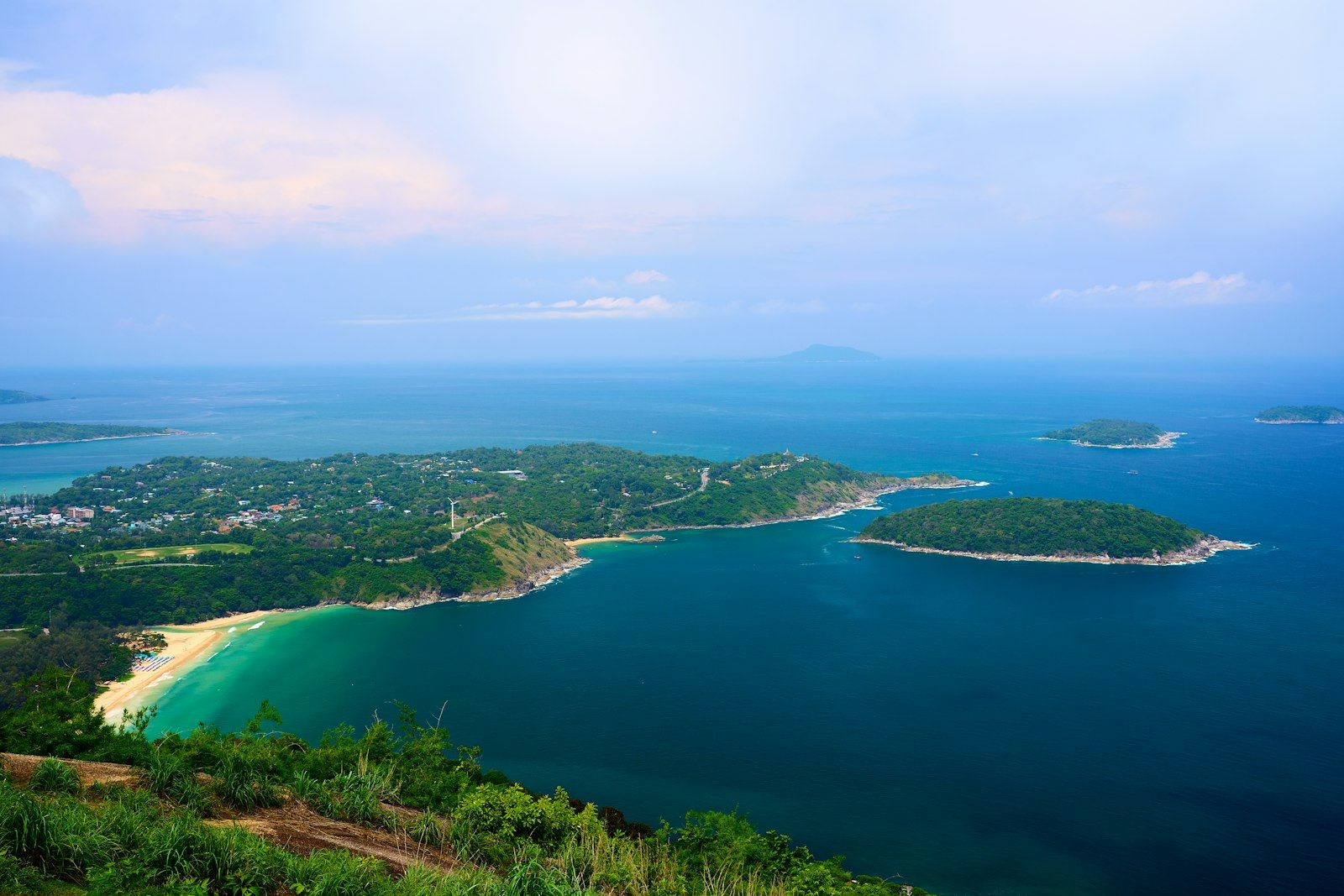
Diving in particular has a hard seasonal edge because the Similan Islands national park closes for the monsoon and only reopens around mid October. If the Similans are on your list, plan for the late October to April window. Closer to shore, the sheltered east coast and the southern capes stay calmer than the exposed west coast beaches even in green season, so there are always some swimmable options if you know where to look.
If you would rather stay on land, Phuket's hills and waterfalls are at their fullest in green season. The trails around the island are green and flowing from May onward, which suits hiking and riding far better than the dusty end of the dry season.
Best time for festivals and events in Phuket
Phuket's calendar has a festival for almost every season, so the best time to visit Phuket for events depends on which one you want to catch. Timing a trip around a festival is one of the easiest ways to turn a good holiday into a memorable one.
The biggest cultural event is Songkran, the Thai new year, from 13 to 15 April, when the whole island turns into a giant, joyful water fight. Read our full Songkran in Phuket survival guide before you go, and check the dates and details on the Songkran 2027 event page.
In October, the intense and unforgettable Phuket Vegetarian Festival takes over Old Town and the Chinese shrines for nine days of processions and ritual. Green season also has a surprisingly full calendar of music, sport and community events, as our monthly events roundup shows. High season then brings the sailing regattas and the enormous New Year beach countdowns.
When to visit Phuket for fewer crowds
For fewer crowds, the best time to visit Phuket is the green season, especially June, September and October, when domestic and international visitor numbers are at their lowest. Beaches that feel packed in January are close to empty, restaurants rarely need a booking, and the whole island moves at a slower pace. If solitude is your goal, and you can accept the rain, this is the answer.
Within high season, the quietest weeks are the shoulders, early to mid November and the second half of April, once the New Year and Songkran peaks have cleared. You still get good weather and calm seas, but without the density of the Christmas period. Avoid the last week of December and the first few days of January if crowds are your main concern.
Whenever you come, you can dodge the worst of the crush by getting to popular beaches and viewpoints early, and by eating where locals eat rather than only on the tourist strips. The Phuket restaurant listings are a good place to find those spots across the island.
How to plan around the weather whatever month you visit
Whatever month you choose, a little planning makes Phuket work in any season. In green season, keep your itinerary flexible and treat the mornings, which are often clearer, as prime beach and boat time. Save covered activities like markets, temples, spas, cafes and museums for the afternoon when showers are most likely. A cheap rain poncho and quick drying clothes go a long way.
Getting around also shifts with the weather. Roads can flood briefly during heavy downpours, and riding a scooter in the rain is genuinely risky, so consider a car or a ride app on wet days. If you do want two wheels, hire from a reputable shop such as this Phuket motorbike rental and ride cautiously. For the wider picture of moving around the island and the region, start from the Phuket hub page.
Finally, sort your paperwork before you fixate on the weather. Most visitors can enter for a short stay easily, but check the current rules in our Thailand tourist visa guide so nothing derails the trip you have carefully timed.
Frequently asked questions
Which month is the best to visit Phuket?
For most people the best month to visit Phuket is either December, January or February, when the weather is driest, the sea is calmest and the island is at its liveliest. If you want similar conditions with fewer crowds and lower prices, choose late November or early April instead.
What is the rainy season in Phuket?
Phuket's rainy or green season runs from roughly May to October, driven by the southwest monsoon. Rain usually comes in short, heavy bursts rather than all day, and September into early October is the wettest and roughest stretch, with the most cancelled boat trips.
What is the rainiest month in Phuket?
September is the rainiest month in Phuket, closely followed by October. These months see the heaviest rainfall of the year and the roughest seas on the west coast, but they are also the quietest and cheapest, so they suit budget travellers who can plan around the weather.
What is the cheapest time to visit Phuket?
The cheapest time to visit Phuket is the green season from May to October, with the deepest discounts in September and October. Hotel rates commonly fall by 30 to 40 percent and low season flights appear, in exchange for more rain and rougher seas.
Is Phuket worth visiting in the rainy season?
Yes. Green season Phuket offers far fewer crowds, prices up to 40 percent lower, lush scenery and full waterfalls. The rain often falls in short afternoon bursts, so you still get beach time. Just keep boat days flexible and swim only between the beach safety flags.
What is the worst time to visit Phuket?
For beach and diving holidays, the worst time is September into early October, the peak of the monsoon, when seas are roughest and tours are most often cancelled. For crowds and cost, the worst time is the Christmas and New Year fortnight, the busiest and most expensive weeks.
Is April a good time to visit Phuket?
April is a good time to visit Phuket, especially the first half, which is usually dry with a calm sea. It is the hottest month, so expect strong heat, and the middle of the month brings Songkran, the water festival, which is a highlight for some and a soggy surprise for others.
Is November a good time to visit Phuket?
November is one of the best value times to visit Phuket. The season flips from wet to dry, so by the second half the sea is calming and the skies are clearing, while prices remain well below the December peak. Early November can still bring the odd heavy shower.
When is high season in Phuket?
High season in Phuket runs from about November to April, when the dry northeast monsoon brings sunshine and calm seas. The peak within it is December to February, and the two to three weeks around Christmas and New Year are the busiest and most expensive of the entire year.
Sources
- Climates to Travel, Phuket climate and monthly averages
- Thai Meteorological Department
- Department of National Parks, Thailand (Similan seasonal closure)
- Tourism Authority of Thailand
About this guide
This guide was researched and written by the Thailand Stuff editorial team, who are based in Phuket and cross check every guide against official weather data and tourism sources. Seasonal dates and conditions are general guidance drawn from long term climate patterns and can vary year to year, so always check a live forecast and official festival dates before you travel. We review and update this guide each season to keep it current.
Keep reading
 News
NewsA Thai senator has proposed letting foreigners own 100% of a business in Thailand to end the nominee system. Here is what was said and what it could mean.
 Practical
The honest 2026 answer: most Thai banks reject DTV visa holders for new accounts. Why it happens, what does not work, and the real alternatives that do.
 Practical
How do tourists pay in Thailand? Compare Wise and home cards, the KBank prepaid Visa card, cash and ATM fees, honestly, with no Thai bank account needed.