
Thailand foreign income tax 2026: what expats pay on money brought in
A plain-English Thailand foreign income tax guide for 2026: the 180-day residency test, the remittance rule, rates, double tax agreements and how to file.
Thailand Stuff Editorial Team
31 Jul 2026 · 16 min read

Few subjects worry new arrivals more than the Thailand foreign income tax rules, and few are more misunderstood. Since 2024 Thailand has changed how it treats money that residents bring in from abroad, headlines have swung between "Thailand taxes your worldwide income" and "nothing has really changed", and a proposed rollback in 2026 has muddied the water further. The reality sits in between, and for most retirees, remote workers and long-stay expats it is far less alarming than the scare stories suggest. This guide explains, in plain English, who is actually liable, how the remittance rule works, what the 2026 rates and proposed exemption mean, and whether you need to file at all.
Reviewed July 2026. Thai tax rules changed in 2024 and a further change is under discussion for 2026, so details move quickly. This is general information for people living in Phuket and Thailand, not tax advice. Always confirm your own position with the Thai Revenue Department or a qualified tax adviser before acting.
Do expats pay tax on foreign income in Thailand?
Only if you are a Thai tax resident, and only on foreign income you actually bring into the country. Thailand does not tax your worldwide income the way the United States does. It taxes foreign-source income on a remittance basis, which means the money becomes potentially assessable when it enters Thailand, not when you earn it abroad. If you keep funds offshore and never transfer them in, they are not taxed here.
Three things therefore decide whether the Thailand foreign income tax touches you at all: whether you are a tax resident (the 180-day test), whether the money counts as assessable income, and whether you remit it into Thailand. Miss any one of those and there is usually no Thai tax to pay. According to PwC's Thailand tax summary, residents are taxed on Thai-source income and on foreign-source income brought into Thailand, while non-residents are taxed on Thai-source income only.
That structure matters because it gives you levers. A retiree living on savings, a nomad paid into an overseas account, and an employee on a local Thai salary can all face very different bills. The sections below work through each test in turn so you can place yourself in the right box before you worry about rates.
Are you a Thai tax resident? The 180-day rule
You are a Thai tax resident in any calendar year in which you spend 180 days or more in Thailand. The days do not need to be consecutive, and it is a simple physical-presence count from 1 January to 31 December. Spend 179 days or fewer and you are a non-resident for that year, taxable only on income arising from work or business inside Thailand.
This single number is the most important line in the whole system. A tourist on short trips, or someone who splits the year across several countries and keeps Thai days under 180, never becomes liable for Thailand foreign income tax on remittances at all. Someone settled here on a Thailand retirement visa or a long-stay permit will almost always cross 180 days and should assume resident status.
Residency is assessed year by year, so it can change. If you arrive in July and stay, you may be a non-resident in your first partial year and a resident from the next. Keep a simple record of your entry and exit stamps: if the Revenue Department ever asks, your passport is the evidence. The same 180-day count also underpins the 90-day reporting address rule, though the two obligations are separate and should not be confused.
What counts as foreign income, and what does not
Assessable foreign income is money you earn abroad that would be taxable if it arose in Thailand: employment salary, self-employment and freelance earnings, rental income, dividends, interest, pensions and most capital gains. What is generally not assessable is a genuine gift, a loan, or the return of your own capital, though the line between capital and income can be technical.
The most important carve-out is timing. Foreign income and savings you accumulated before 1 January 2024 are outside the new remittance rule. If you built up a pot of savings before that date and later transfer it in, that historic capital is not caught, which is why keeping clear records of pre-2024 balances is so valuable. The rule bites on income earned from 2024 onward.
It also helps to separate three common money types that expats remit:
- Pre-2024 savings. Not assessable under the current rule. Document the balance as at 31 December 2023.
- Capital you already owned. Returning your own money is not income, but mixing old and new funds in one account makes it hard to prove which is which.
- New income earned from 2024. Salary, pension, rent, dividends or gains earned abroad from 2024, then remitted, is the category the rules are aimed at.
Keeping new income in a separate account from old savings is the single simplest piece of housekeeping that makes your position defensible.
How the remittance rule works
Thailand taxes foreign income when it is brought into the country, not when it is earned. If you earn 1,000,000 baht of dividends offshore in 2026 but leave them in your overseas broker, there is no Thai tax event. Transfer some or all of it into your Thai bank and the amount you remitted becomes assessable in the year you bring it in. This is the crux of the Thailand foreign income tax and the part most headlines get wrong.
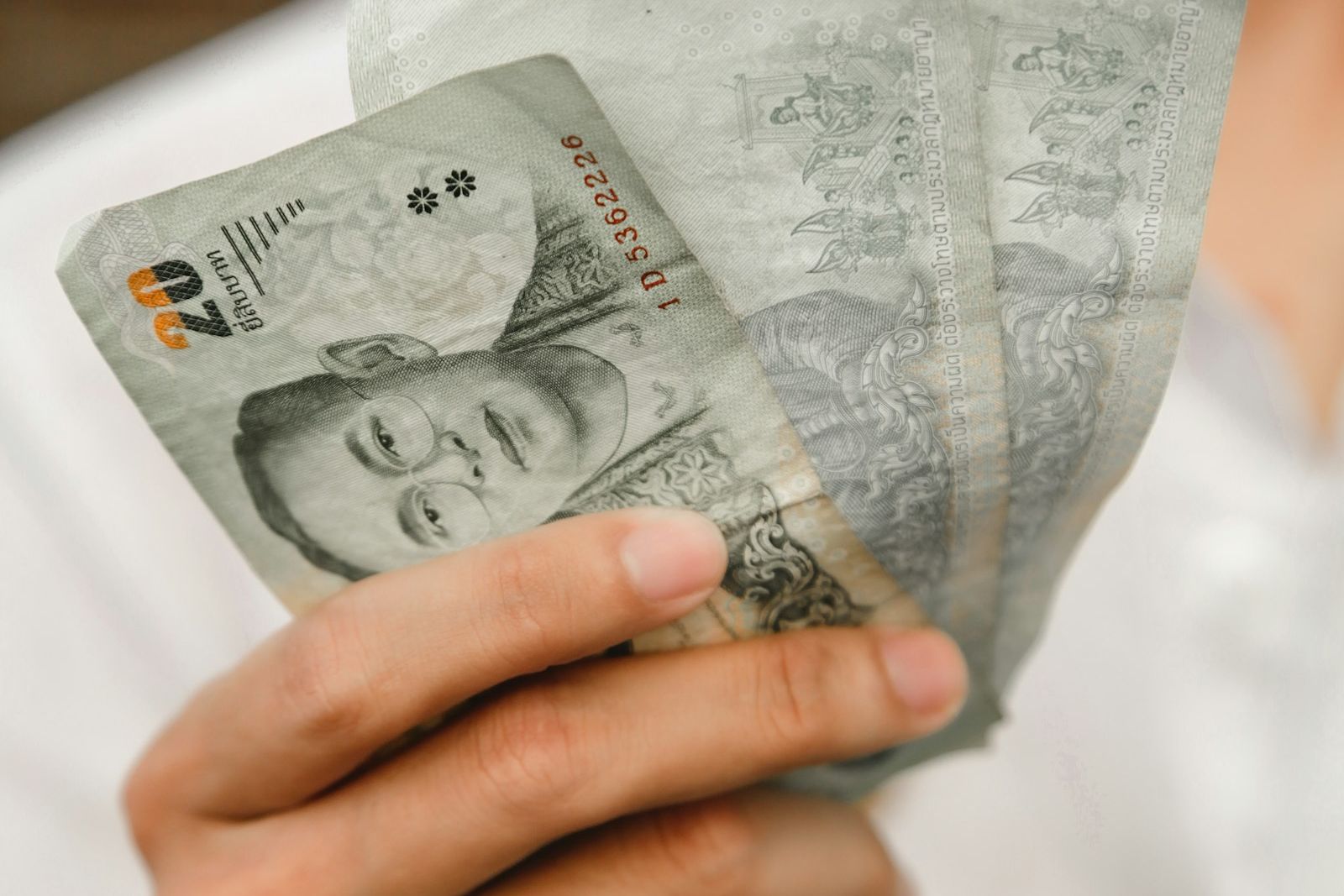
The 2024 change, introduced through Revenue Department orders, closed an old loophole. Previously, foreign income was only taxed if remitted in the same year it was earned, so people simply waited until the following January to transfer it in tax-free. From 2024 that timing trick was removed: foreign income earned from 1 January 2024 became assessable whenever it is later remitted, even years later. That is what triggered the wave of concern among expats.
In practice, remittance is broad. A bank transfer into Thailand is the obvious case, but spending on a foreign credit card, or using an overseas debit card at a Thai ATM, can also count as bringing income in. This is why setting up your money sensibly, including opening a Thai bank account and deciding which funds you draw on, is part of tax planning and not just admin.
What is changing for 2026: the proposed exemption
The most significant recent development is a proposed softening of the 2024 rule. Through 2025 and into 2026, the Thai Revenue Department signalled a partial reversal that would exempt foreign income from tax if it is remitted in the same year it is earned or in the following calendar year. Money brought in later than that would remain assessable. Industry observers expect it to apply from the 2026 filing period and to cover income earned from 2024 onward.
If enacted as described, this largely restores the pre-2024 flexibility for people who bring their money in promptly. A retiree transferring this year's pension this year, or a nomad remitting recent earnings within the two-year window, would fall outside the charge. The STEP industry note summarises the proposal, and law firm Nishimura and Asahi reported that it is expected to take effect from the January to March 2026 filing season.
Treat this strictly as proposed, not settled law until it is formally enacted and published. The direction of travel is toward relief rather than a tougher regime, which is reassuring, but you should not restructure your finances around a rule that could still change in the detail. Check the current status before you rely on it, and keep records either way.
Thailand income tax rates 2026
Thailand uses a progressive personal income tax scale, and the rates are unchanged for 2026. Tax applies to your net assessable income, which is income after deductions and personal allowances, so the headline rate is rarely the rate you actually pay. The top 35 percent band only bites on the portion of net income above 5,000,000 baht, a level most expats never reach.

| Net annual income (THB) | Tax rate |
|---|---|
| 0 to 150,000 | 0% (exempt) |
| 150,001 to 300,000 | 5% |
| 300,001 to 500,000 | 10% |
| 500,001 to 750,000 | 15% |
| 750,001 to 1,000,000 | 20% |
| 1,000,001 to 2,000,000 | 25% |
| 2,000,001 to 5,000,000 | 30% |
| Over 5,000,000 | 35% |
Before those rates apply, you subtract allowances and deductions. Everyone gets a personal allowance of 60,000 baht, with further allowances for a spouse and children, and residents aged 65 and over receive an additional income exemption of 190,000 baht that is especially relevant to retirees. The Thai Revenue Department publishes the current allowances and bands. The practical effect is that a modest remittance can attract little or no tax once the first 150,000 baht sits in the zero band and allowances are applied on top.
Certain approved professionals under Board of Investment schemes, and holders of the wealthy or skilled categories of the long-stay visa, can access preferential treatment. KPMG notes that qualified expatriates under some incentive schemes are taxed at a flat 15 percent, and the LTR visa carries a foreign-income tax exemption for eligible pensioners and professionals.
Double tax agreements: not paying tax twice
If your home country already taxes the income, a double tax agreement usually stops Thailand taxing the same money again. Thailand has signed more than 60 double tax agreements, and where one applies you can generally credit foreign tax already paid against any Thai tax due, or the treaty assigns the taxing right to one country only. The relevant treaty, not a general rule of thumb, decides the outcome.
The Revenue Department publishes the full list of Thailand's double tax agreements, which includes the United States, United Kingdom, Australia, Canada, most of the European Union and much of Asia. The credit method means that if you paid, say, 20 percent tax on rental income at home and the Thai rate on that slice would be 10 percent, the foreign credit typically wipes out the Thai charge, though you may still have a filing obligation.
Two points catch people out. First, a treaty relieves double taxation, it does not automatically make income tax-free, so you may still need to declare it and claim the relief. Second, you generally need documentation, such as evidence of foreign tax paid, to support a credit. Anyone with a genuinely complex cross-border position, for example running a business or drawing multiple income streams, should read our guide to starting a business in Thailand and take professional advice rather than rely on assumptions.
Do retirees and pensioners pay tax?
It depends on the pension and the treaty. Many retirees pay little or no Thai tax, but "retirement income is always exempt" is a myth that gets people into trouble. The key question is what type of pension you receive and what your country's treaty with Thailand says about it.
Government and state pensions are often protected. Under the United States and Thailand tax treaty, for instance, US social security is generally taxable in the United States rather than Thailand, and similar rules apply to many government service pensions. Private and company pensions are treated differently and can be assessable in Thailand if they are remitted while you are resident, subject to any treaty relief and the over-65 exemption.
Because pensions vary so much, retirees benefit most from planning. Working out your likely bill is part of the wider budgeting covered in our guides on how much you need to retire in Thailand and the cost of living in Phuket. If your only Thai-relevant income is a treaty-protected state pension remitted promptly, your practical liability may be nil, but you should still confirm whether a filing is required.
Digital nomads, DTV holders and remote workers
Remote workers who spend 180 days or more in Thailand are tax residents, and income they remit into the country is assessable in the same way as anyone else's. Holding a Destination Thailand Visa (DTV) does not change the tax analysis: the DTV is an immigration status, not a tax exemption, and the 180-day residency test still governs your liability.
In practice, many nomads manage their exposure through the remittance mechanism. Income kept in an overseas account and drawn down carefully, combined with the proposed same-year or following-year exemption, can keep Thai tax low or nil for those who plan. Nomads on other routes, such as the education visa or a tourist visa with short stays, should still count their days, because it is presence, not visa type, that decides residency.
The grey area is working for foreign clients while physically in Thailand. Strictly, income from work performed in Thailand can be seen as Thai-source, and separately the remittance rule catches foreign earnings brought in. The safest approach is to keep good records of what you earn and what you remit, and to get advice if your setup is anything more than a simple salary paid abroad.
Do you need to file a Thai tax return and get a TIN?
If you are a tax resident with assessable income, you are expected to obtain a tax identification number (TIN) and file an annual return. The personal income tax return, form PND90 or PND91, covers the previous calendar year and is filed between 1 January and 31 March, with a short extension for online filing. Filing is separate from your visa and from 90-day reporting.
Whether you owe anything is a different question from whether you should file. If all your remitted income is covered by allowances, falls in the zero band, or is protected by a treaty, your tax may be nil, but a filing may still be technically required where you have assessable income. Enforcement against ordinary retirees has historically been light, and many long-term residents have never filed, but the Revenue Department is modernising and the direction is toward more, not less, reporting.
A sensible baseline for a resident who remits meaningful sums is to register for a TIN, keep records of what you bring in and its source, and file if you have assessable income. If your only inflows are clearly non-assessable (pre-2024 savings, treaty-protected pensions, or amounts within the proposed exemption window), keep the evidence and take advice on whether a return is needed in your case.
How to stay compliant: a practical checklist
Staying on the right side of the Thailand foreign income tax is mostly about records and timing, not large payments. A little organisation now prevents an awkward conversation later. Work through these basics:
- Count your days. Track time in Thailand each calendar year so you know if you cross 180 days and become resident.
- Separate your money. Keep pre-2024 savings in one account and post-2024 income in another so you can prove what is what.
- Log every remittance. Note the date, amount and source of money you bring into Thailand, including foreign card spending.
- Keep foreign-tax evidence. Save proof of any tax already paid at home to support a treaty credit.
- Register for a TIN if you have assessable income, and diarise the 1 January to 31 March filing window.
- Watch the 2026 change. Confirm the status of the proposed same-year exemption before relying on it.
None of this requires an accountant for a simple case, but all of it makes a complex case far cheaper to sort out if you do need one. Sound money housekeeping also pairs naturally with choosing the best areas to live in Phuket and settling in properly.
Common mistakes expats make
The costliest errors are almost always about assumptions rather than rates. People hear a headline, apply it to themselves without checking the tests, and either panic unnecessarily or ignore a real obligation. Avoid the traps below:
- Assuming worldwide income is taxed. Thailand taxes remitted foreign income, not your global earnings as they accrue.
- Believing a pension or the DTV is automatically exempt. Neither is. Residency and remittance still apply.
- Mixing old savings with new income in one account, making pre-2024 funds impossible to prove.
- Remitting a large lump sum in a single year and pushing it into higher bands, when spreading it may cost less.
- Ignoring the treaty paperwork and so failing to claim relief that is available.
- Planning around the 2026 exemption before it is law. Treat it as proposed until confirmed.
Getting these right is usually straightforward once you understand the three tests. The people who struggle are those who never checked whether they were resident in the first place.
When to get professional help
Most expats with a simple picture, a treaty-protected pension or modest remittances within the exemption window, can manage their own position with good records. You should bring in a qualified Thai tax adviser when your situation is genuinely complex: multiple income streams, business income, large capital gains, property sales, a mixed pre-2024 and post-2024 money history, or an unusual treaty question. The cost of an hour of advice is small against the cost of getting a five or six-figure remittance wrong.
Whatever your situation, keep this guide as an orientation rather than a ruling, and confirm the current rules before you file or make a large transfer. Once your tax picture is clear, the rest of settling in, from your visa to daily life, is far more enjoyable. Start with the wider practicalities on our guides hub or go straight to explore Phuket.
Related Thailand money and visa guides
| Guide | What it covers |
|---|---|
| Opening a Thai bank account | Which visas banks accept and how to set up your accounts |
| Thailand retirement visa | The Non-O, O-A and O-X routes, the 800,000 THB rule and insurance |
| How much to retire in Thailand | Realistic monthly budgets and the numbers behind them |
| Cost of living in Phuket | What day-to-day life actually costs on the island |
| Destination Thailand Visa (DTV) | The long-stay route for remote workers and nomads |
| LTR visa | The 10-year visa with a foreign-income tax exemption |
Frequently asked questions
Is foreign income taxable in Thailand?
Foreign income is only taxable if you are a Thai tax resident (180 days or more in a year) and you remit the money into Thailand. Income kept offshore is not taxed. Savings built up before 1 January 2024 are outside the current rule, and double tax agreements often prevent the same income being taxed twice.
Does Thailand tax overseas income you never bring in?
No. Thailand operates a remittance basis, so foreign income is only assessable when it is brought into the country. Money you earn abroad and leave in an overseas account is not taxed in Thailand, however large it is, unless and until you transfer it in while a tax resident.
What is the personal income tax rate in Thailand in 2026?
Thailand uses progressive rates from 0 to 35 percent, unchanged for 2026. The first 150,000 baht of net income is tax-free, and the top 35 percent rate applies only above 5,000,000 baht. Allowances, including a 60,000 baht personal allowance, reduce the taxable amount before the rates apply.
Does Thailand tax US social security?
Generally no. Under the United States and Thailand double tax agreement, US social security is normally taxable in the United States rather than Thailand. Many government pensions are treated similarly. Private pensions are handled differently and can be assessable if remitted, so confirm your specific pension type.
Do retired expats pay tax in Thailand?
Sometimes, but many pay little or nothing. It depends on the pension type, your treaty, and whether income is remitted. A treaty-protected state pension brought in promptly may attract no Thai tax, helped by the extra 190,000 baht exemption for residents aged 65 and over, but you should still confirm whether a filing is required.
Does a DTV visa affect my Thai tax?
No. The Destination Thailand Visa is an immigration status, not a tax exemption. If you spend 180 days or more in Thailand you are a tax resident regardless of your visa, and income you remit is assessable in the normal way. Count your days rather than relying on your visa type.
Do I need a Thai tax identification number?
If you are a tax resident with assessable income, you are expected to obtain a TIN and file a return. The return covers the previous calendar year and is filed between 1 January and 31 March. If all your income is non-assessable or treaty-protected, take advice on whether a filing is required in your case.
How can I reduce Thai tax on foreign income legally?
Use the tools the system provides: stay under 180 days if that suits you, keep pre-2024 savings separate, draw on non-assessable capital, spread large remittances across years, claim treaty relief, and use the proposed same-year exemption once confirmed. None of this is avoidance; it is ordinary planning within the rules.
Is Thailand's foreign income tax rule changing in 2026?
A proposal reported in 2025 and 2026 would exempt foreign income remitted in the year it is earned or the following year, expected from the 2026 filing season. It is a proposal, not settled law, so confirm the current status before relying on it. The likely direction is relief rather than a tougher regime.
About this guide
This guide was researched and written by the Thailand Stuff editorial team, who live in and cover Phuket. We research our guides against current Thai Revenue Department rules and reputable tax sources, and we review them regularly to keep the figures current. Tax is a your-money matter, so a clear caveat applies: we are not tax advisers or lawyers, and this is general information rather than professional advice. Rules changed in 2024 and a further change is proposed for 2026, and individual positions vary widely by nationality, income type and treaty. For your own situation, confirm the current rules with the Thai Revenue Department or a qualified tax adviser before you file a return or make a large transfer.
Sources
- PwC, Thailand Individual, Taxes on personal income
- Thai Revenue Department, Personal Income Tax
- Thai Revenue Department, Double Tax Agreements
- STEP, Thailand prepares reversal on taxation of repatriated foreign income
- Nishimura and Asahi, Thai Revenue Department proposes tax exemption
- KPMG, Thailand International Executive Services
Keep reading
 News
NewsA Thai senator has proposed letting foreigners own 100% of a business in Thailand to end the nominee system. Here is what was said and what it could mean.
 Practical
The honest 2026 answer: most Thai banks reject DTV visa holders for new accounts. Why it happens, what does not work, and the real alternatives that do.
 Practical
How do tourists pay in Thailand? Compare Wise and home cards, the KBank prepaid Visa card, cash and ATM fees, honestly, with no Thai bank account needed.