
How to open a bank account in Thailand: what actually works in 2026
Open a bank account in Thailand in 2026: which visas banks accept, the documents you need, why tourist and DTV holders are refused, and what to do instead.
Thailand Stuff Editorial Team
Phuket expat desk · 28 Jul 2026 · 16 min read

If you are planning to live, retire or spend serious time here, you will quickly find that you need to open a bank account in Thailand to do almost anything practical: pay rent, take a salary, set up PromptPay transfers, buy a scooter, or satisfy the financial requirements of a long-stay visa. You will also find that it is much harder than it was a few years ago. Since early 2025, Thai banks have tightened foreign account opening sharply, and in 2026 a tourist visa, a visa exemption stamp or a Destination Thailand Visa will get you turned away at most branches. This guide covers what actually works now: which visas banks accept, the documents to bring, what happens at the counter, what it costs, why Phuket is one of the stricter provinces, and what to do if you are locked out for the moment.
Can foreigners open a bank account in Thailand?
Yes, foreigners can open a bank account in Thailand, but in 2026 eligibility is decided almost entirely by which visa you hold rather than by your nationality or your money. There is no law barring non-citizens from Thai banking, and millions of foreign residents hold ordinary Thai savings accounts. What has changed is the risk appetite of the banks themselves. A long-term non-immigrant visa with a clear reason to be in the country will usually get you an account. A short-stay status usually will not, however much you are willing to deposit.
That distinction catches people out because it is not written into any single published rule. It is the aggregate result of anti-money-laundering obligations, customer due diligence standards and each bank's own internal policy, applied by a branch manager who has discretion and who carries personal responsibility if the account later turns out to be a problem. Understanding that is the key to the whole process: you are not filling in a form, you are persuading a specific branch that you are a low-risk, long-term, verifiable resident. Everything below is really about making that case efficiently. If you are still working out the wider budget for a move, our guide to what life in Phuket actually costs pairs naturally with this one.
What changed in 2025 and 2026
The tightening is real, it is recent, and it is driven by Thailand's crackdown on fraud and so-called mule accounts rather than by anything aimed at expats. Mule accounts are accounts opened in one person's name and then used by criminals to move stolen money, and Thailand has had a serious problem with them.
In March 2023 the Bank of Thailand issued a package of measures requiring every financial institution to meet the same minimum standards on preventing, detecting and responding to financial fraud. Among other things it limited each mobile banking user to one username on one device and forced banks to speed up the freezing of suspicious accounts. The programme escalated from there. The central bank's own Annual Report for 2024 records that it implemented stringent measures against individual mule accounts by requiring all banks to elevate their actions on high-risk individual accounts.
Banks responded the way banks do. Rather than assess each foreigner individually, most simply reclassified whole categories of customer as high risk and stopped opening accounts for them. A foreigner on a short-stay entry who plans to leave in a few months, has no Thai employer, no work permit and no verifiable long-term address is exactly the profile a compliance department now declines by default. None of this is announced with a press release, which is why so many people arrive at a branch with a stack of documents and are told only that it is "not possible" with no further explanation.
Which visas Thai banks accept in 2026
The short answer: you generally need a long-term non-immigrant visa or an equivalent long-stay status, and short-stay categories are refused. The table below reflects general practice across the major banks in 2026. Branch discretion is real, so treat this as the strong pattern rather than a guarantee in either direction.
| Your status | Can you open an account? | Notes |
|---|---|---|
| Visa exemption stamp | Almost never | Treated as a tourist. Refused at essentially every major bank. |
| Tourist visa (TR) | Almost never | Occasionally possible years ago, effectively closed now. |
| Destination Thailand Visa (DTV) | Usually refused | Banks classify the DTV as a tourist visa despite the long stay. See the next section. |
| Non-immigrant B with work permit | Yes, straightforward | The easiest case. Employer letter plus work permit is the strongest file you can present. |
| Non-immigrant O, marriage | Yes, usually | Marriage certificate and Thai spouse present makes this much smoother. |
| Non-immigrant O or O-A, retirement | Yes, usually | Standard for over-50s. See the section on the 800,000 baht requirement below. |
| Non-immigrant ED | Sometimes | Depends heavily on the school's standing and the branch. Less reliable than it used to be. |
| LTR visa | Yes, with a set process | The BOI runs a defined route with named banks. Detail below. |
| Thailand Privilege | Yes, usually | The membership is recognised as long-stay status and comes with member support. |
| Permanent residence or work permit holder | Yes | The strongest possible position. |
Two things follow from this table. First, if you are choosing a visa and you know you will need Thai banking, that requirement should influence the choice, not be an afterthought. Second, if you already hold a status in the "usually refused" rows, changing your visa is often faster and cheaper than touring branches hoping for an exception. You can compare every route in all our Thailand visa guides.
Why tourists and DTV holders get refused
This is the single most common frustration in 2026, and the honest answer is that the DTV does not help you with banking. The Destination Thailand Visa was introduced as a five-year multiple-entry visa for remote workers and people coming for activities such as Muay Thai or medical treatment, allowing stays of up to 180 days per entry, as set out by the Royal Thai Embassy. It is genuinely excellent for staying in Thailand. It is not a work visa, it carries no work permit, and Thai banks classify it in the same bucket as a tourist visa.
That means a DTV holder can be in Thailand legally for the best part of a year and still be refused an account at every major bank. It feels illogical, and expat forums are full of people saying so, but from the bank's compliance perspective a visa with no Thai employer and no work permit attached is short-stay by definition, regardless of how many days it grants.
Be sceptical of anyone promising a workaround. There is a persistent market in agents offering to open a DTV account for a fee, and the outcomes reported are inconsistent at best. An account opened outside a bank's stated policy is also an account that can be closed or frozen later, which is a genuinely bad position to be in when your rent is paid from it. If banking matters to you and you are on a DTV, the realistic options are to change visa category or to run your finances from abroad using the alternatives in the final section.
The documents you actually need
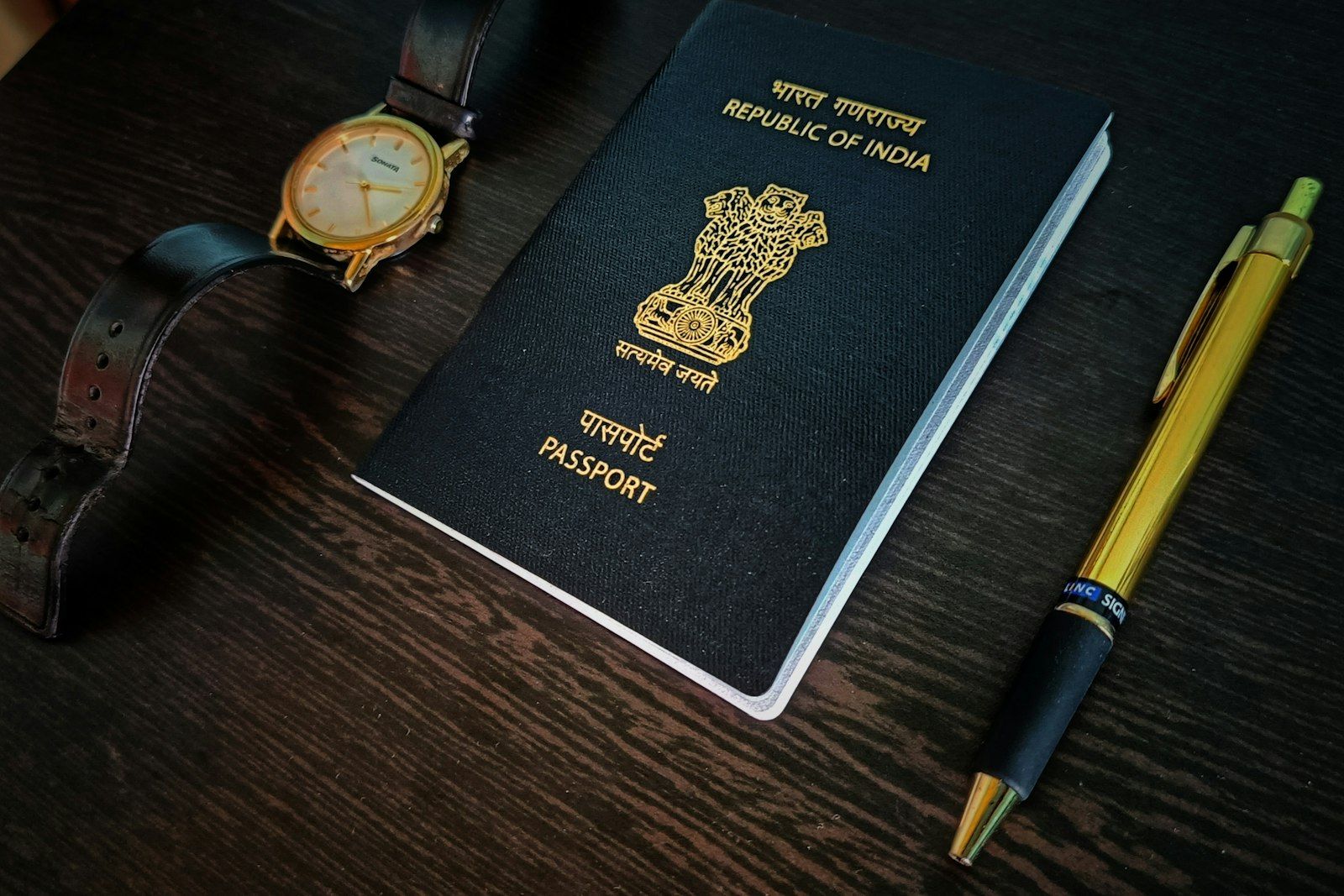
Bring more than you think you need, because the branch that turns you away for one missing paper will not call you back when you find it. There is no single national checklist, but the following is the working set that experienced residents assemble.
- Passport, original, with the current visa page and the latest entry stamp. Bring photocopies of all three.
- Proof of your right to stay, meaning the visa itself, plus any extension of stay stamp.
- Proof of a Thai address. This is where most applications fail. A signed rental contract of at least one year is the baseline. Many branches want more.
- A residence certificate, obtained from your local immigration office or from your embassy. Immigration issues these on the basis of your registered address, so your landlord's TM30 filing needs to be in order first. This document is the single most useful thing you can turn up with. The Thai Immigration Bureau handles both.
- Work permit and an employer letter, if you have them. Nothing else opens an account as reliably.
- A Thai phone number on a SIM registered in your own name, because mobile banking will be tied to it.
- A second photo ID from your home country, typically a driving licence.
- Cash for the opening deposit, in Thai baht.
A few practical notes. Photocopies should be signed by you. Some branches want passport photos, so carry a couple. If you are being sponsored by an employer, a letter on company letterhead naming the branch you will visit is far more effective than a generic one. And if you are also sorting out transport while you settle in, our guide to renting a scooter covers the licence and insurance side of arriving.
Which Thai bank to choose
The honest answer is that the best bank is whichever branch will actually open your account, and that is more about the individual branch than the brand on the door. That said, the major banks do have reputations among foreign residents, and it is worth knowing them before you spend a morning queueing.
| Bank | Reputation with foreigners | Worth knowing |
|---|---|---|
| Bangkok Bank | Generally regarded as the most experienced with foreign customers | The largest branch network and the bank most often named by long-term residents. Also the bank the BOI routes LTR holders to. |
| Kasikornbank (KBank) | Popular for its mobile app | Widely used by younger residents. Branch policy on foreigners varies noticeably. |
| Siam Commercial Bank (SCB) | Mainstream, good digital service | Publishes its savings account range in English. |
| Krungthai Bank | State-owned, used for government-linked payments | Often the bank involved when a Thai government scheme requires an account. |
| Krungsri (Bank of Ayudhya) | Mixed reports, some foreigner-focused products | Worth trying if the bigger names have refused you. |
Two pieces of practical advice matter more than the choice itself. First, prefer a large branch in a business district or a major mall over a small suburban one, because bigger branches see more foreign customers and have staff who have done this before. Second, if a branch says no, that is that branch's answer, not the bank's. People routinely succeed at a second or third branch of the same bank on the same day with the same documents.
Step by step: what happens at the branch
Opening an account is an in-person process that usually takes 60 to 90 minutes if your paperwork is in order. Here is the sequence.
- Prepare your documents and, if possible, get the residence certificate first. This is the step that decides the outcome.
- Go in the morning, mid-week. Branches are calmer, and you want an unhurried staff member, not one working through a Saturday queue.
- Ask for the account-opening desk and say clearly that you are a foreign resident wanting a savings account, and why. A specific, verifiable reason ("I have signed a one-year lease in Rawai and need to pay rent and utilities") lands far better than a vague one.
- Hand over the full file at once. Passport, visa, residence certificate, lease, phone number, second ID.
- Wait while it is checked. For some customers the branch has to seek approval, which is when the wait stretches. Under anti-money-laundering rules the review can be case by case, so patience helps.
- Sign the forms. They will largely be in Thai. Ask for an explanation of anything you are signing, and do not sign anything you do not understand.
- Make the opening deposit in cash.
- Collect your passbook and debit card. Most branches issue both the same day, though some post the card or ask you to return for it.
- Set up mobile banking before you leave. Do this at the counter with staff present. Remember the central bank rule that ties one user to one device, so use the phone you actually intend to keep.
If you are refused, ask politely what specifically was missing. Sometimes the answer is a document you can get that afternoon.
What it costs
Opening an account is cheap. The costs are small and ongoing rather than large and upfront, but they are worth knowing so nothing surprises you. Figures vary by bank, by card type and sometimes by branch, so treat these as the usual ranges rather than fixed prices, and confirm at the counter.
| Item | Typical range | Notes |
|---|---|---|
| Opening deposit | 500 to 1,000 baht | Some accounts advertise no minimum, but bring cash anyway. |
| Debit card issuance | Around 300 baht | One-off, charged when the card is issued. |
| Debit card annual fee | Roughly 300 to 600 baht | Higher for cards bundled with insurance or travel benefits. |
| Passbook replacement | Around 100 baht | If you lose it. |
| Cross-province ATM withdrawal | Often free now, small fee at some banks | Once a standard charge, largely phased out. |
| Dormancy fee | Varies | Charged if the account sits inactive with a low balance. Keep it moving. |
The debit card annual fee is the one that catches people, because it is deducted automatically and can push a dormant account towards a negative balance over a couple of years. If you are budgeting a whole move rather than just the banking, our breakdown of how much you need to retire here puts these figures in context.
Opening a bank account in Phuket
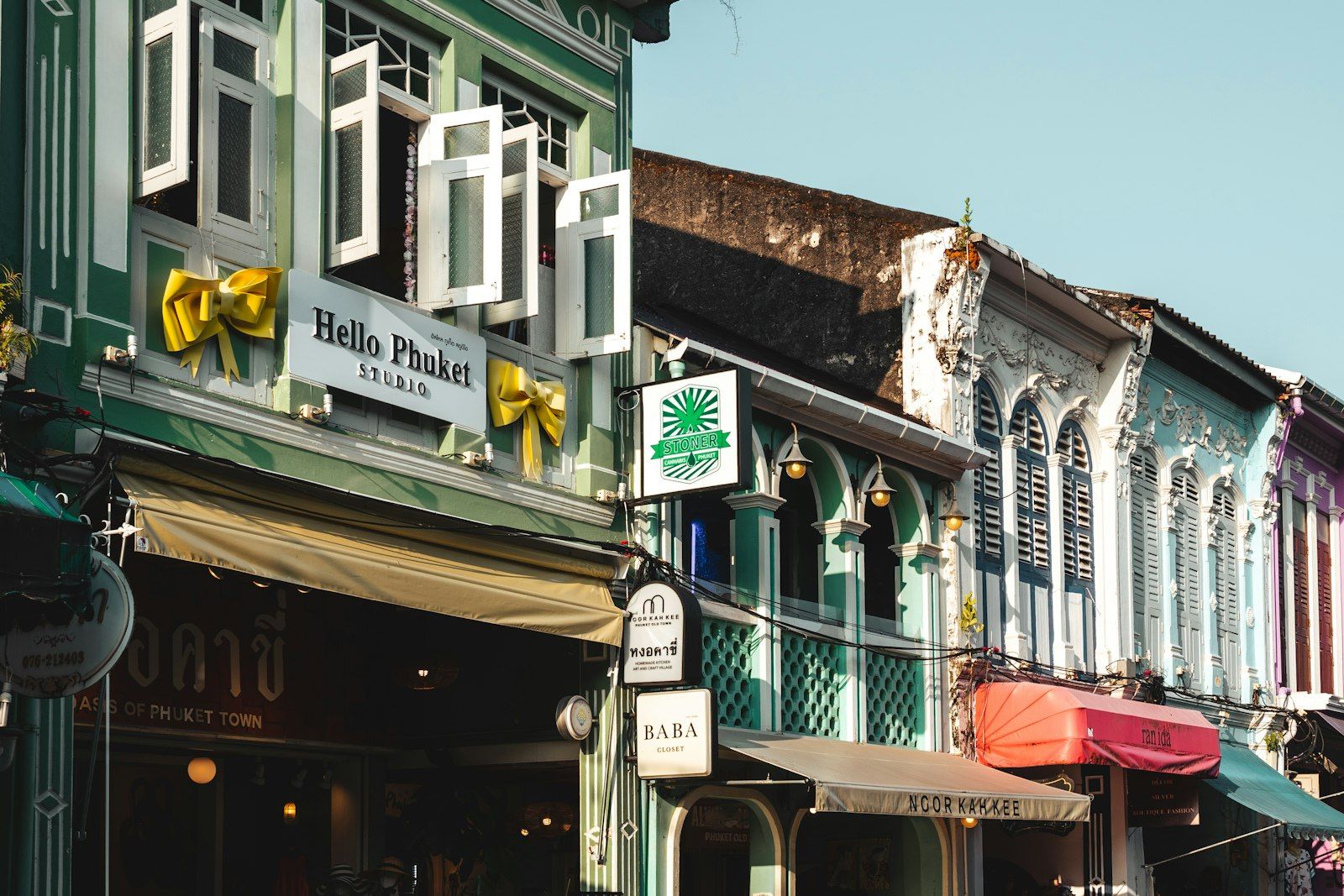
Phuket has a reputation as one of the harder provinces for foreigners to open an account, and that reputation is deserved. The reason is structural rather than personal. Phuket has an enormous transient population of tourists, seasonal workers and short-stay visitors, so local branches see a far higher proportion of applicants who will be gone in three months than a branch in a provincial capital does. Compliance staff calibrate to what they see, and Phuket branches see churn.
What helps here specifically:
- Have a proper lease and a filed TM30. Short-term and holiday-let addresses are the fastest route to a refusal. A twelve-month contract on a normal residential address in an area like Rawai, Chalong or Kathu reads very differently from a condo in the middle of Patong.
- Use a large branch. The bigger branches in Phuket Town and the major shopping centres process more foreign customers than small beach-strip branches.
- Go with a Thai speaker if you can. Not because staff lack English, but because a nuanced conversation about your circumstances is easier in Thai, and it signals local ties.
- Do not branch-hop the same day in the same area. Staff talk. Space attempts out, and fix whatever was missing first.
Where you live genuinely affects how a branch reads your application, which is one more reason to think carefully about where to base yourself before you sign a lease.
The retirement visa and the 800,000 baht account
Retirees hit a chicken-and-egg problem: the retirement extension requires money held in a Thai bank account, but you need a visa to open the Thai bank account. The way through is sequencing. You enter on a non-immigrant O visa obtained abroad, or convert to one in Thailand, and that non-immigrant status is what the bank accepts. Only then do you deposit the funds and let them sit for the required period before applying for the extension of stay.
The financial requirement is held in your own name, in a Thai bank, and immigration expects it to have been there for a set period before you apply, with rules about maintaining a balance afterwards. Those seasoning periods are precise and they are where applications most often come unstuck, so we cover them properly in our Thailand retirement visa guide rather than summarising them loosely here. The banking lesson is simply this: open the account as early in the process as you can, because every subsequent step depends on it existing.
One useful detail for over-50s on the LTR route instead: the Board of Investment publishes a defined bank-account process for LTR holders. Applicants must email the LTR Visa Unit at least four days before visiting a Bangkok Bank branch, bring the BOI Certified Consideration Certificate, and provide a credible document proving the purpose of the account. Notably, for a retirement-purpose account the BOI states that a rental agreement is not acceptable as address proof; it wants property ownership, a title deed or a house registration. Document review is done case by case under Anti-Money Laundering Office regulations.
Non-resident and foreign currency accounts
If you cannot get an ordinary savings account, a non-resident or foreign currency deposit account is sometimes offered instead, and it is important to understand that it is not the same product. A foreign currency deposit account, usually abbreviated to FCD, holds dollars, euros or another currency rather than baht. Some Thai banks will open one for a non-resident, typically with a substantial minimum deposit denominated in the foreign currency.
These accounts are useful for parking foreign currency, for receiving an overseas transfer, or for holding money you do not want converted to baht yet. They are much less useful for daily life. You generally cannot use one the way you use a baht savings account for PromptPay transfers, utility direct debits, scanning QR codes at a market stall or paying rent. Fees and minimum balances are higher too.
So an FCD account is a reasonable fallback if you have significant funds and an overseas income, and a poor substitute if what you actually need is a normal Thai current account for everyday spending. Ask the branch specifically whether the account they are offering supports domestic transfers and PromptPay before you sign.
Can you open a Thai bank account online or from abroad?
No, and this is worth stating plainly because the myth persists. Thai banks require a foreign applicant to attend a branch in person, in Thailand, with original documents. There is no meaningful remote onboarding path for a foreign individual, no mail-in route, and no way to complete it from your home country before you fly.
Thai banking apps do allow existing customers to open additional accounts digitally, and Thai nationals can onboard through apps and identity verification schemes that are not open to foreigners. Neither of those helps a new foreign customer. Any service advertising remote Thai account opening for foreigners is either an agent who will accompany you to a branch anyway, or something you should treat with real caution.
Plan on being physically present, with time in your schedule for a second attempt at a different branch.
If you cannot open an account yet
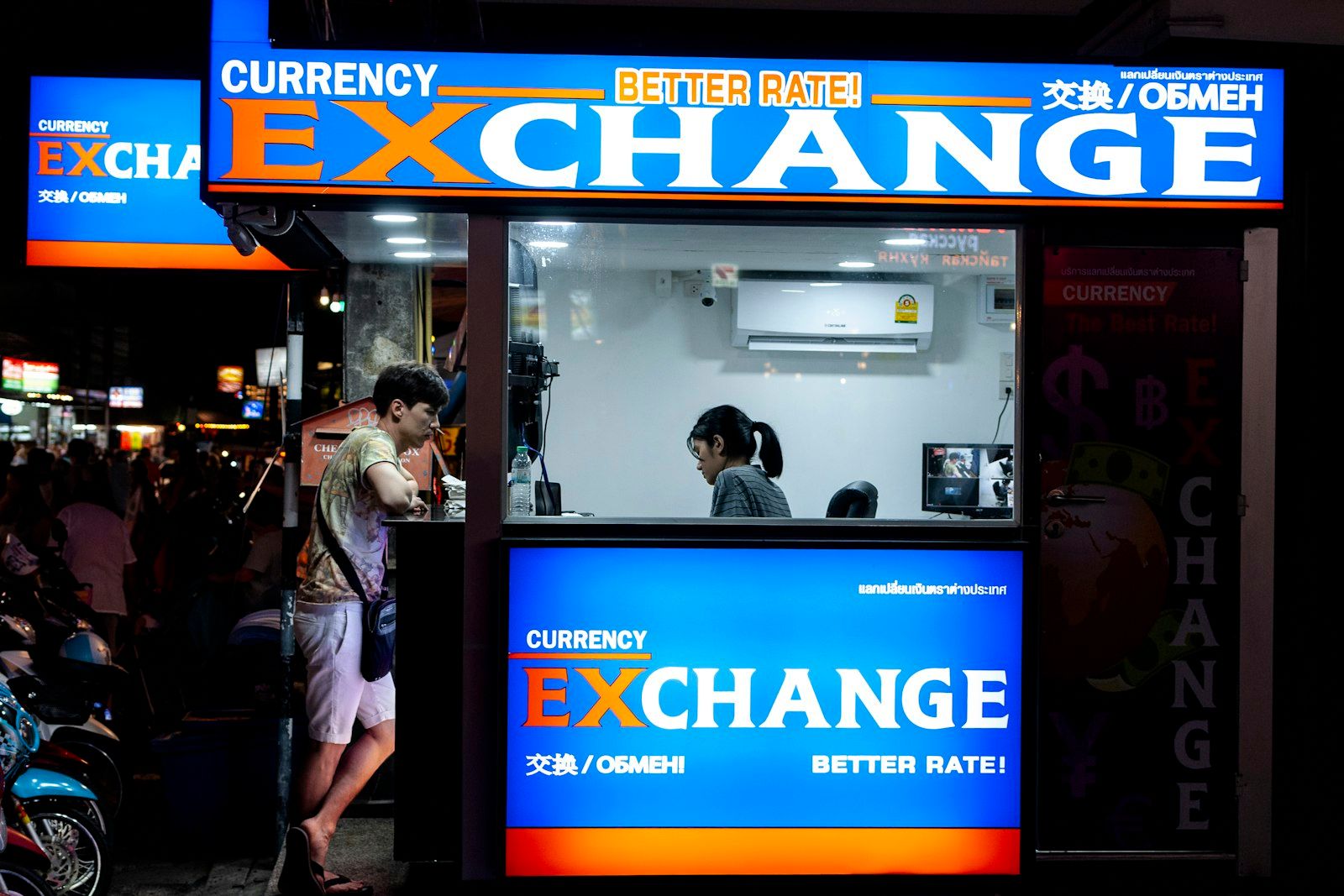
Plenty of people live in Thailand perfectly well without a local account while they sort out their visa situation, and there are sensible ways to bridge the gap. This is the realistic toolkit.
- A multi-currency card or account from home. A card with low foreign transaction fees and a decent exchange rate covers most day-to-day spending. Thailand is heavily card-and-QR based in cities and tourist areas, though not universally.
- Cash. Withdrawals from Thai ATMs on a foreign card carry a fixed local fee per withdrawal on top of your own bank's charges, so take out larger amounts less often rather than small amounts frequently.
- Ask your landlord about payment options. Many will accept an international transfer or cash for rent.
- Coworking and serviced spaces often solve the practical side of a nomadic setup while you wait, and places like Denz in Patong are used to residents in exactly this position.
- Change your visa category. If you are staying long term, this is the real fix rather than a workaround. If you are running a business here, setting up a Thai company with a work permit resolves the banking question entirely.
One caution: do not use somebody else's account, and do not let anyone use yours. That is precisely the mule-account behaviour the whole regulatory programme is designed to stop, and it exposes both parties to frozen funds and worse. If you ever do find yourself dealing with officialdom in Thailand, it helps to know your rights.
Related Thailand visa guides
Because eligibility is decided by visa, the right banking answer usually starts with the right visa. Here is the full set.
| Visa route | Banking outlook | Guide |
|---|---|---|
| Destination Thailand Visa (DTV) | Usually refused | DTV guide |
| Retirement (non-immigrant O and O-A) | Accepted | Retirement visa guide |
| LTR visa | Accepted, defined BOI process | LTR visa guide |
| Non-B and work permit | Accepted, strongest case | Non-B and work permit guide |
| Education (ED) visa | Sometimes | Education visa guide |
| Thailand Privilege | Accepted | Thailand Privilege guide |
| Tourist visa and exemption | Refused | Tourist visa guide |
Thailand Privilege is worth a specific mention here because it is the one route you can buy rather than qualify for. Membership currently runs from 650,000 baht for the five-year Bronze tier up to 5,000,000 baht for the Reserve tier, according to Thailand Privilege. That is a large sum to spend for banking access alone, but for people who want long-stay status without employment or retirement qualification, it is a recognised route.
Frequently asked questions
Can a non-citizen open a bank account in Thailand?
Yes. There is no rule barring foreigners from Thai banking, and millions of foreign residents hold accounts. What decides the outcome in 2026 is your visa status. A long-term non-immigrant visa will usually succeed, while a tourist visa or visa exemption stamp will almost always be refused.
What visa do I need to open a bank account in Thailand?
In practice you need a long-term non-immigrant visa: a Non-B with a work permit, a Non-O for marriage or retirement, an LTR visa or Thailand Privilege membership. Education visas sometimes work. Tourist visas, visa exemption entries and the DTV are generally refused by the major banks.
Can I open a Thai bank account with a DTV visa?
Usually not. Although the DTV allows stays of up to 180 days per entry, Thai banks classify it as a tourist visa because it carries no work permit and no Thai employer. Most major banks refuse DTV holders outright. Changing visa category is more reliable than searching for a branch that will make an exception.
Which bank is best for foreigners in Thailand?
Bangkok Bank is most often named by long-term residents as the most experienced with foreign customers, and it is the bank the Board of Investment routes LTR holders to. In reality the individual branch matters more than the brand, so a large branch used to foreign customers beats any particular bank name.
How long does it take to open a Thai bank account?
Usually 60 to 90 minutes at the branch if your documents are in order, and you normally walk out with a passbook and often a debit card the same day. It takes longer when the branch has to seek internal approval, and some banks post the debit card rather than issuing it immediately.
What is the minimum deposit for a Thai bank account?
Typically 500 to 1,000 baht for a basic savings account, and some accounts advertise no minimum at all. Bring cash in baht regardless. The ongoing costs matter more: expect roughly 300 baht to issue a debit card and around 300 to 600 baht a year to keep it.
Can I open a Thai bank account online or from abroad?
No. Thai banks require foreign applicants to attend a branch in person in Thailand with original documents. There is no genuine remote onboarding route for new foreign customers, and services advertising one are generally agents who will take you to a branch anyway.
Why do Thai banks freeze accounts?
Thailand has run a sustained crackdown on mule accounts, meaning accounts used to move money for fraudsters. The Bank of Thailand required all institutions to speed up freezing suspicious accounts and to elevate action on high-risk individual accounts. Unusual activity or a third party using your account can trigger a freeze.
Can foreigners open a US dollar account in Thailand?
Yes, some Thai banks offer foreign currency deposit accounts, including to non-residents, usually with a substantial minimum deposit in the foreign currency. They are useful for holding foreign funds but poor substitutes for a baht account, since they generally do not support everyday PromptPay transfers and domestic payments.
Is it harder to open a bank account in Phuket?
Yes, generally. Phuket branches see a very high proportion of short-stay applicants, so compliance staff apply extra scrutiny. A one-year residential lease, a filed TM30 and a residence certificate from immigration make a substantial difference, as does using a larger branch in Phuket Town rather than a small beach-strip one.
Sources
- Bank of Thailand, Press Release 5/2023: additional measures to combat financial fraudulent activities
- Bank of Thailand, Annual Report 2024
- Thailand Board of Investment, LTR Visa: Opening a Bank Account in Thailand
- Royal Thai Embassy, Washington DC: Destination Thailand Visa
- Thai Immigration Bureau
- Siam Commercial Bank, savings accounts
- Thailand Privilege, membership packages
About this guide
Written and fact-checked by the Thailand Stuff editorial team, who live in and cover Phuket. Banking policy in Thailand changes frequently and individual branches apply real discretion, so treat everything here as a well-researched starting point rather than a guarantee, and confirm current requirements with the bank before you travel to a branch. This is general information, not financial or immigration advice. Last reviewed 28 July 2026. You can browse every guide we publish for more on living in Phuket.
Keep reading
 News
NewsA Thai senator has proposed letting foreigners own 100% of a business in Thailand to end the nominee system. Here is what was said and what it could mean.
 Practical
The honest 2026 answer: most Thai banks reject DTV visa holders for new accounts. Why it happens, what does not work, and the real alternatives that do.
 Practical
How do tourists pay in Thailand? Compare Wise and home cards, the KBank prepaid Visa card, cash and ATM fees, honestly, with no Thai bank account needed.