
Thai driving licence for foreigners: cost, tests and the process
How foreigners get a Thai driving licence in Phuket: the documents, DLT tests, real costs, timeline, renewal and whether a tourist visa actually works.
Thailand Stuff Editorial Team
Researched and fact-checked against on-the-ground prices and reputable data · 29 Jul 2026 · 13 min read

Getting a Thai driving licence for foreigners is cheaper, quicker and less painful than most people fear, and once you have one you can stop worrying about fines, roadside stops and rejected insurance claims. If you are living in Phuket on a long-stay visa and still riding a scooter on your home licence, you are one traffic checkpoint away from a needless penalty. This guide walks through exactly who is eligible, the documents you need, the tests at the Department of Land Transport (DLT), the real costs, how long it takes and how renewals work, with the Phuket office specifically in mind. It is written for people who want to do it themselves, so we also weigh up when paying an agency actually makes sense.
Do foreigners need a Thai driving licence?
Yes, in practice, if you live here. A foreigner can legally drive in Thailand for a while on a valid International Driving Permit (IDP) alongside their home licence, but that is a short-term fix aimed at tourists. Once you are a resident, the sensible move is a Thai driving licence for foreigners, issued by the Department of Land Transport.
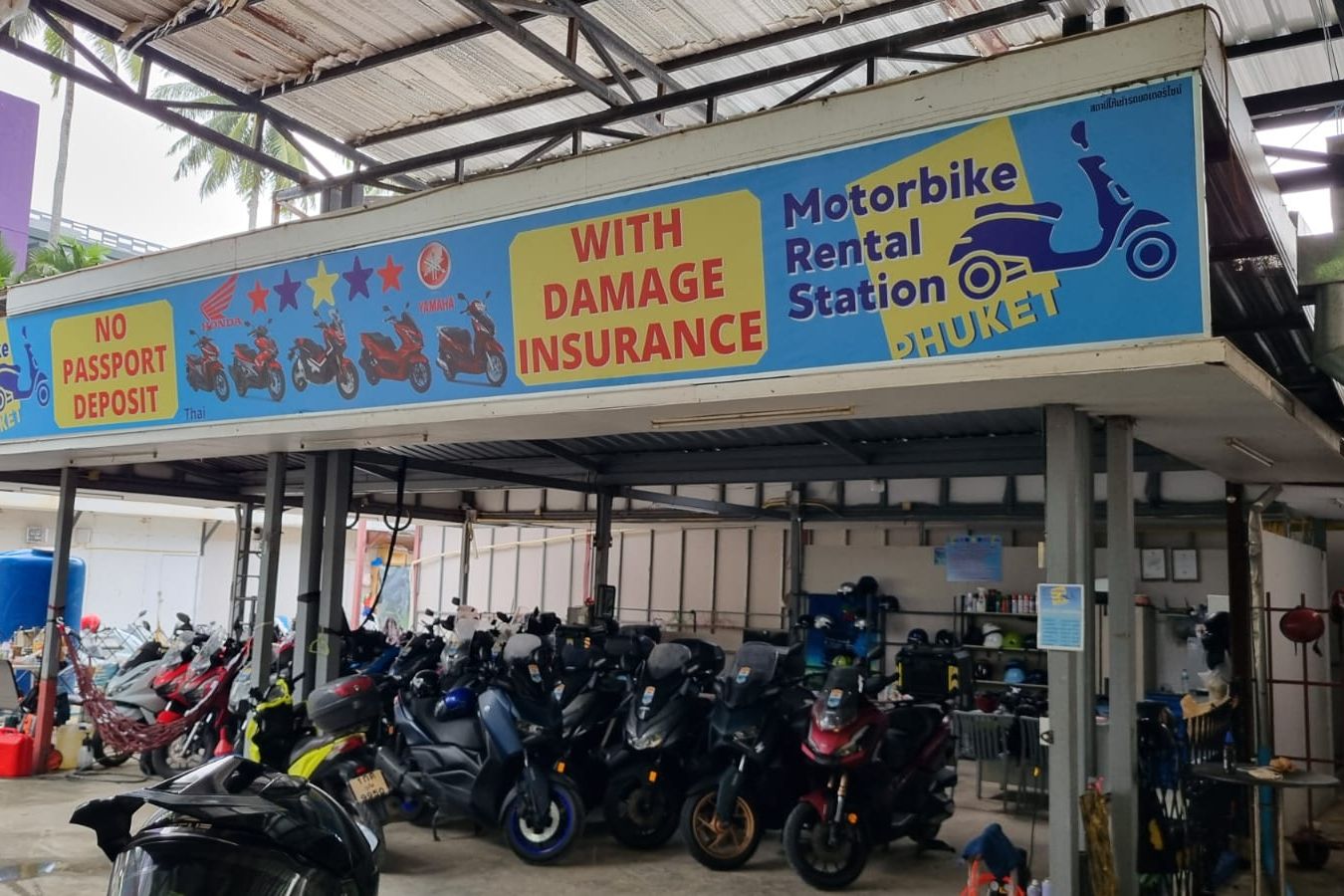
The reasons are money and risk. Riders stopped without a valid licence typically face a fine of 500 to 1,000 baht, and repeat stops on the same trip are common in Phuket, especially around Patong and the tourist beaches. More importantly, driving without the correct licence can void your travel or motorbike insurance after an accident, which turns a small crash into a large bill. Knowing your rights during a routine police stop helps, but a proper Thai licence removes the problem entirely. If you are still deciding whether to ride at all, our guide to renting a scooter in Phuket covers the safety side.
IDP versus a Thai driving licence: which do you need
Short version: an IDP is for visitors, a Thai licence is for residents. An IDP is only a certified translation of your existing home licence, it must be obtained in your home country before you travel, and it is valid for one year. You cannot get an IDP inside Thailand. A Thai driving licence is a full local credential that never depends on your home paperwork and is recognised by police and insurers without question.
| Feature | International Driving Permit (IDP) | Thai driving licence |
|---|---|---|
| Best for | Tourists and short stays | Residents and long-stay foreigners |
| Where you get it | Your home country only | Any DLT office in Thailand |
| Validity | 1 year | 2 years first, then 5 years |
| Needs home licence with it | Yes, always carry both | No |
| Accepted by insurers | Usually, if valid and carried | Yes, without dispute |
| Cost | Set by your home country | From around 205 baht |
If you are only in Phuket for a holiday, sort an IDP at home and carry the paper booklet plus your original licence. If you are staying for months or years, the Thai licence is the better investment every time.
Who is eligible: visa types and the tourist-visa question
Eligibility hinges on your visa and proof of address, not your nationality. The DLT expects a foreigner to hold a long-stay status, so applicants on a Non-B visa and work permit, a retirement visa, an LTR visa or a marriage extension are accepted straightforwardly. The document that proves where you live, the residence certificate, is the real gatekeeper.
The most-asked question is whether you can get a Thai licence on a tourist visa or visa exemption. Officially the guidance points to a long-stay, non-immigrant status, and the immigration authorities frame the licence as being for those planning to stay long-term. In practice, outcomes vary by office and by the day. Some DLT branches accept a residence certificate issued to a tourist, others insist on a non-immigrant visa. Holders of the newer Destination Thailand Visa (DTV) report mixed results for the same reason. If you are on a tourist visa or visa exemption, call the Phuket office first, or plan around a longer-stay visa before you apply, so you do not waste a trip.
Documents you need: the full checklist
You need four core things: your passport with a valid visa, a residence certificate, a recent medical certificate, and your foreign licence or IDP. Assemble originals and photocopies of everything, because Thai offices run on copies.
Passport and visa
Bring your passport (original and a photocopy of the photo page, the entry stamp and the current visa or extension). The immigration guidance notes your permission to stay should have at least 15 days of validity remaining when you apply.
Certificate of residence
A certificate of residence (also called a residence certificate) proves your Thai address, and it is the document that trips most people up. You can obtain it free from a Thai immigration office, which usually requires your TM30 address-registration receipt (filed by your landlord or hotel), or you can buy one from your embassy, which may charge a fee. It is the same document you would use to open a Thai bank account, so it is worth getting right once. Allow a day or two of lead time.
Medical certificate
A medical certificate is mandatory and must be recent. Any Thai clinic or hospital can issue the standard "five diseases" certificate confirming you are fit to drive, it typically costs 100 to 300 baht, and it must be issued no more than 30 days before your DLT visit. Get it the same week you plan to apply.
Photos and your foreign licence
Bring your original foreign or international licence plus a photocopy. Passport-style photos are sometimes taken at the office, but carrying two spare photos does no harm. If your home licence is not in English, a certified translation or your IDP covers the gap.
| Document | Where to get it | Notes |
|---|---|---|
| Passport with valid visa | You already hold it | Original plus copies of key pages |
| Certificate of residence | Immigration (free) or embassy (fee) | Needs TM30 receipt at immigration |
| Medical certificate | Any Thai clinic or hospital | Valid within 30 days, about 100 to 300 baht |
| Foreign licence or IDP | Home country | Original plus photocopy |
How much a Thai driving licence costs
The government fees are tiny. The Department of Land Transport charges a fixed, low amount, and the real "cost" is your time plus the medical certificate. According to the official DLT fee schedule, a first (two-year temporary) car licence is around 205 baht and a two-year motorcycle licence is around 105 baht, while the longer five-year versions cost about 505 baht for a car and 255 baht for a motorcycle.
| Licence | Approximate government fee |
|---|---|
| Car, 2-year temporary | 205 baht |
| Car, 5-year | 505 baht |
| Motorcycle, 2-year temporary | 105 baht |
| Motorcycle, 5-year | 255 baht |
| Medical certificate | 100 to 300 baht |
Add it up and a car plus motorcycle licence with a medical certificate comes to well under 1,000 baht in official charges. That is trivial next to the wider cost of living in Phuket, which is one reason it makes no sense to keep risking fines. The bigger expense only appears if you hire an agency to run the process for you, covered further down.
The aptitude and written tests explained
Most of the "tests" are quick physical checks, and the written theory exam is often waived if you convert an existing licence. New applicants at the DLT go through a set of aptitude tests: colour recognition (usually red, green and amber), reaction braking, depth perception and peripheral vision. These take 15 to 30 minutes and are designed to be passable by any fit driver.
First-time applicants also watch a road-safety video or class session of roughly an hour, then sit a computer-based theory test. The electronic written exam has 50 questions and you need to score at least 90 percent, meaning 45 correct. It is available in English, the questions cover signs and basic road rules, and free practice apps make it easy to prepare. A practical driving test may also apply for brand-new drivers.
Here is the key shortcut: if you already hold a valid home-country licence plus an IDP, many offices waive the written and practical tests and treat your application as a conversion, leaving only the aptitude checks. That is why carrying your home licence and IDP is worth it even when you intend to go Thai.
Step by step: getting your licence at DLT Phuket
The process is a single half-day visit once your documents are ready. The Phuket DLT office processes foreigners regularly, and going early is the single biggest time-saver because same-day slots fill up. Follow this order:
- Get your residence certificate first. Sort it at Phuket immigration (with your TM30 receipt) or your embassy a day or two ahead.
- Get your medical certificate. Visit any clinic the same week, keep it within the 30-day window.
- Arrive early with all originals and copies. Aim to submit your papers before 08:30, as some services stop taking new applicants mid-morning.
- Register and have documents checked. Staff verify everything and hand you a queue number.
- Take the aptitude tests. Colour, reaction, depth and peripheral vision.
- Watch the video or class. Around an hour for new licences, sometimes waived for conversions.
- Sit the theory test if required. 50 questions in English, 90 percent to pass.
- Pay and collect. Pay the small cash fee, have your photo taken, and receive your printed licence the same day.
Book ahead where possible. Some branches, including Phuket, use an appointment app or online booking to reserve a slot, which avoids the worst of the queue.
How long it takes
Plan for one morning at the DLT, plus a day or two beforehand for paperwork. The visit to the Department of Land Transport office itself usually runs two to four hours: registration and document checks, the aptitude tests, the video session and any written test, then payment and printing. Conversions move faster because the class and tests are often skipped.
The part people underestimate is the lead time for the residence and medical certificates. Neither is instant, so treat the licence as a two- or three-day project rather than a single errand. If you batch the certificates one day and hit the DLT early the next morning, you can realistically hold your licence within 48 hours.
Doing it yourself versus using an agency
You can absolutely do this yourself, and most residents do, but an agency saves time if paperwork or language is a barrier. The government fees are under 1,000 baht, so the entire "premium" of an agency is convenience. A licence service in Phuket typically charges somewhere in the region of 6,000 to 8,000 baht to gather your documents, book the slot, translate and escort you through the office.
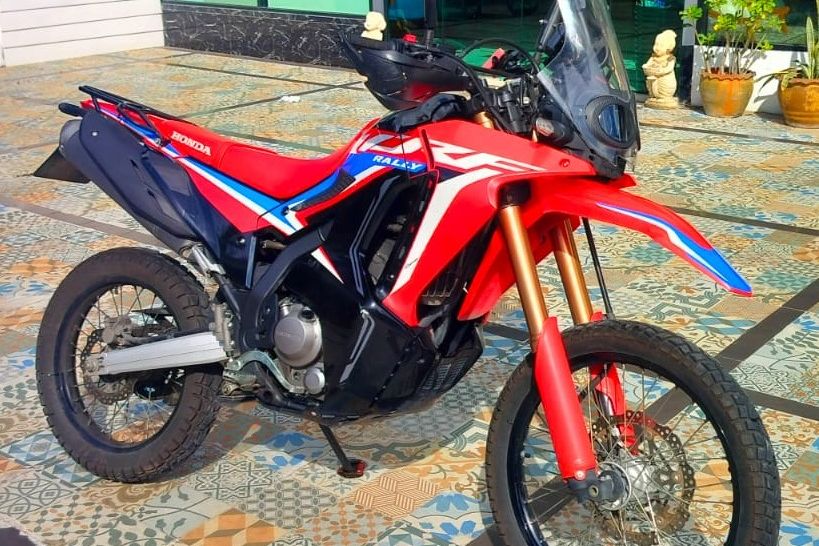
An agency earns its fee if your Thai is limited, if your visa situation is borderline, or if you simply cannot spare the mornings. If your documents are in order and you are comfortable following signs and queueing, the DIY route is straightforward and keeps the cost near zero. Riders who plan to explore beyond the beaches, for example the off-road and enduro trails on a rented CRF, should note that the licence class is the same standard motorcycle licence, so there is no reason to over-pay for a specialist service.
Renewing: from a 2-year to a 5-year licence and beyond
Your first Thai licence is a two-year temporary, after which you upgrade to a five-year licence and keep renewing every five years. The renewal is lighter than the first application: you repeat the aptitude tests and watch a short video, but there is no written or practical driving test for a standard renewal.
You can renew a five-year licence within a window, generally up to a few months before expiry, and you can still renew up to one year after expiry without retaking the driving test. Let it lapse longer and additional steps apply. You will still need a current medical certificate and a valid residence certificate each time, and your visa must still support long-stay status. Thailand has also approved moves toward online licence renewals for eligible drivers, which industry observers expect to cut office queues over time, though the in-person route remains the norm for most foreigners today.
Common mistakes and tips
Most failed trips come down to stale or missing paperwork, not the tests. Avoid the usual traps:
- Expired medical certificate. It must be within 30 days, so do not reuse an old one.
- No residence certificate or no TM30. Immigration will not issue the residence certificate without your address registration on file.
- Wrong visa page copied. Photocopy the current extension or visa stamp, not a superseded one.
- Arriving late. Get there before 08:30, as new applicants may be turned away later in the morning.
- Confusing licence classes. Car and motorcycle are separate licences, so apply for both if you ride and drive.
- Forgetting photocopies. Bring copies of everything, signed, to avoid queueing twice.
When to get help and the bottom line
A Thai driving licence for foreigners is one of the cheapest and most worthwhile pieces of admin you will do as a Phuket resident. For a few hundred baht and a morning of your time, you remove the risk of fines and insurance disputes for years. If your visa status is borderline, or you cannot navigate the office in Thai, an agency or a quick call to the DLT is worth it. Otherwise, gather your residence and medical certificates, arrive early, and you will walk out with your licence the same day. When you are ready to make the most of it, explore Phuket and settle into the best areas to live.
Related guides at a glance
| Guide | Why it helps |
|---|---|
| Renting a scooter in Phuket | Prices, licence rules and safety before you ride |
| Destination Thailand Visa (DTV) | Long-stay status that affects licence eligibility |
| Retirement visa | Common route for older long-stay drivers |
| Opening a Thai bank account | Uses the same residence certificate |
| Cost of living in Phuket | Where transport fits your monthly budget |
Frequently asked questions
Can a foreigner get a driver's licence in Thailand?
Yes. Foreigners with a long-stay visa and proof of address can apply for a Thai driving licence at any Department of Land Transport office. You need your passport, a residence certificate, a recent medical certificate and your foreign licence or IDP. Nationality is not a barrier.
Can I get a Thai driving licence on a tourist visa?
Officially the licence is aimed at long-stay, non-immigrant visa holders, and results on a tourist visa or visa exemption vary by office. Some branches accept a tourist-issued residence certificate, others require a non-immigrant visa. Call the Phuket DLT first or apply on a longer-stay visa.
How much does a Thai driving licence cost?
Government fees are low: roughly 205 baht for a two-year car licence and 105 baht for a motorcycle, or about 505 and 255 baht for the five-year versions. Add 100 to 300 baht for the medical certificate. Agencies charge extra for convenience.
How long does the process take?
The DLT visit itself takes two to four hours, usually one morning. Add a day or two beforehand to obtain your residence and medical certificates. Conversions from a home licence plus IDP move faster because the class and tests are often waived.
What documents do I need for a Thai driving licence?
You need your passport with a valid visa, a certificate of residence, a medical certificate issued within 30 days, and your foreign or international licence. Bring originals plus photocopies of every document, as Thai offices require copies for their records.
What is a certificate of residence and how do I get one?
It is an official document proving your Thai address, required for a licence, a bank account and vehicle purchases. Get it free from a Thai immigration office (you need your TM30 address registration on file) or buy one from your embassy, which may charge a fee.
Do I need to take a driving test?
New drivers take aptitude tests, watch a road-safety video and sit a 50-question theory exam needing 90 percent to pass. If you hold a valid home-country licence plus an IDP, many offices waive the written and practical tests and treat it as a conversion.
How hard is the Thai written test?
Not hard. The theory test is 50 multiple-choice questions on signs and basic road rules, available in English, with a 90 percent pass mark. Free practice apps cover the question bank, and many applicants who convert a foreign licence skip it entirely.
How do I renew a Thai driving licence?
Your first licence is a two-year temporary, then you upgrade to five years. Renewals need the aptitude tests and a short video but no written or practical test. You still need a current medical certificate and residence certificate, and your visa must still support long-stay status.
How early can I renew my Thai driving licence?
You can renew a five-year licence within a few months before it expires, and still renew up to one year after expiry without retaking the driving test. Let it lapse longer and extra steps apply. Online renewal is being rolled out for eligible drivers.
Sources
- Department of Land Transport (official)
- Driving licence in Thailand, Wikipedia
- Thai Immigration, getting your first Thai driving licence
- Bangkok Post, how foreigners get a driving licence in Thailand
- Pattaya City Expats Club, Thai driving licence
- Roojai, getting a Thai driving licence as a foreigner
- TDL Service, Thai driving licence cost
- WellMed Bangkok, medical certificate for driving licence
About this guide
This guide was researched and written by the Thailand Stuff Editorial Team, which lives in and covers Phuket. We check our guides against current on-the-ground prices, official Department of Land Transport and immigration information and reputable expat resources, and we review them regularly to keep figures current. Last reviewed on 29 July 2026.
This is general information, not legal or immigration advice. Rules and fees change, and individual Department of Land Transport and immigration offices apply them differently, so confirm the current requirements with the official Department of Land Transport or a qualified professional before you rely on any detail for your own situation.
Keep reading
 News
NewsA Thai senator has proposed letting foreigners own 100% of a business in Thailand to end the nominee system. Here is what was said and what it could mean.
 Practical
The honest 2026 answer: most Thai banks reject DTV visa holders for new accounts. Why it happens, what does not work, and the real alternatives that do.
 Practical
How do tourists pay in Thailand? Compare Wise and home cards, the KBank prepaid Visa card, cash and ATM fees, honestly, with no Thai bank account needed.