
Health insurance in Thailand for expats: costs, plans and how to choose
What expat health insurance in Thailand costs in 2026, local vs international plans compared, which visas require cover, and how to choose the right plan.
Thailand Stuff Editorial Team
Researched and fact-checked against on-the-ground prices and reputable data · 4 Aug 2026 · 16 min read

Health insurance in Thailand for expats: costs, plans and how to choose
Health insurance in Thailand for expats is the one line in your budget that quietly protects every other line. Thailand has genuinely excellent private hospitals, but you pay for that quality up front, and your home-country policy almost certainly will not travel with you. This guide lays out what cover really costs by age, how local Thai insurers stack up against international plans, which visas make insurance compulsory in 2026, and how to choose the right plan without overpaying or getting caught by an exclusion. It is written for retirees, digital nomads and long-stay foreigners in Phuket and across Thailand who want a straight answer, not a sales pitch.
Do expats actually need health insurance in Thailand?
For most foreigners the honest answer is yes, because you cannot use Thailand's subsidised public system and your home insurance will not pay Thai hospital bills. Thailand's public healthcare runs on the Universal Coverage Scheme, which is funded for Thai nationals, and on Social Security for people in formal employment. As a retiree, remote worker or long-stay visitor you sit outside both, so a serious accident or illness means paying a private hospital in cash unless you are insured.
Two facts catch newcomers out. First, Thailand does not accept United States health insurance, including Medicare, so American travellers without a local or international policy pay out of pocket, as travel-medical guidance from UnitedHealthcare and destination advisories make clear. Second, private hospitals here expect a payment guarantee before major treatment, so being uninsured is not just risky, it can delay care. If you are still weighing the move, our guides to the cost of living in Phuket and living in Phuket as a digital nomad put insurance in the context of a full monthly budget.
Some long-stay expats do choose to self-insure, setting aside savings instead of paying premiums, and for a young, healthy person on a tight budget that can be a defensible gamble. The problem is that Thai private hospital bills scale fast: a serious accident, a heart event or a cancer diagnosis can wipe out a modest emergency fund in a single admission. Insurance exists precisely to cap that downside, and the older you are, the harder self-insuring becomes to justify.
Public vs private hospitals: what expats can and cannot use

In practice, most expats use private hospitals and pay through insurance, because affordable public care is reserved for Thais and formally employed residents. Understanding the split is the foundation of every insurance decision you make.
- Public hospitals. Government hospitals treat everyone, but the subsidised Universal Coverage Scheme is for Thai citizens. Foreigners can be treated as paying patients, and care is cheap by Western standards, though wards are busy, waits are long and English can be limited.
- Social Security. If you work legally in Thailand on a work permit and Non-B visa and pay into Social Security, you are entitled to treatment at your registered hospital. This does not cover retirees or nomads, and many people top it up with private cover anyway.
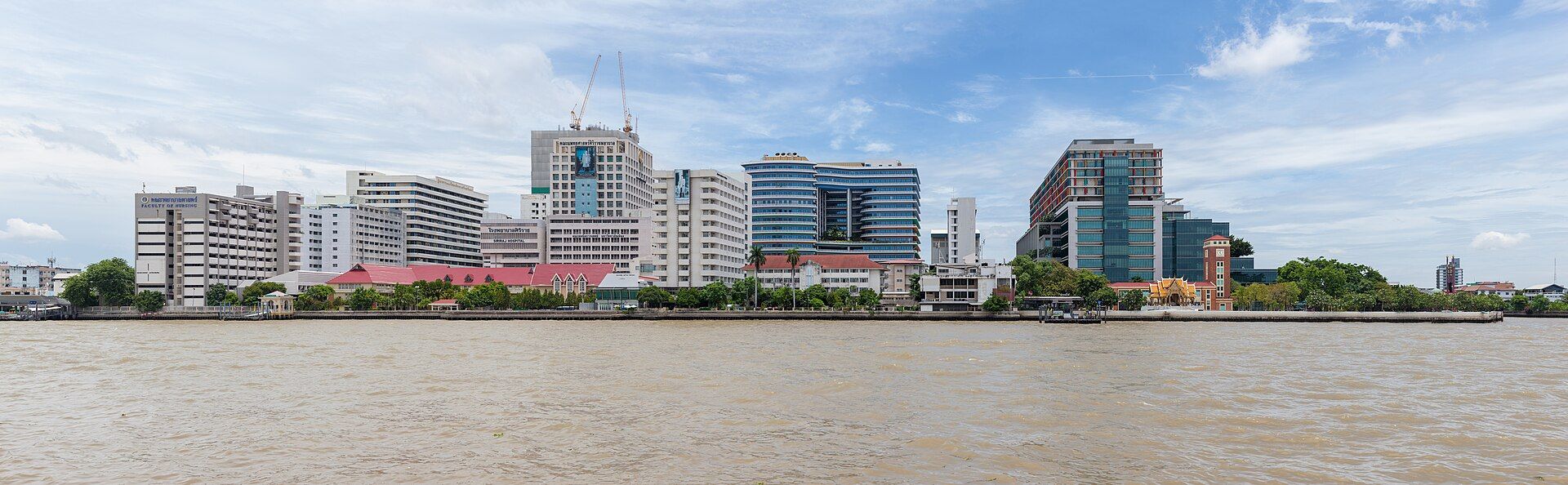
- Private hospitals. This is where insured expats go. Bangkok has flagship names like Bumrungrad and Bangkok Hospital; in Phuket the main private options include Bangkok Hospital Phuket, Bangkok Hospital Siriroj, Dibuk Hospital and Phuket International Hospital, with Vachira Phuket as the large public hospital. Care is excellent and internationally staffed, but a single inpatient episode can run into hundreds of thousands of baht.
Because Phuket is a tourist island, private hospital pricing here sits at the higher end, which is exactly why cover matters more, not less, if you are basing yourself on the coast. If you are still choosing a base, our guide to the best areas to live in Phuket notes which neighbourhoods sit closest to the main hospitals.
How much does health insurance in Thailand cost?
Expect to pay roughly 20,000 to 120,000 baht a year for a solid expat plan, with international policies typically two to four times the price of local Thai cover at the same age. The spread is enormous because premiums depend on your age, whether the plan covers Thailand only or the world, your deductible, and whether you include outpatient care.
As a rough map of the market: basic local Thai inpatient plans can start from only a few hundred baht a month for younger buyers, and Siam Legal puts a realistic minimum for meaningful cover at around 35,000 baht (roughly USD 1,200) a year. Mid-range international plans commonly start near USD 112 a month with providers such as Now Health International, and comprehensive worldwide cover for older applicants climbs far higher. Broker Pacific Prime has reported average international plan costs in the thousands of dollars, with many buyers landing in a roughly USD 1,500 to 3,100 band depending on cover level. You can trim the premium significantly by accepting a deductible (for example 20,000 baht) or dropping routine outpatient cover and insuring only for the big inpatient events. For the wider retirement maths, see how these figures fit into how much you need to retire in Thailand, and remember that tax on foreign income you bring in can affect your true disposable budget.
Typical premiums by age
Age is the single biggest driver of price, and premiums rise steeply after 60. The table below shows indicative annual premium ranges for international-style cover, drawn from broker Tenzing Pacific figures. Treat them as ballpark planning numbers, not quotes, because your final price depends on the insurer, cover ceiling, deductible and medical history.
| Age | Indicative annual premium (international-style plan) | What tends to happen at this age |
|---|---|---|
| 30 | USD 750 to 1,000 | Cheapest band; easy to get cover and add outpatient |
| 40 | USD 1,000 to 1,400 | Still affordable; good time to lock in an international plan |
| 50 | USD 1,400 to 2,000 | Prices climbing; underwriting questions get stricter |
| 60 | USD 2,000 to 3,500 | Common retirement-visa age; local plans look tempting on price |
| 70 | USD 4,000 to 8,000 | Some insurers cap new entry; renewability becomes critical |
The lesson for anyone in the health insurance in Thailand for expats bracket is simple: buy earlier rather than later. It is far easier and cheaper to start a plan at 55 and keep renewing it than to shop for your first policy at 68 with a couple of conditions already on file.
Local Thai insurers vs international plans
The core decision is local versus international, and it comes down to price and Thailand-only cover on one side against worldwide portability and higher ceilings on the other. Local Thai plans (from insurers such as Pacific Cross, LUMA and the Thai arms of AXA and Aetna) are cheaper and settle smoothly with local hospitals, but they generally cover treatment inside Thailand, carry lower payout limits, and can re-underwrite or decline to renew you as you age or after a big claim. International plans (Cigna Global, Allianz Care, AXA Global Healthcare, William Russell, APRIL and others) cost more but offer worldwide cover, very high ceilings, guaranteed renewability for life and English-language service, which matters if you split your year between countries.
| Feature | Local Thai insurer | International plan |
|---|---|---|
| Typical price | Lower (often half or less) | Higher |
| Geographic cover | Usually Thailand only | Worldwide or region-wide |
| Payout ceilings | Lower (for example 1 to 5 million baht) | High (often USD 1 million or more) |
| Guaranteed renewal | Not always; can be re-rated or declined | Usually guaranteed for life |
| Pre-existing conditions | Strict; often excluded or declined | More likely to cover stable conditions with loading |
| Paperwork and service | May be in Thai; local claims | English service; global claims team |
| Best for | Budget-focused, Thailand-based, staying put | Older buyers, frequent travellers, complex history |
Feather Insurance frames it well for retirees, noting that for many older expats worldwide cover and English support make the international option the more practical choice despite the price. Neither answer is universally right, which is why the how-to-choose section below turns this into a personal decision rather than a general one.
What visas require health insurance? O-A, LTR and DTV realities
Whether insurance is compulsory depends entirely on which visa you hold, and the rules differ sharply between the two retirement routes. This trips people up constantly, so here is the current picture for the main long-stay options.
- Non-Immigrant O-A (retirement, applied for abroad). Health insurance is mandatory. Cover must meet a minimum sum insured of 3,000,000 baht (about USD 100,000), historically inclusive of COVID-19, per the Royal Thai Consulate requirements, and the earlier baseline set floors of 40,000 baht outpatient and 400,000 baht inpatient described by ThaiEmbassy.com. For a Thai policy it must come from a TGIA-approved insurer, or a foreign policy with the required certificate.
- Non-Immigrant O (retirement, applied for in Thailand). No health insurance is required to obtain this visa, as Siam Legal sets out. This is the single biggest reason many retirees choose the in-country Non-O over the O-A. Insurance is still strongly advisable.
- Long-Term Resident (LTR). Requires health insurance with at least USD 50,000 of coverage, or an accepted alternative such as Social Security benefits or a deposit, as detailed by Pacific Cross.
- Destination Thailand Visa (DTV). Health insurance is not a published requirement, confirmed by LUMA Health and ThaiEmbassy.com. It is not compulsory, but given Thailand's pay-first private system it is very strongly recommended.
| Visa | Insurance required? | Minimum cover | Read more |
|---|---|---|---|
| Retirement O-A (from abroad) | Yes | 3,000,000 THB sum insured | Retirement visa guide |
| Retirement Non-O (in Thailand) | No | Not required (advisable) | Retirement visa guide |
| LTR | Yes | USD 50,000 (or alternative) | LTR visa guide |
| DTV | No | Not required (recommended) | DTV guide |
| Thailand Privilege | No | Not required | Privilege visa guide |
| Education (ED) | No | Not required | Education visa guide |
Whichever route you take, staying compliant does not stop at insurance: most long-stay holders must also keep up their 90-day reporting. If you are only here short term, our tourist visa and exemption guide and the notes on maximum stay on a tourist visa explain why travel cover, not an expat plan, is usually the right fit.
Pre-existing conditions and exclusions
Assume that any condition you already have will be excluded unless you buy a plan that specifically underwrites it, and never hide it on the application. Thailand's private insurers assess risk case by case and can legally exclude conditions or decline you, and the tighter, cheaper local plans are the strictest of all. Non-disclosure is the fastest way to have a future claim refused.
When you declare a condition, an insurer typically responds in one of three ways described by Pacific Prime:
- Permanent exclusion. The condition is written out of the policy, but you are covered for everything else.
- Moratorium. The condition is excluded for a set period (often two years) and may be covered later if symptom-free.
- Loading. The insurer covers the condition but charges a higher premium to reflect the risk.
International plans are generally more willing to cover stable, controlled conditions with a loading, while Thai insurers more often exclude or decline chronic issues outright, as Pacific Cross notes when it stresses reading the exclusions carefully. Common blanket exclusions across the market include cosmetic surgery, fertility treatment, self-inflicted injury and, on many plans, anything arising before the start date. Declare everything, get the terms in writing, and read the exclusions page before you pay.
How to choose: a decision framework
Choose the plan that matches your age, travel pattern and medical history, not the cheapest headline premium. Work through the criteria below, then use the two rules of thumb to settle the local-versus-international question.
- Cover ceiling. Aim high enough that a major surgery at a top private hospital is fully covered. A 5,000,000 baht limit is a sensible floor for inpatient cover in Thailand.
- Geographic scope. Thailand-only is fine if you rarely leave; pay for worldwide cover if you travel or split your year.
- Renewability. Confirm the plan renews for life without re-underwriting. This is the quiet feature that matters most as you age.
- Deductible. A higher deductible cuts the premium and suits anyone who can absorb small bills and only wants protection from catastrophe.
- Outpatient. Decide whether you want day-to-day clinic visits covered or just the big inpatient events.
- Age limits. Check the maximum entry age and whether cover continues past 70 or 75.
Choose a local Thai plan if you are based in Thailand long term, you are under roughly 60 and healthy, you rarely travel, and price is your priority. It settles easily with local hospitals and costs far less.
Choose an international plan if you are older, you have a manageable pre-existing condition, you want guaranteed lifetime renewal, or you spend meaningful time outside Thailand. The higher premium buys portability, higher ceilings and peace of mind. Whichever you pick, budgeting for the right plan sits alongside the other big first-year costs like a deposit and setup, which our guide to opening a Thai bank account helps you organise.
How to buy, and the mistakes to avoid
Buy through a reputable broker or directly from a major insurer, compare at least three quotes, and read the renewal terms before the price. A good broker costs you nothing extra (they are paid by the insurer) and can match your history to the right underwriter, which is especially useful with a pre-existing condition. Buying direct works well if your needs are simple and you already know the plan you want.
- Do not underinsure to save a little. A 500,000 baht ceiling looks cheap until a serious operation costs more than that at a Phuket private hospital.
- Do not ignore renewability. A plan that can drop you after a claim is worth little at 70. Prioritise guaranteed renewal over a small premium saving.
- Do not confuse travel insurance with expat cover. Travel policies are for short trips and often exclude anything ongoing; long-stay residents need a proper health plan.
- Do not leave a gap. Line the new policy up to start before the old one ends, or a fresh condition in between can become a permanent exclusion.
- Do declare everything. Full disclosure is the only way to keep future claims valid.
If insurance is compulsory for your visa, sort the policy before you file, because the certificate is part of the application for the O-A and LTR routes described above.
Frequently asked questions
How much is health insurance in Thailand per month for foreigners?
Roughly USD 100 to 300 a month for a mid-range international plan, and less for basic local Thai cover, though older applicants pay considerably more. A healthy 40-year-old might pay around USD 100 a month, while a 65-year-old on comprehensive worldwide cover can pay several hundred.
Can an American get health insurance in Thailand?
Yes. Americans can buy either local Thai plans or international policies designed for expats. What does not work is relying on United States health insurance or Medicare, neither of which pays Thai hospital bills, so a local or international plan is essential.
What is the best health insurance for expats in Thailand?
There is no single best plan; it depends on your age, budget and travel. Younger, budget-focused residents often do well with a local plan from an insurer like Pacific Cross or LUMA, while older buyers and frequent travellers usually prefer an international plan such as Cigna Global or Allianz Care for lifetime renewal and worldwide cover.
Does Thailand have good healthcare for expats?
Yes, Thailand's private hospitals are excellent, modern and internationally staffed, which is why the country is a medical-tourism hub. The catch is cost: without insurance you pay full price at private facilities, and the subsidised public system is not aimed at foreign residents.
How much is health insurance in Thailand for a 60 year old?
Expect roughly USD 2,000 to 3,500 a year for an international-style plan at 60, and less for a local Thai plan. Price varies widely with cover level, deductible and any pre-existing conditions, so get individual quotes rather than relying on the band alone.
Can I get insurance in Thailand with a pre-existing condition?
Sometimes, but expect the condition to be excluded, subject to a waiting period, or covered only with a higher premium. International plans are more likely than strict local insurers to cover a stable condition with a loading. Always declare it, as hiding it voids future claims.
Does the retirement visa require health insurance?
It depends on the route. The O-A visa applied for abroad requires cover of 3,000,000 baht, while the Non-O retirement visa applied for inside Thailand does not require insurance at all. The LTR visa requires USD 50,000 of cover.
Does the DTV visa require health insurance?
No. Health insurance is not a published requirement for the Destination Thailand Visa. It is still strongly recommended, because Thailand's private hospitals expect payment up front and treatment is not free for foreigners.
Is local or international health insurance better in Thailand?
Local plans are cheaper and settle easily with Thai hospitals but usually cover Thailand only and can decline renewal. International plans cost more but offer worldwide cover, higher ceilings and guaranteed lifetime renewal. Younger, settled expats lean local; older or mobile expats lean international.
Will my travel insurance work for living in Thailand?
Usually not for long stays. Travel insurance is built for short trips and often excludes ongoing treatment and residence abroad. If you are living in Thailand you need a dedicated expat health plan, local or international, rather than a travel policy.
Sources
- ThaiEmbassy.com, Health insurance for retirees
- Royal Thai Consulate, Non-Immigrant O-A requirements
- TGIA, Long Stay Visa O-A approved insurers
- Siam Legal, Thailand Retirement Visa requirements
- Pacific Cross, Long Stay Visa health plans
- Pacific Prime, Cost of health insurance in Thailand
- Tenzing Pacific, Premiums by age
- Now Health International, Thailand
- LUMA Health, DTV and health insurance
- Wise, Expat health insurance for Thailand
About this guide
This guide was researched and written by the Thailand Stuff Editorial Team, which lives in and covers Phuket. We check our guides against current on-the-ground prices, insurer and official visa sources, and reputable cost data, and we review them regularly to keep figures current. Last reviewed August 2026.
This is general information, not financial or medical advice. Premiums, visa rules and cover terms change and vary by individual, so treat the figures here as planning estimates rather than quotes. Always confirm cover details, exclusions and visa requirements directly with the insurer and the relevant Thai authority, and speak to a licensed broker or adviser for your own circumstances before you buy.
Keep reading
 News
NewsA Thai senator has proposed letting foreigners own 100% of a business in Thailand to end the nominee system. Here is what was said and what it could mean.
 Practical
The honest 2026 answer: most Thai banks reject DTV visa holders for new accounts. Why it happens, what does not work, and the real alternatives that do.
 Practical
How do tourists pay in Thailand? Compare Wise and home cards, the KBank prepaid Visa card, cash and ATM fees, honestly, with no Thai bank account needed.